
Daily Sabah logo

Politics
Diplomacy Legislation War On Terror EU Affairs Elections News Analysis
TÜRKİYE
Istanbul Education Investigations Minorities Expat Corner Diaspora
World
Mid-East Europe Americas Asia Pacific Africa Syrian Crisis Islamophobia
Business
Automotive Economy Energy Finance Tourism Tech Defense Transportation News Analysis
Lifestyle
Health Environment Travel Food Fashion Science Religion History Feature Expat Corner
Arts
Cinema Music Events Portrait Reviews Performing Arts
Sports
Football Basketball Motorsports Tennis
Opinion
Columns Op-Ed Reader's Corner Editorial
PHOTO GALLERY
JOBS ABOUT US RSS PRIVACY CONTACT US
© Turkuvaz Haberleşme ve Yayıncılık 2025

Daily Sabah - Latest & Breaking News from Turkey | Istanbul

  • Politics
    • Diplomacy
    • Legislation
    • War On Terror
    • EU Affairs
    • Elections
    • News Analysis
  • TÜRKİYE
    • Istanbul
    • Education
    • Investigations
    • Minorities
    • Expat Corner
    • Diaspora
  • World
    • Mid-East
    • Europe
    • Americas
    • Asia Pacific
    • Africa
    • Syrian Crisis
    • Islamophobia
  • Business
    • Automotive
    • Economy
    • Energy
    • Finance
    • Tourism
    • Tech
    • Defense
    • Transportation
    • News Analysis
  • Lifestyle
    • Health
    • Environment
    • Travel
    • Food
    • Fashion
    • Science
    • Religion
    • History
    • Feature
    • Expat Corner
  • Arts
    • Cinema
    • Music
    • Events
    • Portrait
    • Reviews
    • Performing Arts
  • Sports
    • Football
    • Basketball
    • Motorsports
    • Tennis
  • Gallery
  • Opinion
    • Columns
    • Op-Ed
    • Reader's Corner
    • Editorial
  • TV
  • Business
  • Automotive
  • Economy
  • Energy
  • Finance
  • Tourism
  • Tech
  • Defense
  • Transportation
  • News Analysis

World's biggest nuclear plant given nod to restart

by Agence France-Presse - AFP

TOKYO, Japan Nov 21, 2025 - 4:41 pm GMT+3
Kashiwazaki Kariwa nuclear power station in Kashiwazaki City, Niigata Prefecture, Japan, Nov. 1, 2022. (Getty Images Photo)
by Agence France-Presse - AFP Nov 21, 2025 4:41 pm

Japanese local authorities approved on Friday the restart of the world's biggest nuclear plant for the first time since the 2011 Fukushima disaster.

Hideyo Hanazumi, governor of Niigata province where the Kashiwazaki-Kariwa plant is located, told a news conference he "would approve" the resumption, which will need final permission by Japan's nuclear regulator.

The plant was taken offline when Japan pulled the plug on nuclear power after a colossal earthquake and tsunami sent three reactors at the Fukushima atomic plant into meltdown in 2011.

However, the resource-poor nation now wants to revive atomic energy to reduce its heavy dependence on fossil fuels, achieve carbon neutrality by 2050 and meet growing energy needs from artificial intelligence.

Fourteen reactors, mostly in western and southern regions, have resumed operation since the post-Fukushima shutdown under strict safety standards.

The 400-hectare (1,000-acre) Kashiwazaki-Kariwa plant on the Sea of Japan coast facing the Korean peninsula would be the first restart for Fukushima operator Tepco since the disaster.

Niigata Governor Hideyo Hanazumi announces his approval of the restart of the Kashiwazaki-Kariwa nuclear power plant at a press conference, Niigata City, Japan, Nov. 21, 2025. (AFP Photo)

The huge facility in central Japan has been fitted out with a 15-meter (50-feet) wall in case of tsunamis, new power backup systems on higher ground and other measures.

Before the 2011 quake and tsunami, which killed around 18,000 people, nuclear power generated about a third of Japan's electricity, with fossil fuels contributing most of the rest.

Yoko Mulholland of climate think-tank E3G said that Prime Minister Sanae Takaichi, who came to power last month, is more focused than previous leaders on restarting nuclear power.

"Takaichi places nuclear power capacity build-out and energy self-sufficiency more centrally in energy policy, without much emphasis on renewables expansion," she said.

Power company Kansai Electric said in July it was taking an initial step toward building the nation's first new nuclear reactor since the Fukushima disaster.

Rising wind costs

Japan is the world's fifth-largest single-country emitter of carbon dioxide, after China, the United States, India and Russia, and is heavily dependent on imported fossil fuels.

Nearly 70% of Japan's power needs in 2023 were met by power plants burning coal, gas and oil – a figure Tokyo wants to slash to 30%-40% over the next 15 years.

Almost all these fossil fuels must be imported, at a cost of around $500 million per day.

Tokyo aims to make renewables its top power source by 2040.
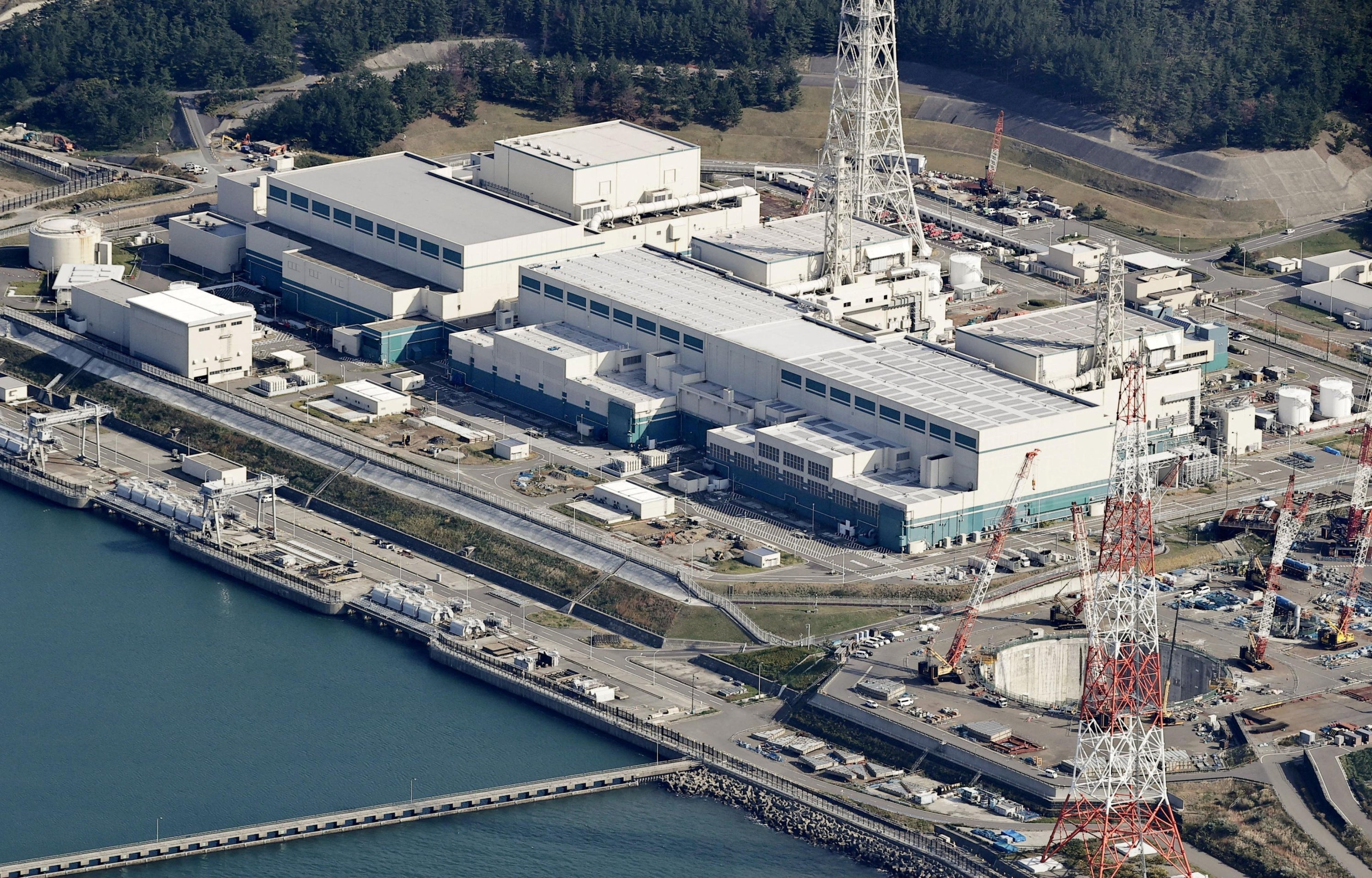
The Kashiwazaki-Kariwa nuclear power plant, Kashiwazaki, Niigata prefecture, Japan, Nov. 7, 2025. (Reuters Photo)

Under a plan approved by the government in February, nuclear power will account for around 20% of Japan's energy supply by the fiscal year starting in April 2040 – up from 8.5% in 2023/24.

The country has also laid out ambitious new targets that should see wind's contribution to the energy mix rise to between 4% and 8% by the 2040 fiscal year – up from around 1% today.

But, costs for wind power are rising sharply; at the end of August, Japanese conglomerate Mitsubishi pulled out of three key wind power projects deemed no longer profitable.

Japan still faces the daunting task of decommissioning the Fukushima plant, a project that is expected to take decades.

In August, Japanese technicians sent in remotely controlled robots to one of the damaged reactor buildings as part of preparations to remove radioactive debris.

Dangerously high radiation levels make removing melted fuel and other debris a particularly tough challenge.


  • shortlink copied
  • Last Update: Nov 25, 2025 11:43 am
    KEYWORDS
    nuclear energy nuclear power japan nuclear power plant fukushima fukushima disaster fukushima nuclear plant
    The Daily Sabah Newsletter
    Keep up to date with what’s happening in Turkey, it’s region and the world.
    You can unsubscribe at any time. By signing up you are agreeing to our Terms of Use and Privacy Policy. This site is protected by reCAPTCHA and the Google Privacy Policy and Terms of Service apply.
    No Image
    Fall and tumble: Crash course in the Winter Olympics 2022
    PHOTOGALLERY
    • POLITICS
    • Diplomacy
    • Legislation
    • War On Terror
    • EU Affairs
    • News Analysis
    • TÜRKİYE
    • Istanbul
    • Education
    • Investigations
    • Minorities
    • Diaspora
    • World
    • Mid-East
    • Europe
    • Americas
    • Asia Pacific
    • Africa
    • Syrian Crisis
    • İslamophobia
    • Business
    • Automotive
    • Economy
    • Energy
    • Finance
    • Tourism
    • Tech
    • Defense
    • Transportation
    • News Analysis
    • Lifestyle
    • Health
    • Environment
    • Travel
    • Food
    • Fashion
    • Science
    • Religion
    • History
    • Feature
    • Expat Corner
    • Arts
    • Cinema
    • Music
    • Events
    • Portrait
    • Performing Arts
    • Reviews
    • Sports
    • Football
    • Basketball
    • Motorsports
    • Tennis
    • Opinion
    • Columns
    • Op-Ed
    • Reader's Corner
    • Editorial
    • Photo gallery
    • DS TV
    • Jobs
    • privacy
    • about us
    • contact us
    • RSS
    © Turkuvaz Haberleşme ve Yayıncılık 2021