Türkiye and Japan have agreed to collaborate on enhancing safety and infrastructure monitoring in Türkiye’s high-speed rail lines through the implementation of Japan’s advanced Zero Energy IoT (Internet of Things) Series monitoring system.
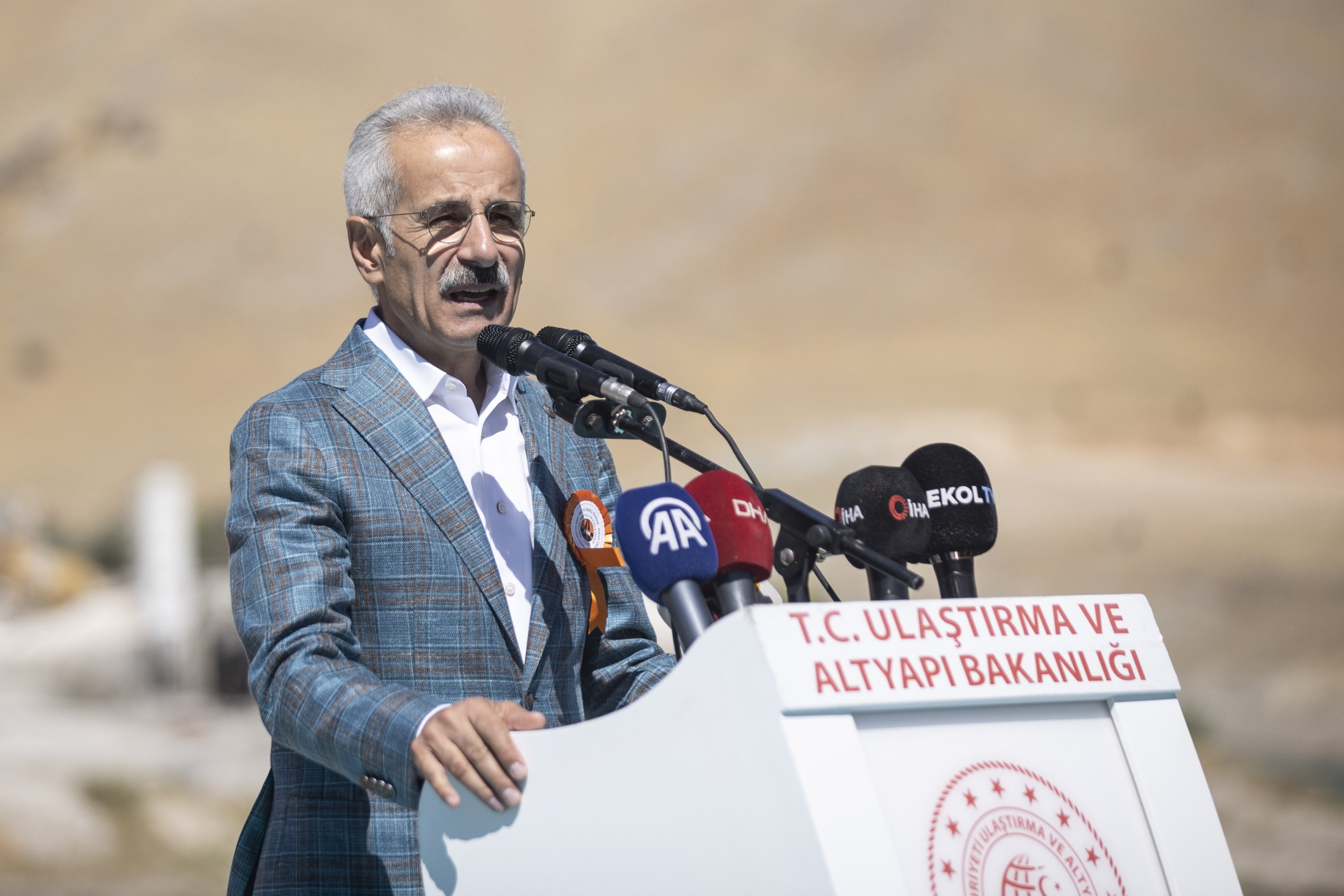
Transport and Infrastructure Minister Abdulkadir Uraloğlu told Anadolu Agency (AA) on Thursday that the technology, developed by Japanese firm OKI, is already in use on Japan’s high-speed rail network and is designed to detect infrastructure displacements and natural disasters such as floods and landslides.
Noting that Türkiye’s already existing rail infrastructure features equipment, software and applications compliant with international standards of rail safety and maintenance, Uraloğlu explained that the Turkish State Railways (TCDD) aims to bring the best international practices to Türkiye by enabling innovative solutions, such as the collaboration with OKI, conducted under a grant program by the Japanese Ministry of Economy, Trade and Industry.
The Zero Energy IoT Series monitoring system will be implemented on the Polatlı-Konya and the Konya-Karaman-Ulukışla high-speed lines.
"The system will detect possible shifts in the infrastructure and natural disasters like floods and landslides caused by climate change,” the minister said.
The installation of the monitoring system will begin sometime in October or November.
A 24-month monitoring phase will follow, during which the collected data will be analyzed to determine the feasibility of long-term integration. The collaboration will also support the development of local technological solutions through joint efforts by engineers from the Turkish State Railways (TCDD) and Japanese experts.
Uraloğlu added that the project is a testament to the TCDD’s commitment to advancing its existing infrastructure and its focus on domestic engineering.