Daily Sabah logo

Politics
Diplomacy Legislation War On Terror EU Affairs Elections News Analysis
TÜRKİYE
Istanbul Education Investigations Minorities Expat Corner Diaspora
World
Mid-East Europe Americas Asia Pacific Africa Syrian Crisis Islamophobia
Business
Automotive Economy Energy Finance Tourism Tech Defense Transportation News Analysis
Lifestyle
Health Environment Travel Food Fashion Science Religion History Feature Expat Corner
Arts
Cinema Music Events Portrait Reviews Performing Arts
Sports
Football Basketball Motorsports Tennis
Opinion
Columns Op-Ed Reader's Corner Editorial
PHOTO GALLERY
JOBS ABOUT US RSS PRIVACY CONTACT US
© Turkuvaz Haberleşme ve Yayıncılık 2026

Daily Sabah - Latest & Breaking News from Turkey | Istanbul

  • Politics
    • Diplomacy
    • Legislation
    • War On Terror
    • EU Affairs
    • Elections
    • News Analysis
  • TÜRKİYE
    • Istanbul
    • Education
    • Investigations
    • Minorities
    • Expat Corner
    • Diaspora
  • World
    • Mid-East
    • Europe
    • Americas
    • Asia Pacific
    • Africa
    • Syrian Crisis
    • Islamophobia
  • Business
    • Automotive
    • Economy
    • Energy
    • Finance
    • Tourism
    • Tech
    • Defense
    • Transportation
    • News Analysis
  • Lifestyle
    • Health
    • Environment
    • Travel
    • Food
    • Fashion
    • Science
    • Religion
    • History
    • Feature
    • Expat Corner
  • Arts
    • Cinema
    • Music
    • Events
    • Portrait
    • Reviews
    • Performing Arts
  • Sports
    • Football
    • Basketball
    • Motorsports
    • Tennis
  • Gallery
  • Opinion
    • Columns
    • Op-Ed
    • Reader's Corner
    • Editorial
  • TV
  • Life
  • Health
  • Environment
  • Travel
  • Food
  • Fashion
  • Science
  • Religion
  • History
  • Feature
  • Expat Corner

NASA monitors health impact during Artemis II lunar mission

by Agence France-Presse - AFP

Washington Apr 10, 2026 - 11:47 am GMT+3
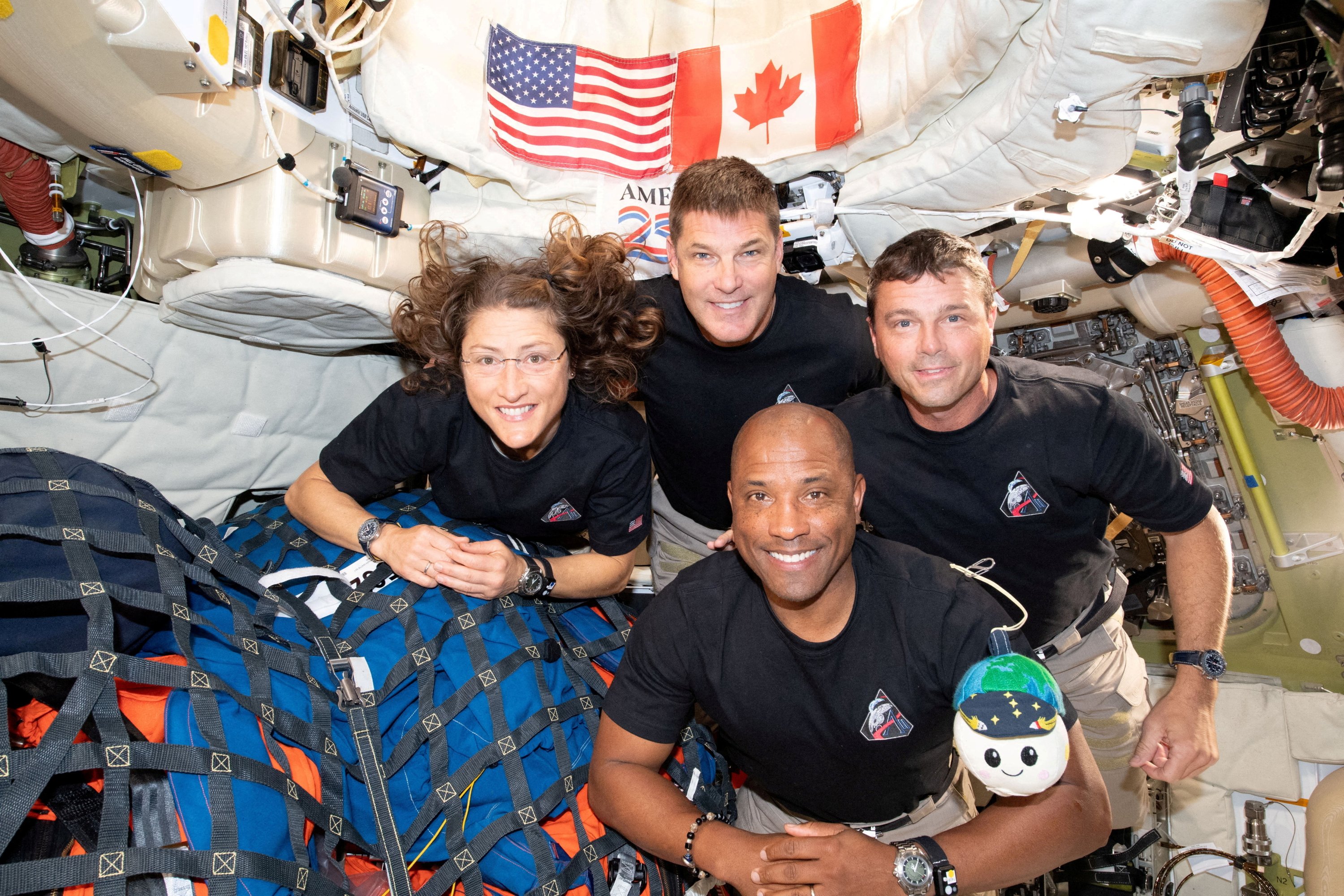
The NASA Artemis II crew, mission specialist Christina Koch, mission specialist Jeremy Hansen, commander Reid Wiseman and pilot Victor Glover, pose for a group photo inside the Orion spacecraft on their way home following a flyby of the far side of the moon, April 7, 2026. (Reuters Photo)
by Agence France-Presse - AFP Apr 10, 2026 11:47 am

While the Artemis II astronauts have been protected from the icy vacuum of space on their journey, their bodies have nonetheless been left exposed to possibly high levels of radiation, a danger of space travel that NASA is anxiously waiting to study.

Their trip around the moon has taken the four astronauts farther into space than any human before – more than 1,000 times the distance from Earth to the International Space Station (ISS).

Earth's magnetosphere offers some protection against radioactive cosmic rays and solar particles to the orbiting ISS, but no such cover on the moon.

Studying the impacts of radiation is essential as NASA hopes to eventually build a moon base and send astronauts on the long trip to Mars.

The U.S. space agency installed radiation sensors on the Orion capsule and took blood samples of the astronauts before takeoff to compare with samples post-trip. The crew's saliva samples are gathered throughout the journey, and their health is monitored via smartwatches.

NASA has also placed state-of-the-art computer chips in the capsule that can replicate certain physiological functions, like those of an organ.

Mission planners chose to mimic bone marrow, which produces blood cells and is one of the tissues "most quickly affected by radiation and other stressors," NASA Human Research Program chief scientist Steven Platts told Agence France-Presse (AFP).

With all of the data, Platts said his team hoped to better understand the variation between low earth orbit and deep space.

"It will be good research information for us to see the level of radiation, but also the type of radiation," he said.

"Our prediction is that we'll see a lot more galactic cosmic radiation ... which is from supernovas and is everywhere," versus radiation coming from the Sun, he said.

Mental health

Platts said while most people associate radiation with cancer risk, it also can impact the central nervous system and blood circulation.

"It can lead to inflammation in the brain, and that's one of the things that can increase the risk of Parkinson's disease," he said.

With the Artemis II astronauts spending just 10 days in space, radiation is not a major concern, but the danger could rise dramatically with longer stays on the Moon.

Extensive health studies were conducted on the Apollo astronauts, but technology has advanced greatly in the 50 years since, said Bruce Betts, chief scientist at the Planetary Society, a space advocacy group.

"There will be a lot of information on the medical side of things," he said.

The other major focus is on the psychological risks of spending long periods of time on the Moon or Mars.

With greater disconnection from home and tight living quarters, mental health could pose the greatest danger to astronauts on such missions, Platts said.

He compared the difference between the ISS and the tiny Orion capsule as like going from a "six-bedroom house, like a mansion, to a camper van."


  • shortlink copied
  • Last Update: Apr 10, 2026 1:08 pm
    KEYWORDS
    artemis ii lunar mission nasa radiation health
    The Daily Sabah Newsletter
    Keep up to date with what’s happening in Turkey, it’s region and the world.
    You can unsubscribe at any time. By signing up you are agreeing to our Terms of Use and Privacy Policy. This site is protected by reCAPTCHA and the Google Privacy Policy and Terms of Service apply.
    No Image
    A look back at the Costa Concordia disaster after 10 years
    PHOTOGALLERY
    • POLITICS
    • Diplomacy
    • Legislation
    • War On Terror
    • EU Affairs
    • News Analysis
    • TÜRKİYE
    • Istanbul
    • Education
    • Investigations
    • Minorities
    • Diaspora
    • World
    • Mid-East
    • Europe
    • Americas
    • Asia Pacific
    • Africa
    • Syrian Crisis
    • İslamophobia
    • Business
    • Automotive
    • Economy
    • Energy
    • Finance
    • Tourism
    • Tech
    • Defense
    • Transportation
    • News Analysis
    • Lifestyle
    • Health
    • Environment
    • Travel
    • Food
    • Fashion
    • Science
    • Religion
    • History
    • Feature
    • Expat Corner
    • Arts
    • Cinema
    • Music
    • Events
    • Portrait
    • Performing Arts
    • Reviews
    • Sports
    • Football
    • Basketball
    • Motorsports
    • Tennis
    • Opinion
    • Columns
    • Op-Ed
    • Reader's Corner
    • Editorial
    • Photo gallery
    • DS TV
    • Jobs
    • privacy
    • about us
    • contact us
    • RSS
    © Turkuvaz Haberleşme ve Yayıncılık 2021