Daily Sabah logo

Politics
Diplomacy Legislation War On Terror EU Affairs Elections News Analysis
TÜRKİYE
Istanbul Education Investigations Minorities Expat Corner Diaspora
World
Mid-East Europe Americas Asia Pacific Africa Syrian Crisis Islamophobia
Business
Automotive Economy Energy Finance Tourism Tech Defense Transportation News Analysis
Lifestyle
Health Environment Travel Food Fashion Science Religion History Feature Expat Corner
Arts
Cinema Music Events Portrait Reviews Performing Arts
Sports
Football Basketball Motorsports Tennis
Opinion
Columns Op-Ed Reader's Corner Editorial
PHOTO GALLERY
JOBS ABOUT US RSS PRIVACY CONTACT US
© Turkuvaz Haberleşme ve Yayıncılık 2025

Daily Sabah - Latest & Breaking News from Turkey | Istanbul

  • Politics
    • Diplomacy
    • Legislation
    • War On Terror
    • EU Affairs
    • Elections
    • News Analysis
  • TÜRKİYE
    • Istanbul
    • Education
    • Investigations
    • Minorities
    • Expat Corner
    • Diaspora
  • World
    • Mid-East
    • Europe
    • Americas
    • Asia Pacific
    • Africa
    • Syrian Crisis
    • Islamophobia
  • Business
    • Automotive
    • Economy
    • Energy
    • Finance
    • Tourism
    • Tech
    • Defense
    • Transportation
    • News Analysis
  • Lifestyle
    • Health
    • Environment
    • Travel
    • Food
    • Fashion
    • Science
    • Religion
    • History
    • Feature
    • Expat Corner
  • Arts
    • Cinema
    • Music
    • Events
    • Portrait
    • Reviews
    • Performing Arts
  • Sports
    • Football
    • Basketball
    • Motorsports
    • Tennis
  • Gallery
  • Opinion
    • Columns
    • Op-Ed
    • Reader's Corner
    • Editorial
  • TV
  • Life
  • Health
  • Environment
  • Travel
  • Food
  • Fashion
  • Science
  • Religion
  • History
  • Feature
  • Expat Corner

Snake venom molecule shows promise in fight against COVID-19

by REUTERS

SAO PAULO Sep 01, 2021 - 11:06 am GMT+3
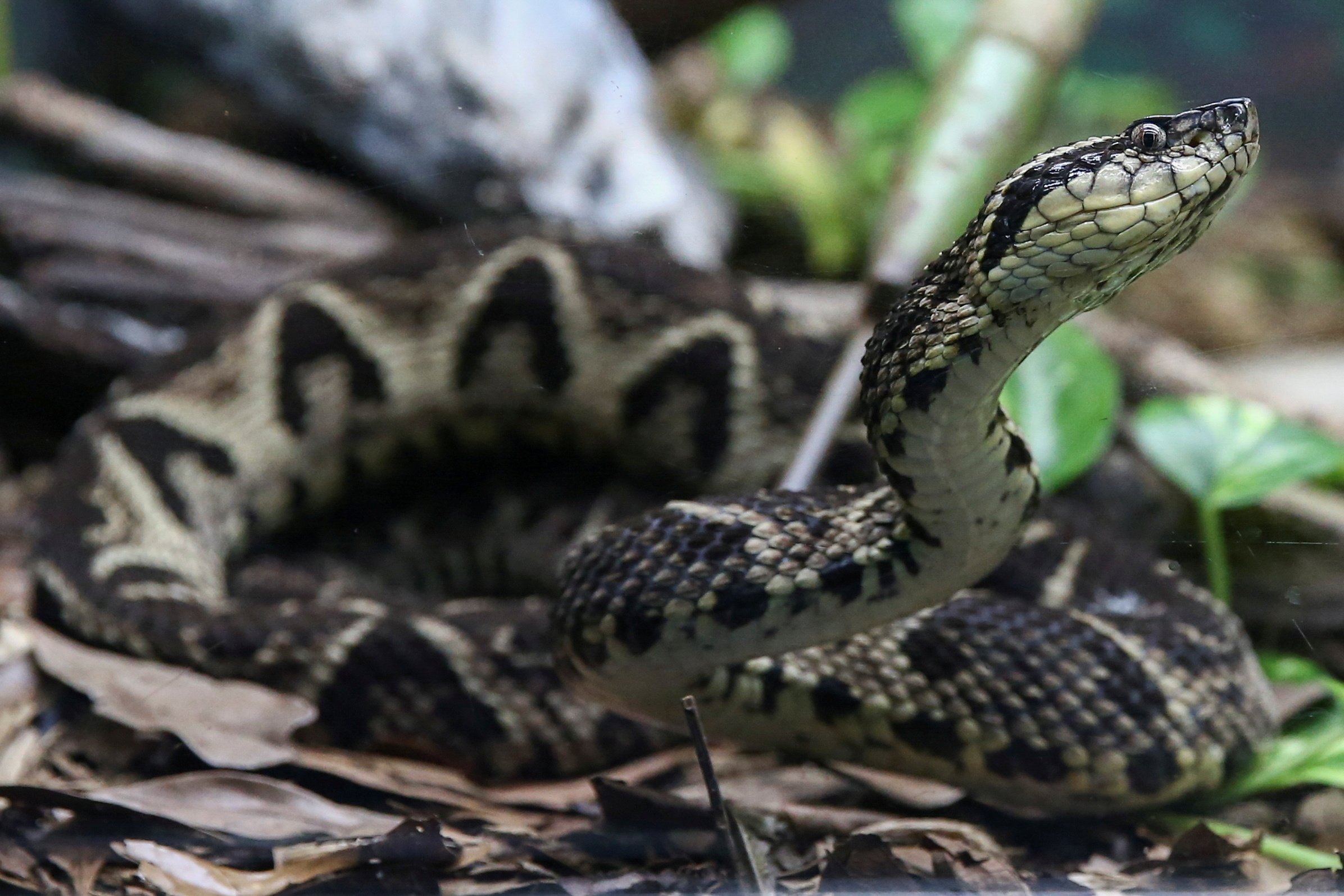
A jararacussu snake, whose venom is used in a study against the coronavirus disease, is seen at Butantan Institute in Sao Paulo, Brazil, Aug. 27, 2021. (Reuters Photo)
by REUTERS Sep 01, 2021 11:06 am

Before you go running through the Amazon rainforest hoping to get bitten by a poisonous snake because you are under the impression its venom will protect you from COVID-19, and yes, we feel we have to make that disclaimer given people who have ingested bleach or who are now promoting the horse dewormer ivermectin, please know that the only way the bite itself would protect you from the virus would be because you'd die fairly soon afterward from the venom.

Brazilian researchers have found that a molecule in the venom of a type of snake inhibited the coronavirus reproduction in monkey cells, a possible first step toward a drug to combat the virus causing COVID-19.

A study published in the scientific journal Molecules this month found that the molecule produced by the jararacussu pit viper inhibited the virus's ability to multiply in monkey cells by 75%.

"We were able to show this component of snake venom was able to inhibit a very important protein from the virus," said Rafael Guido, a University of Sao Paulo professor and an author of the study.

The molecule is a peptide, or chain of amino acids, that can connect to an enzyme of the coronavirus called PLPro, which is vital to the reproduction of the virus, without hurting other cells.

Already known for its antibacterial qualities, the peptide can be synthesized in the laboratory, Guido said in an interview, making the capture or raising of the snakes unnecessary.

"We're wary about people going out to hunt the jararacussu around Brazil, thinking they're going to save the world ... That's not it!" said Giuseppe Puorto, a herpetologist running the Butantan Institute's biological collection in Sao Paulo. "It's not the venom itself that will cure the coronavirus," he explained.

Researchers will next evaluate the efficiency of different doses of the molecule and whether it is able to prevent the virus from entering cells in the first place, according to a statement from the State University of Sao Paulo (Unesp), which was also involved in the research.

They hope to test the substance in human cells but gave no timeline.

The jararacussu is one of the largest snakes in Brazil, measuring up to 6 feet (2 meters) long. It lives in the coastal Atlantic Forest and is also found in Bolivia, Paraguay and Argentina.


  • shortlink copied
  • KEYWORDS
    covid-19 snakes brazil jararacussu coronavirus
    The Daily Sabah Newsletter
    Keep up to date with what’s happening in Turkey, it’s region and the world.
    You can unsubscribe at any time. By signing up you are agreeing to our Terms of Use and Privacy Policy. This site is protected by reCAPTCHA and the Google Privacy Policy and Terms of Service apply.
    No Image
    Europe's 'recycled' waste ends up being illegally dumped in Turkey
    PHOTOGALLERY
    • POLITICS
    • Diplomacy
    • Legislation
    • War On Terror
    • EU Affairs
    • News Analysis
    • TÜRKİYE
    • Istanbul
    • Education
    • Investigations
    • Minorities
    • Diaspora
    • World
    • Mid-East
    • Europe
    • Americas
    • Asia Pacific
    • Africa
    • Syrian Crisis
    • İslamophobia
    • Business
    • Automotive
    • Economy
    • Energy
    • Finance
    • Tourism
    • Tech
    • Defense
    • Transportation
    • News Analysis
    • Lifestyle
    • Health
    • Environment
    • Travel
    • Food
    • Fashion
    • Science
    • Religion
    • History
    • Feature
    • Expat Corner
    • Arts
    • Cinema
    • Music
    • Events
    • Portrait
    • Performing Arts
    • Reviews
    • Sports
    • Football
    • Basketball
    • Motorsports
    • Tennis
    • Opinion
    • Columns
    • Op-Ed
    • Reader's Corner
    • Editorial
    • Photo gallery
    • DS TV
    • Jobs
    • privacy
    • about us
    • contact us
    • RSS
    © Turkuvaz Haberleşme ve Yayıncılık 2021