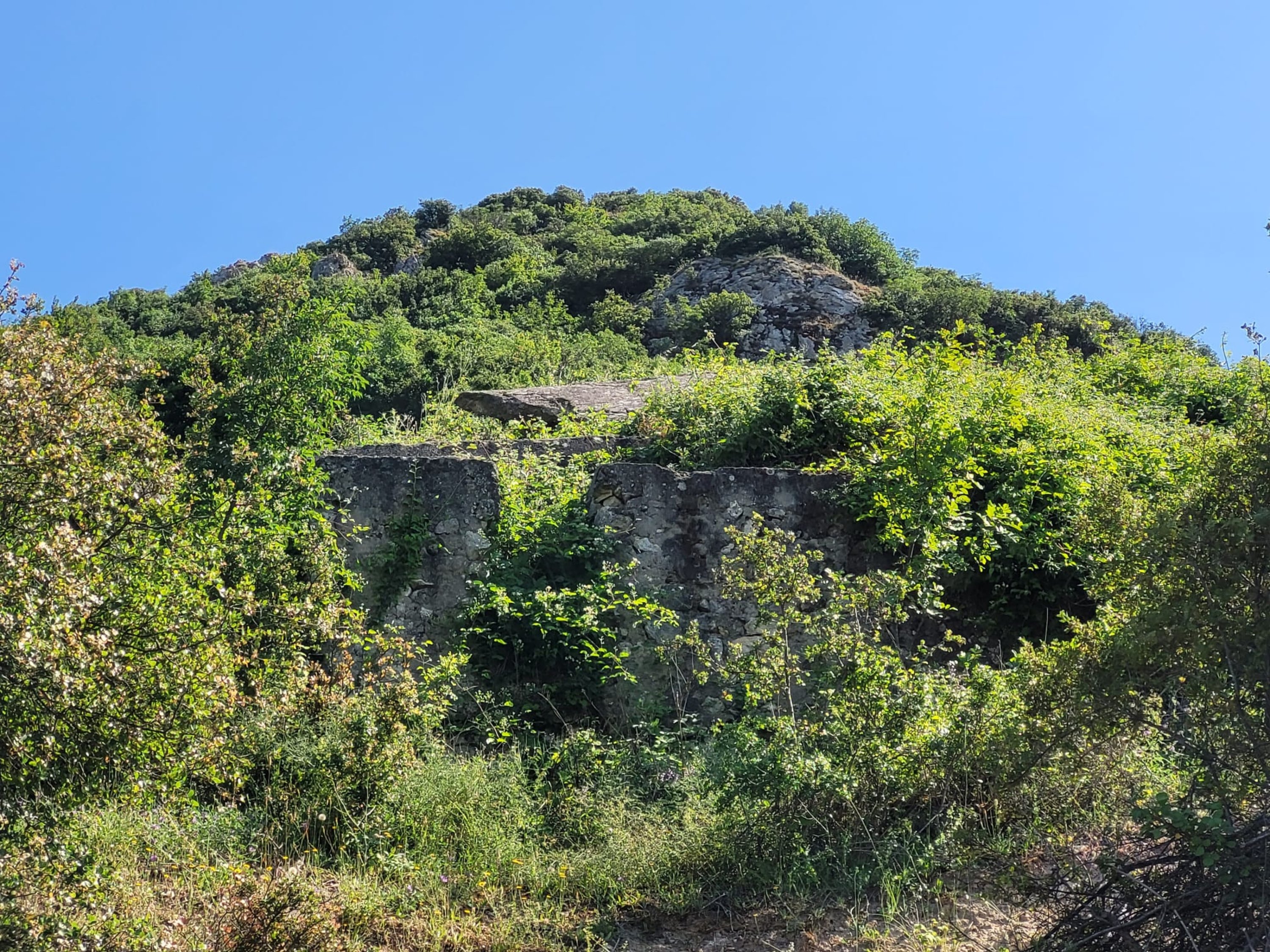
New historical and archaeological findings suggest that Çimpe Castle, a key site in the Ottoman crossing into Rumelia in 1352, may have been located in Tekirdağ, northwestern Türkiye, rather than on the Gallipoli Peninsula, as long believed.
The castle, considered an important foothold in the Ottoman expansion into the Balkans, may be identified with the remains at Cintepe in Yeniköy, between the Malkara and Şarköy districts, according to research presented in a doctoral dissertation by Ayhan Sekili under the supervision of professor Levent Kayapınar of Ankara University.
The study, which began in 2020, examined Ottoman cadastral registers, chronicles, historical settlement names, geographical features and previous archaeological surveys. Academics also inspected the castle remains at Cintepe during fieldwork in Tekirdağ this year.
Speaking to Anadolu Agency (AA), Kayapınar said the findings strengthened the theory that Çimpe Castle and Çimpe Harbor, mentioned in historical sources, were connected to the Malkara and Şarköy area.
Ottoman chronicles describe how Süleyman Pasha and his companions crossed the Marmara Sea from the Anatolian shore to Çimpe Harbor before capturing the castle inland. The subsequent capture of fortresses around Gaziköy, Ortaköy and Balabancık cut off potential aid routes to Gallipoli from Thrace, paving the way for its later conquest, Kayapınar said.
Following its capture, Çimpe became an Ottoman administrative subdistrict. Cadastral records from 1475 list seven villages in the Çimpe (Çimbi) subdistrict. The names of five survive, with minor changes, in present-day settlements around Malkara and Şarköy.
“The present-day locations of villages associated with Çimpe indicate that the castle should be sought around Malkara and Şarköy,” Kayapınar said, citing settlements including Müstecep, Bulgur, Kalamış, Sofuköy and Bunak.
Researchers have previously placed the castle around Bolayır and the Gallipoli Peninsula. However, Kayapınar said a combined assessment of Byzantine sources, Ottoman chronicles, cadastral records and field evidence supported identifying it with Cintepe Castle in Yeniköy.
The remains at Cintepe were documented in 2010 during surface surveys on Mount Ganos by professor Zeynep Erdem of Mimar Sinan Fine Arts University. Historian Metin Tetik also suggested in a 2023 study that the site could be the historical Çimpe Castle.
Kayapınar visited the site on June 12, 2026, accompanied by local guides. He said the building materials appeared consistent with those used during the late Byzantine and early Ottoman periods, although comprehensive archaeological research is needed to establish the site's identity. Determining the location of Çimpe Harbor would also help clarify the findings.
Despite its historical significance, the site remains difficult to access and largely unknown, Kayapınar said, adding that the team had to ask villagers and forestry workers for directions.
“There are no signposts or developed access roads leading to a site of such importance to Turkish history,” he said, warning that the remains risk deterioration from illegal excavations and forest vegetation.
“The site needs to be investigated and protected using scientific methods,” he added.
Associate professor Ökkeş Narinç of Tekirdağ Namık Kemal University said the findings could prompt a reassessment of the long-established view that Gallipoli and Bolayır were the first points of the Ottoman crossing into the Balkans in 1352.
Based on historical records, cadastral and foundation registers and field inspections, the researchers placed Çimpe Castle between the villages of İbribey and Yeniköy, near Malkara, he said.
Narinç compared the importance of identifying the castle's location with that of the battles of Manzikert in 1071 and Dandanaqan in 1040, which played major roles in the Turkish advance into Anatolia.
“Identifying the castle's actual location would also further elevate Tekirdağ's historical importance,” he said.
Narinç added that the site in Bolayır traditionally identified as Çimpe Castle should be reassessed. He argued that its location and building materials did not match historical records and suggested it may instead have served as a defensive position.
The researchers' findings are expected to be presented at an international academic panel in November.