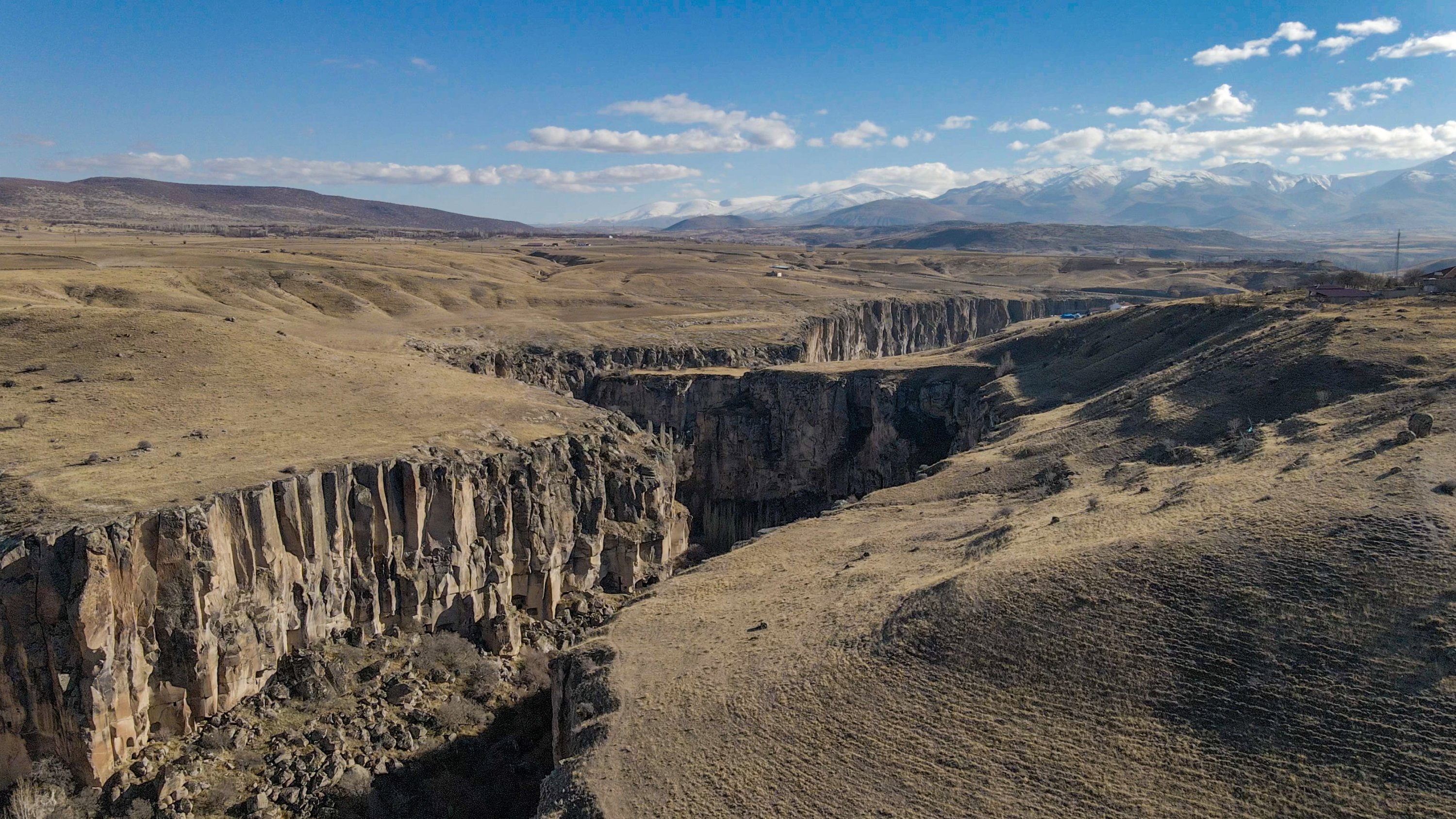
Ihlara Valley is among my top places to visit in Turkey, and although I have already been there four times, I cannot seem to get enough of it. Each time I go, I am equally, if not more, dazzled.
A quick overview
Ihlara Valley, or Peristremma as it was called in ancient sources, is a 14-kilometer-long (8.7-mile-long) valley located within the borders of Aksaray’s suburban district of Güzelyurt in central Anatolia. According to the data published by the Turkish Ministry of Culture and Tourism, with more than half a million tourists, this spot was ranked the 6th most-visited ancient site in Turkey in 2019.
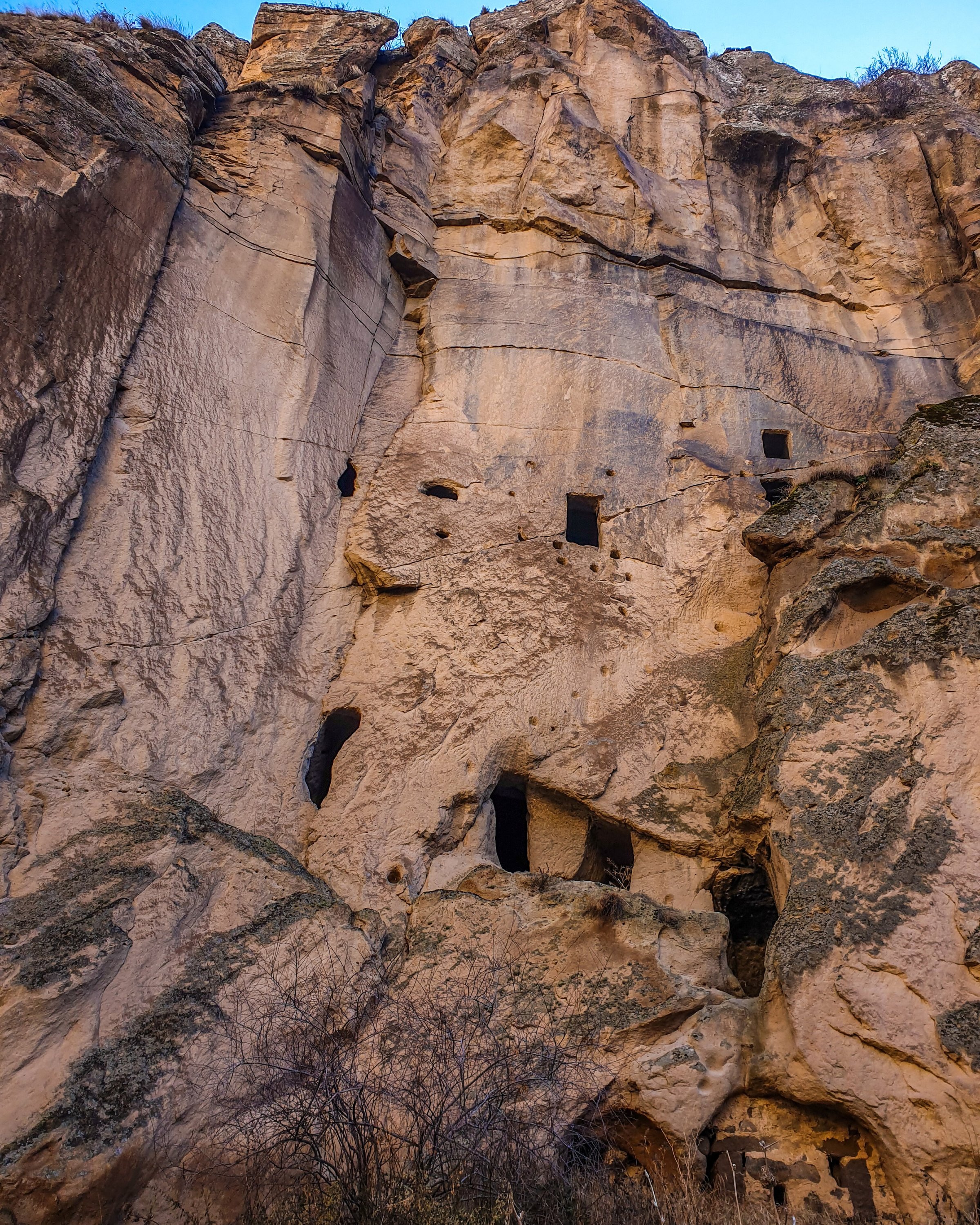
The valley is so massive that its glorious walls reach as high as 150 meters (164 yards) and stretch as far as 200 meters wide.
Thousands of years ago, the dormant volcano of Mount Hasan, located on the border of the Turkish provinces of Aksaray and Niğde, erupted. Subsequently, with the Melendiz Stream cutting the lava piled at the northeast side of the volcano in half, Ihlara Valley was formed over many years.

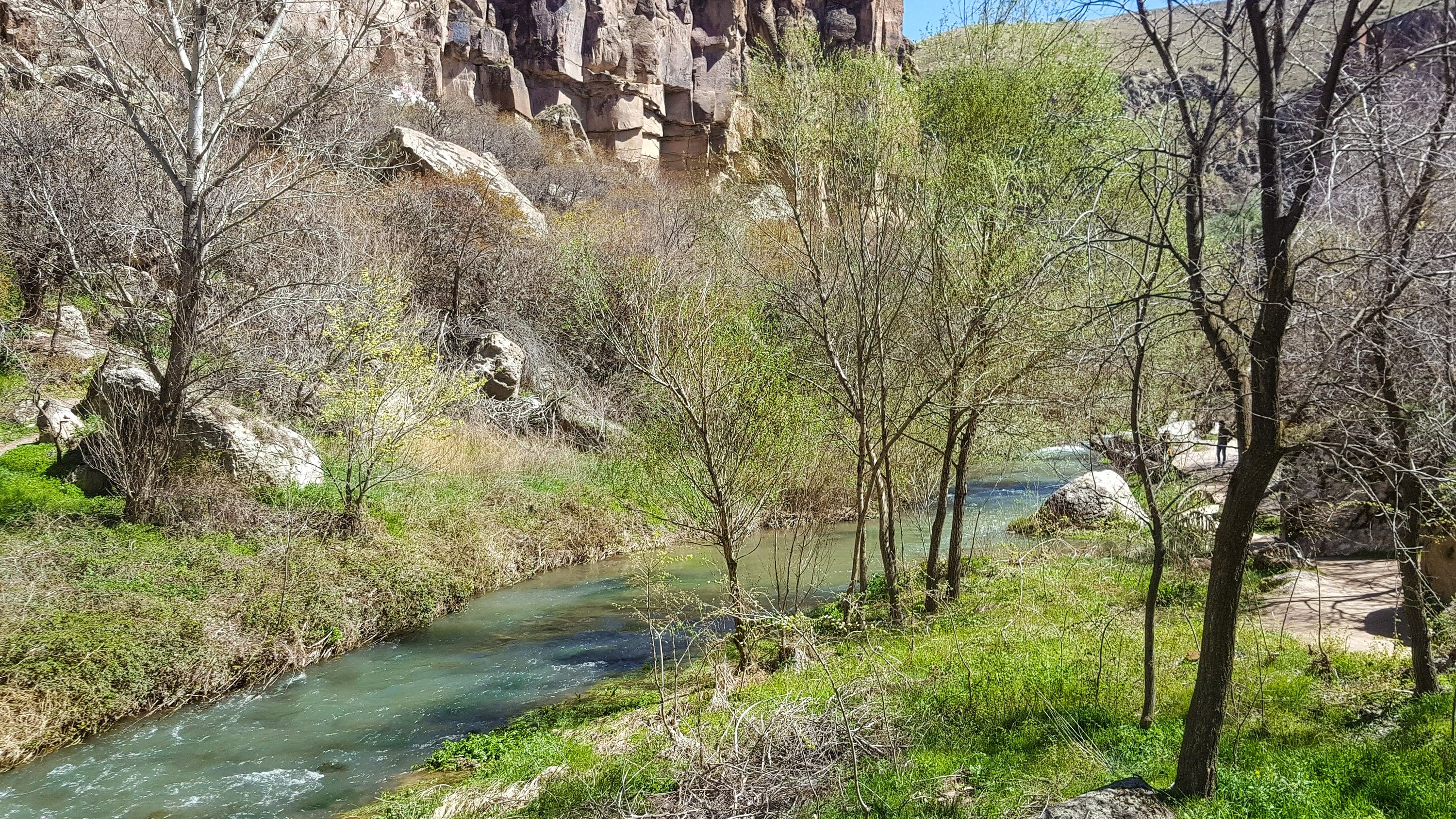
Laying aside the intriguing history of the valley for a moment, I find it useful to emphasize the rich flora and fauna of the area. As some of you know, central Anatolia’s landscape is not necessarily the lushest or greenest in Turkey. The region chiefly consists of vast plains where only agricultural products that do not require much water grow. Aksaray is no exception to that. When I first visited the Ihlara Valley, one of the sights that surprised me the most was seeing that, while the surrounding lands bear the characteristics of central Anatolia’s climate, the inside the valley is a whole different world with green trees, thick vegetation and colorful flowers scattered all over. Besides being a world-renowned heritage site, the Ihlara Valley is also a stunningly beautiful oasis in the dry region.
In "normal" pre-pandemic times, Ihlara Valley is always full of tourists. On one of my previous visits, I even remember having to wait in a queue for 10 minutes to go inside a church. But, during my visit this time, due to the pandemic, I saw no more than five people in the whole valley. Thinking that this was a once-in-lifetime chance to be able to hike through the valley so comfortably, I spent the whole day in there until the sun dipped under the horizon.
It was an indescribable feeling to wander around the valley and comfortably explore the churches all alone. For hours, I slowly covered the attractions as I was accompanied by the relaxing sound of the Melendiz Stream and the peaceful choir of chirping birds.

What to see
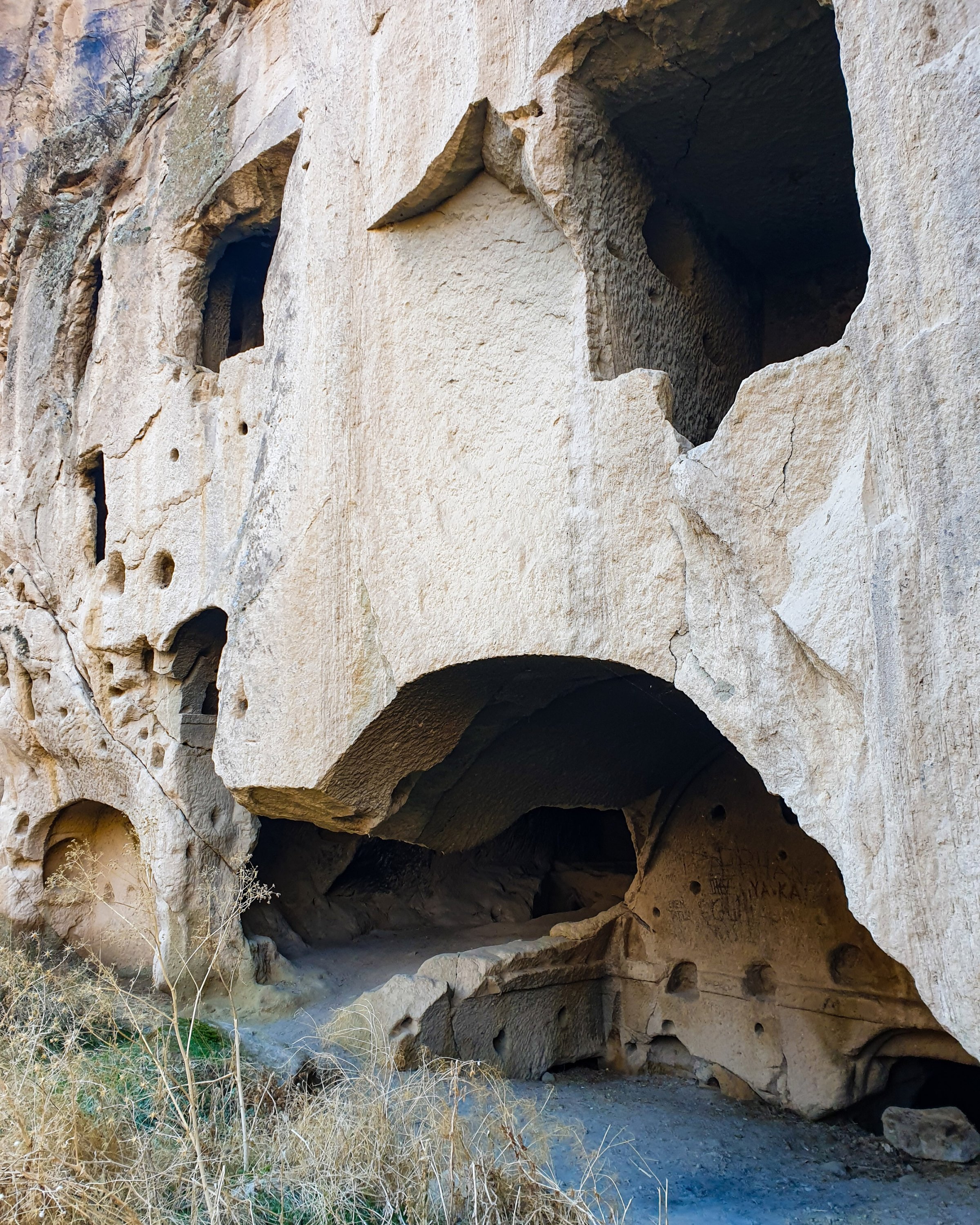
This natural wonder boasts 105 rock-hewn churches and approximately 10,000 structures carved inside the walls of the valley. Among the churches, only 14 of them are open for visitors. The rest are either submerged under the boulders that have fallen off the cliffs in the past centuries or are not safe to visit.
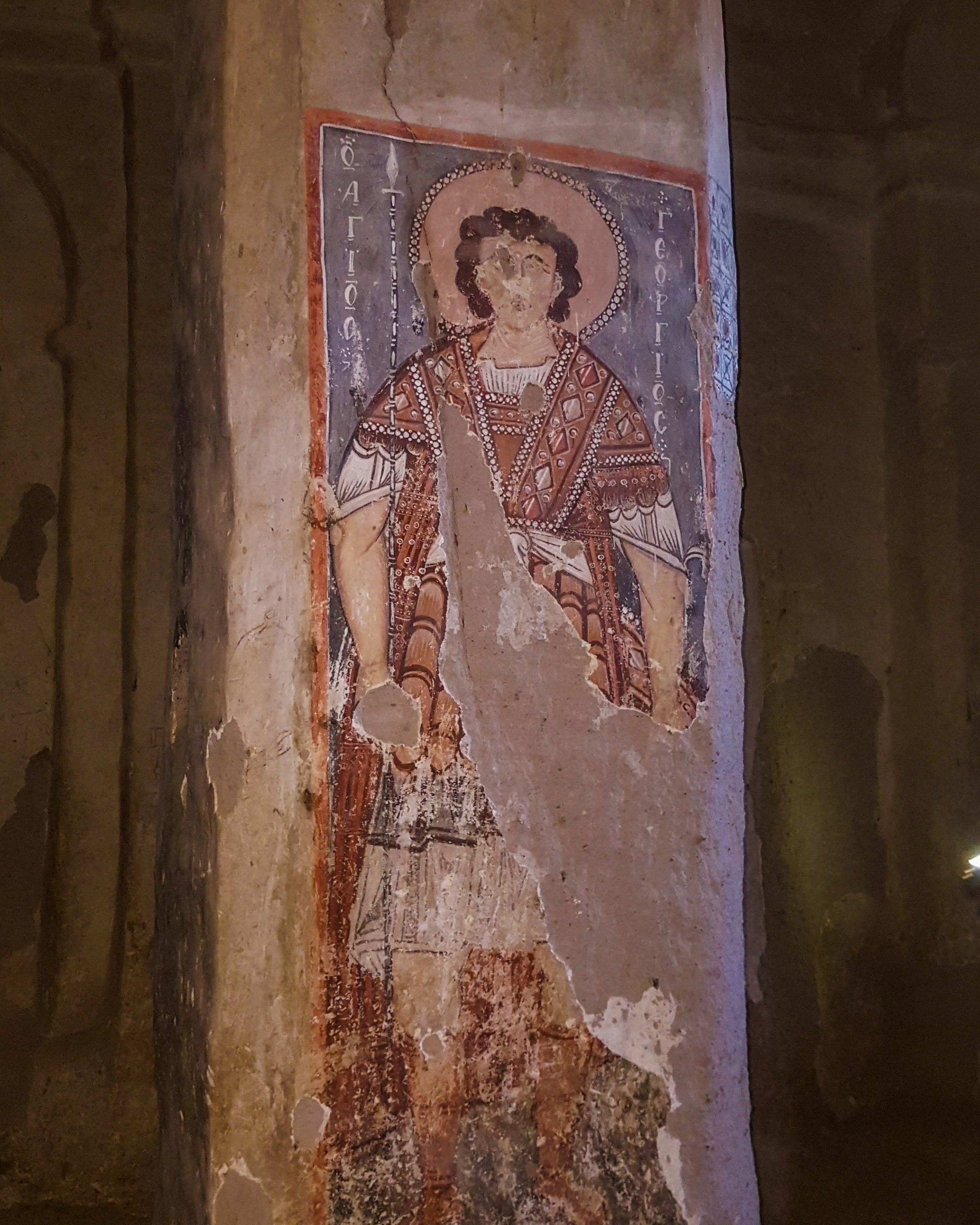
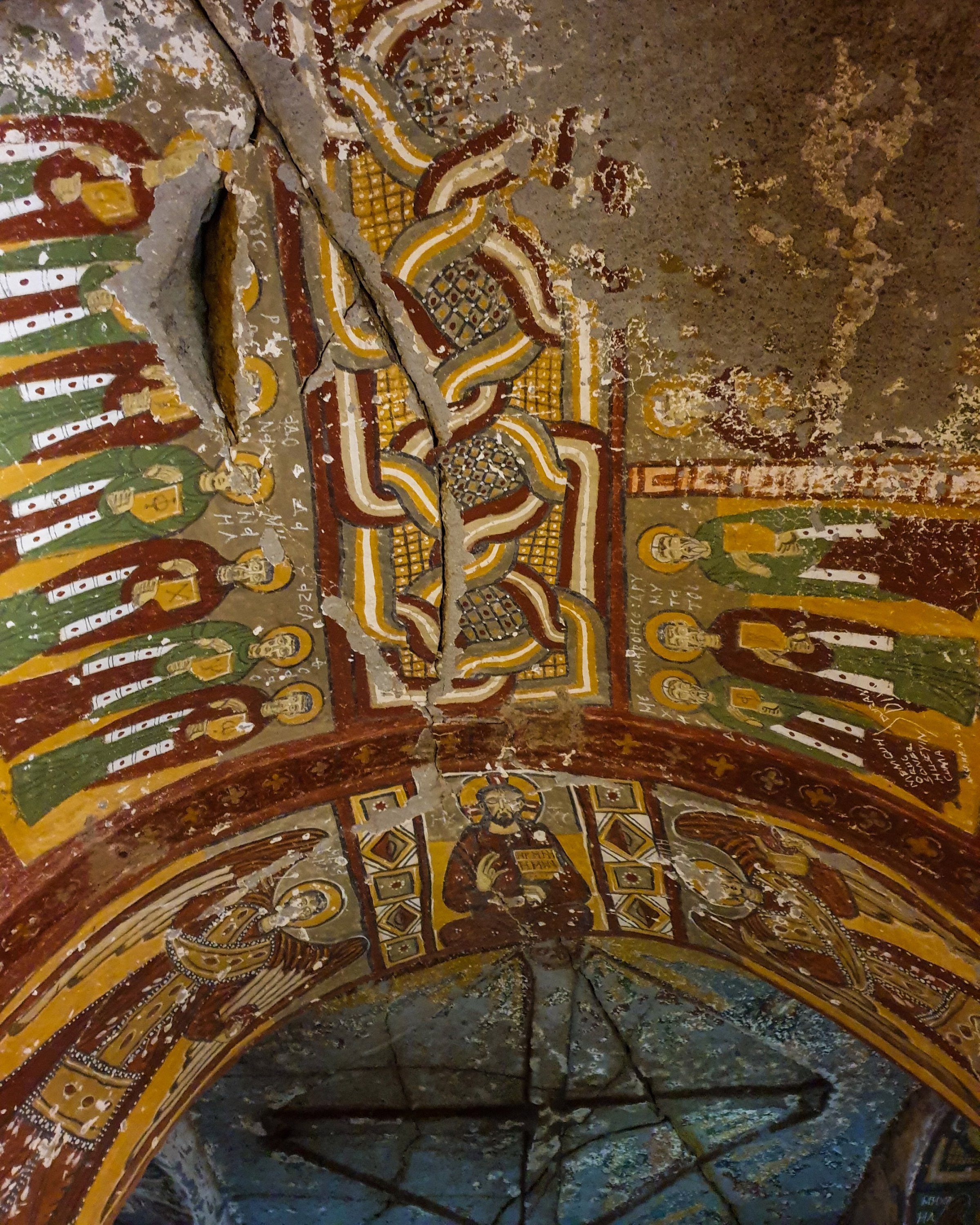
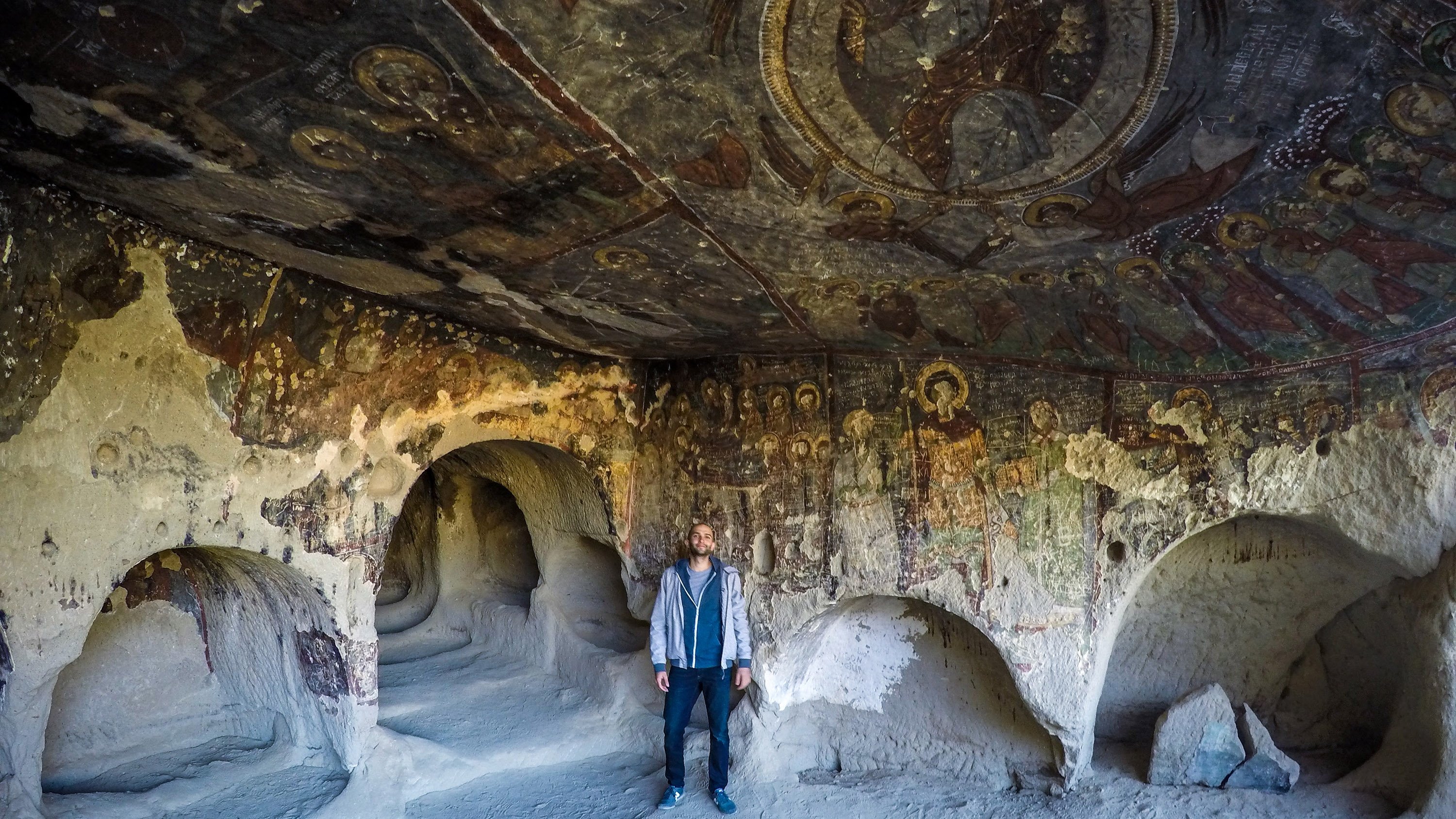
The churches of Kokar, Pürenliseki, Eğritaş, Karanlıkkale, Ağaçaltı, Sümbüllü, Yılanlı, Kırkdamaltı, Bahaddin Hayloft, Direkli, Ala, St. Mary and Karagedik as well as the Selime Cathedral are the 14 religious complexes that can be visited in Ihlara Valley. Each of these spots boasts remarkably well-preserved colorful frescoes and wall paintings that are among the finest surviving examples in the region.
In addition to the sites mentioned above, it is also a great freedom to be allowed to visit many of the unnamed rock dwellings, chambers and caves that stretch along the valley.
Historical significance
Ihlara Valley holds great historical significance in Christian history. The earliest inhabitants of the valley were the early Christians who were seeking refuge from the persecution and violent punishments of the Romans. Over the centuries, this settlement, where Christians lived covertly at first, grew into a vast town with 80,000 residents and 4,000 dwellings at its peak.
As I was stopping by the churches and examining the frescoes on the walls, a question kindled in my head: “Why did the ancient residents of this valley cover every single inch of these churches with amazingly detailed frescoes? What was their motivation?” After doing a little research, I learned that back in the day, when this area was actively inhabited, a large percentage of the population was not able to read Greek or Latin. The main aspiration behind coating the church walls with frescoes and wall paintings was to visually teach the illiterate public about the Bible.
Entrances to the valley
Ihlara Valley has four entrances. The main entrance to the valley is between the villages of Ihlara and Belisırma. It is also the only one that the GPS services show. However, it would be useful to add that the main entrance requires you to climb around 400 steps, which in the long run might not be very tourist-friendly for some people.
The second most opted-for entrance is the one at the village of Belisırma. This spot allows you to enter the valley with your vehicle and eliminates the hassle of climbing stairs.
Another two entrances are at the villages of Ihlara and Selime, which are also the two farthermost points of the valley.
My personal recommendation is that you choose the entrance at Belisırma, as it is the most convenient one and allows you to see the greatest number of places without getting exhausted.
Visiting information for Ihlara Valley
In the summers (April 1-Oct. 1), Ihlara Valley can be visited from 8 a.m. to 6:30 p.m., and in winters (Oct. 1-April 1), it is open to visitors from 10 a.m. to 4 p.m. Entrance to the valley costs TL 45 ($6) and is free for Museum Pass owners.
Parking at the Belisırma entrance is free of charge. However, at the main entrance to the valley, the parking fee is TL 10 for standard vehicles.
What you need to know before you visit
Especially nowadays, it may be the perfect time to visit Ihlara Valley. If you are nearby Aksaray or planning to take a road trip soon, I highly suggest channeling your interest here and witnessing one of the most stunning ancient sites in the world.
(Click here for Day 1 and Day 2.) Next week, we'll be covering two very overlooked gems of Byzantine origin, the mountaintop ancient city of Nora and the vast rock-hewn monastic complex of the Bell Church.