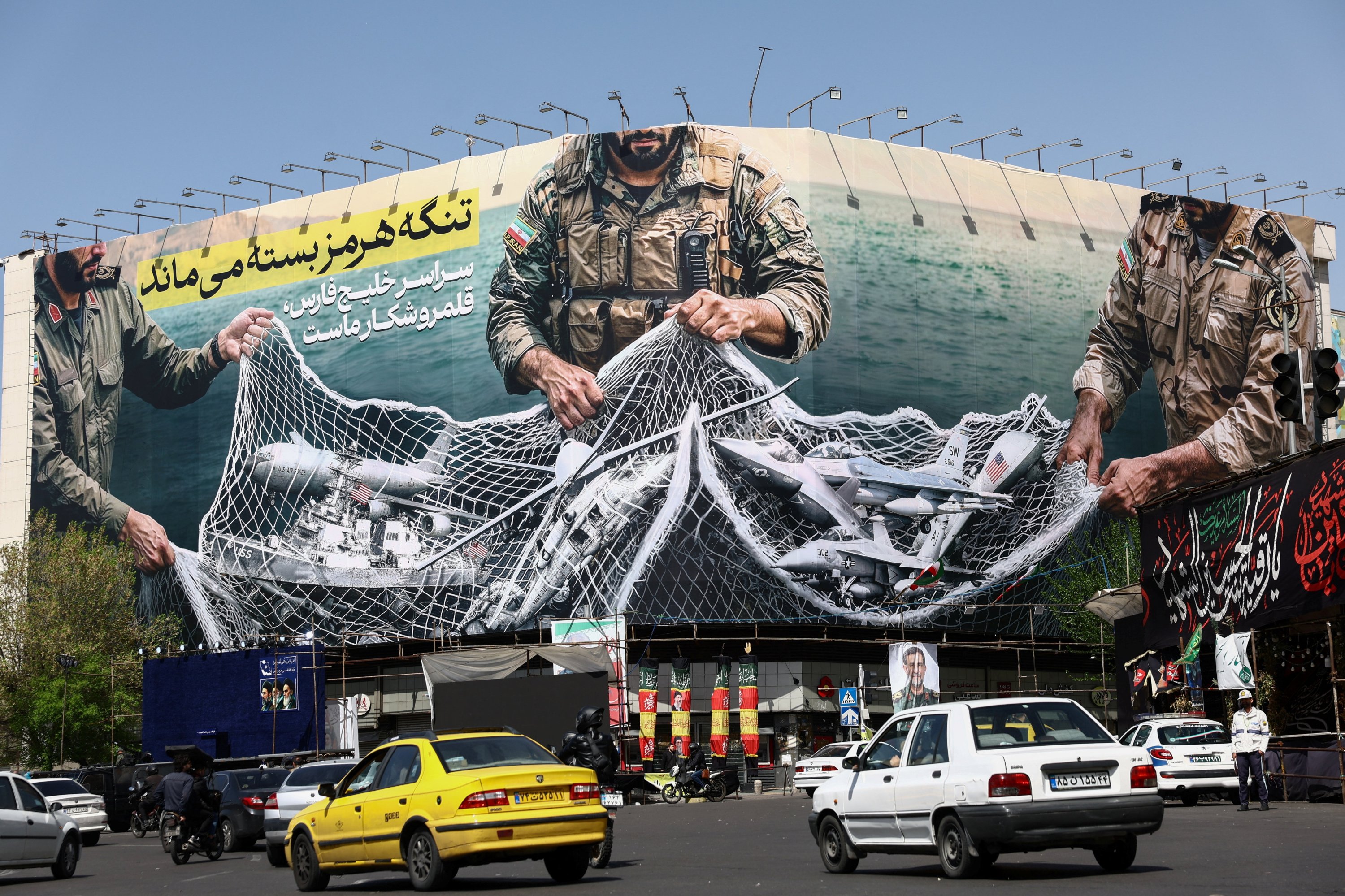
Since the U.S. and Israel’s attacks against Iran started on Feb. 28, the war has largely changed the regional balance of power. When we look at these three warring states, we see that the two aggressors did not achieve their objectives. Iran did not surrender, its regime did not fall, and its people did not rebel against their government. On the contrary, despite the loss of most of its leadership cadres, Iran consolidated its regime, which caused great damage to the U.S. and Israel narratives of war.
Today, I will discuss the reality on the ground. After Iran closed the Strait of Hormuz, it has only allowed Iranian military ships to pass through the strait. The move has greatly damaged the world economy, and, as a result, the U.S. government decided to lift the oil embargo imposed against Russia to influence the oil prices.
This situation reminds me of a proverb, "He who hunts two hares loses both."
Likewise, the attacking states sought to obtain Iran’s enriched uranium but have failed to do so. Iranian authorities concealed the uranium, and its whereabouts remain unknown. As a matter of fact, many observers claim that the new Iranian leadership may decide to continue its uranium enrichment project and eventually produce nuclear weapons to increase its deterrence. Iran wants to solve the problem once and for all.
The U.S. government projected a very low cost of its attacks against Iran. However, things went wrong. The U.S.’ deterrent power has weakened, especially after the Iranian military targeted the American military bases and the two largest aircraft carriers. Washington continues to censor its losses. President Donald Trump, who measures everything in monetary terms, has lost a trillion dollars during the war. Even rising oil prices alone would be enough for Trump to lose support. It is obvious that he faces difficult times in American domestic politics.
The U.S. did not receive support from either its people and institutions or the international community, including its NATO allies. Everyone knows that this is an unjust war. Besides the Israeli government, which dragged the U.S. into the war, no other state gives clear-cut support to the U.S. government on this move. Many high-level U.S. military and intelligence officers either resigned or were forced to resign. The majority of Americans oppose the war. Millions have taken to the streets to protest the Trump administration’s aggressive stance toward the outside world. As a reaction to the rising domestic pressures, Trump had to fire some of its top officials.
Further escalation of the war will cost more to the U.S. as its president acts like a gambler. The more he loses, the more he becomes aggressive. This may bring the U.S. to the brink of a major catastrophe. In particular, if Trump decides to initiate a ground war, the U.S. military will be mired in a quagmire. While it may be easy for U.S. troops to enter Iran, it will not be easy to leave. A hybrid war waged using guerrilla methods and hit-and-run tactics will wear down the U.S. military.
The biggest loss for the U.S. will be in terms of credibility. Since World War II, the U.S. has been bringing many states under its control through consent. However, it is now trying to obtain their submission through brute force, which has resulted in the loss of trust. Neither European partners nor Middle Eastern allies trust the U.S. anymore. No one can trust the U.S. because of a government that constantly changes its mind and openly lies.
Furthermore, trans-Atlantic tensions are steadily increasing, and European countries and the U.S. are increasingly diverging. The U.S. and European countries have different views on both Iran and Ukraine. While European countries have been trying to punish Russia for its occupation of Ukraine, the U.S. has been trying to improve its relations with the Russian government. The U.S. attacks against Iran have further increased this tension. The U.S. remains indifferent to the interests of its allies. Trump repeatedly declared, "Take care of yourselves."
As for Israel, it has lost a significant portion of its deterrent power. The so-called Iron Dome did not work during most of the Iranian attacks or prevent the hypersonic Iranian missiles. Many of Israel’s critical facilities and buildings were hit and destroyed by Iran. Due to the repressive policies implemented by the Israeli government, the number of casualties and the extent of the damage in Israel are unknown. However, everyone can see that it has suffered significant damage.
More importantly, after the Gaza genocide, Israel continues to lose credibility with its Western allies following the unjust attack against Iran. The Western public opinion is increasingly turning against Israel, which is unable to sell its narrative to the Western audience anymore. Western peoples have begun to turn against Israel; soon, this change will be reflected in the domestic policies of Western states. For instance, American politicians seeking votes in the coming midterm elections are declaring that they do not accept money from Jewish lobbies to garner support.
Lastly, the Gulf states suffered the greatest losses in their history as a result of a war that was not theirs. The Gulf countries have ceased to be the most trouble-free and developed region in the world. It was revealed not only how fragile their security was, but also how vulnerable their assets were. They have learned one of the greatest lessons that any cooperation with Israel will be detrimental to the Arabs, including the Gulf countries. It is now clear that whoever acts in concert with Israel is destined to lose the game in the Middle East.
All in all, nothing will ever be the same in the Middle East. All regional countries need to redesign their international status. The Gulf countries must find a new way to ensure their security. It will be difficult for them to come together for a common cause. Not only Iran but also the Gulf countries must redefine their regional priorities.