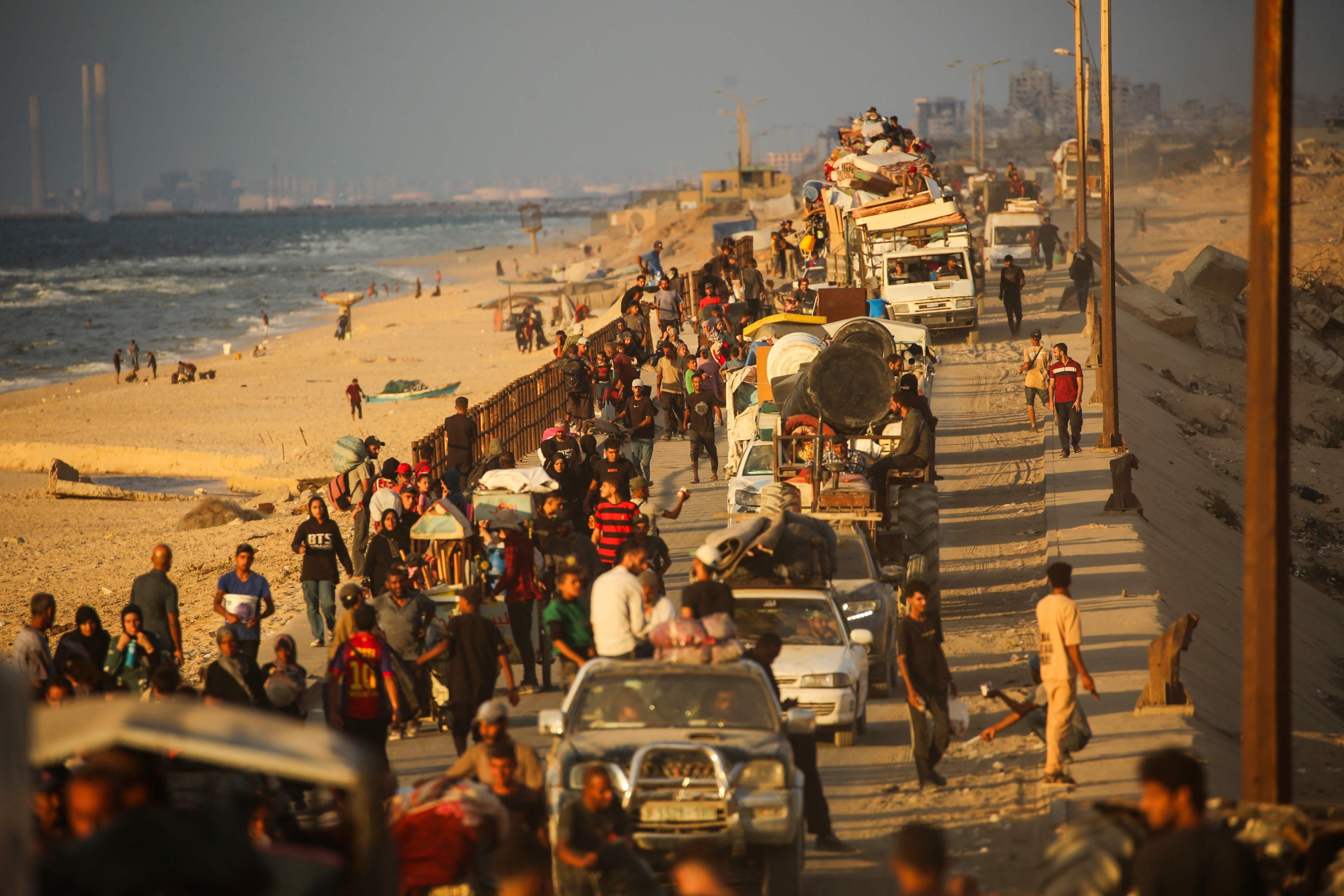
Few issues in international politics have proven as intractable as the Palestinian question. For decades, diplomats have gathered around tables, drafting plans and proposals, only to see them collapse under the weight of the reality on the ground. Recent weeks have once again underscored this truth: Decisive battles for Palestine are fought not only in conference halls, but first and foremost in the field.
As the second anniversary of the Oct. 7, 2023, Operation Al-Aqsa Flood approaches, a wave of recognition has swept across Europe. The United Kingdom, Canada, Australia, Belgium and Luxembourg have announced their formal recognition of the State of Palestine. This domino effect in Europe marks a critical turning point in the trajectory of the Palestinian struggle.
Of course, the pursuit of Palestinian statehood is not a new phenomenon. The U.N. partition plan of 1947 laid the groundwork for a two-state solution but was swiftly buried under the violence of Israel’s declaration of independence and the subsequent war. The Six-Day War of 1967 further expanded Israel’s occupation, bringing the West Bank and Gaza under its control. Recognition of the Palestine Liberation Organization (PLO) in 1974 as the “legitimate representative of the Palestinian people” at the U.N. was the first real breakthrough in international legitimacy. A decade later, Yasser Arafat’s 1988 declaration of Palestinian statehood in Algiers was endorsed by over a hundred countries, primarily Arab nations, but met little resonance in the Western world.
The Oslo Accords of 1993 briefly raised hopes, with Washington pressing for negotiations on a two-state solution. But the process was quickly derailed by Israel’s unyielding policy of illegal settlements. In 2012, the U.N. General Assembly upgraded Palestine’s status to “non-member observer state,” a symbolic victory that fell short of actual recognition.
Today, the landscape is shifting. The recognition of Palestine by states at the heart of Europe signals more than a diplomatic gesture; it represents a direct challenge to Washington’s pro-Israel bias. While the U.S. continues to pay rhetorical tribute to the two-state formula, in practice, it grants Israel’s government a blank check.
Against this backdrop, Israeli Prime Minister Benjamin Netanyahu issued a stark warning: “After the horrific massacre of Oct. 7, I have a clear message to the leaders who recognize a Palestinian state: You are giving terrorism a huge reward. And I have another message: It will not happen. There will be no Palestinian state west of the Jordan River.”
His statement captures the enduring tension in Israeli politics: Palestinian statehood is framed as an existential threat. Yet the growing chorus of European recognition makes it clear that the world is no longer uniformly persuaded by this argument.
Here, the words of Malcolm X resonate with haunting relevance: “The white man will try to satisfy us with symbolic victories rather than economic equity and real justice.” The risk for Palestine is precisely this: that recognition remains symbolic, while justice and sovereignty on the ground remain elusive.
And yet recognition is not meaningless. It strengthens Palestine’s standing in international law, widening its access to platforms such as the International Criminal Court. It paves the way for formalized economic and diplomatic ties, unlocking development funds. It bolsters Palestinian morale and identity and most importantly, it increases the international pressure on Israel with every new declaration.
Ultimately, recognition represents a decisive moment in the Palestinian struggle. It is fueled not merely by diplomatic maneuvers, but by the resilience of Gaza’s people and the momentum unleashed since the Al-Aqsa Flood. The struggle continues, but the tide, at last, appears to be shifting.