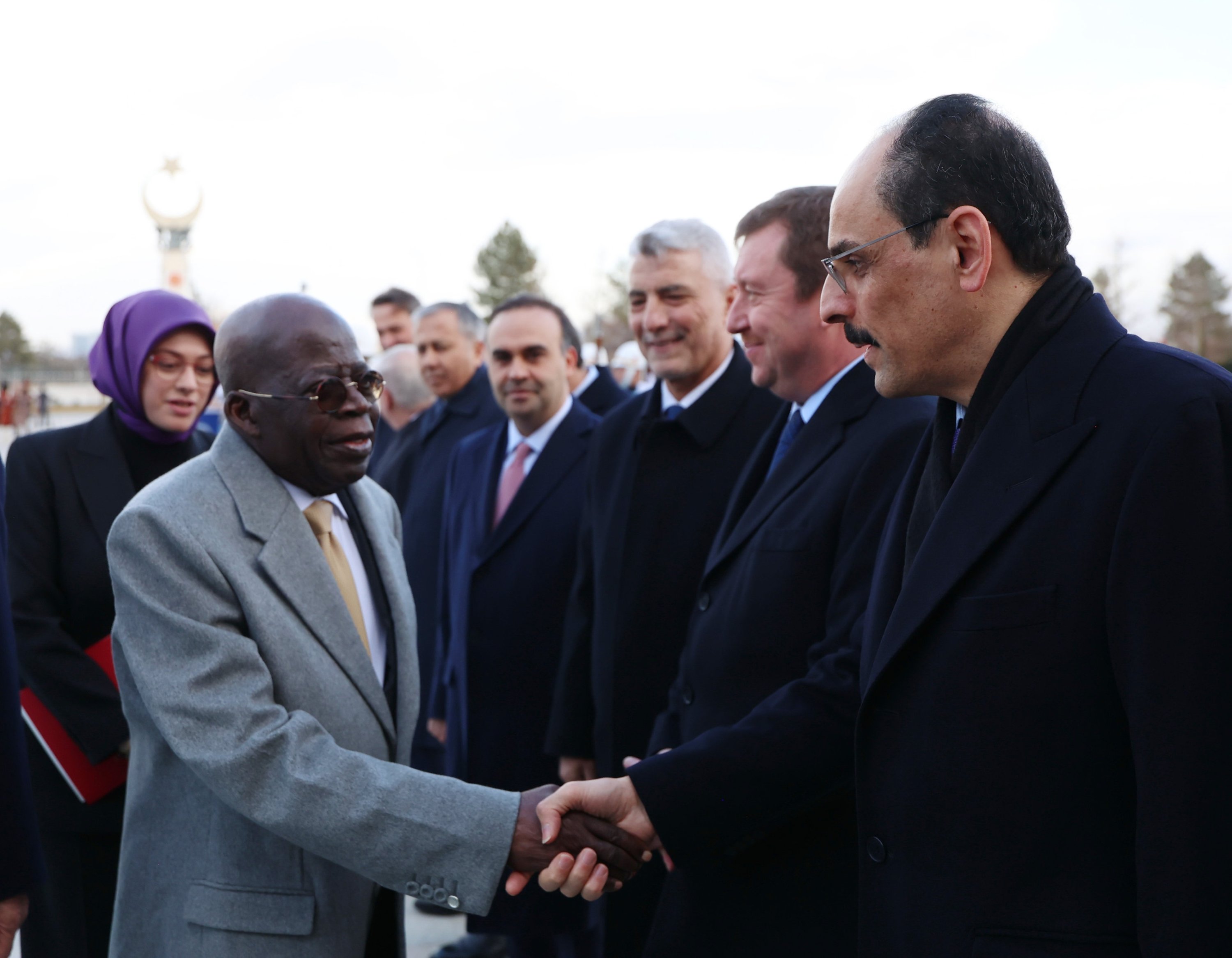
When Türkiye’s intelligence chief Ibrahim Kalın publicly described Africa as a “strategic priority,” he was not just unveiling a new slogan. He was signaling that the continent has moved to the center of Ankara’s evolving intelligence and security doctrine in an era of heightened competition from the Sahel to the Red Sea.
His emphasis on intelligence diplomacy stretching from Libya and Somalia to Sudan and on to Chad, Niger, Togo, Burkina Faso, Tanzania and Kenya points to an expanding intelligence footprint that seeks to shape, not just observe, African security dynamics. Placing Africa at the core of Türkiye’s intelligence and security thinking is not only about counterterrorism. It is also about building strategic depth through trade corridors, maritime security and a more confident, multipolar diplomacy.
What has changed in recent years is that Türkiye’s security presence in Africa is now being translated into an explicit doctrine articulated at the level of the intelligence service. Kalın highlights Libya as a theater where Ankara has played a stabilizing and balancing role, using intelligence channels to manage fragile cease-fires and deter spoilers while avoiding the costly overreach that has plagued some Western and regional interventions. The Libyan conflict has revealed the practical side of Türkiye’s intelligence diplomacy: combining field awareness with the protection of energy and trade corridors and supporting political processes that prevent the country from sliding back into all-out war.
Somalia is the other pillar of this emerging doctrine. There, Kalın points to a model that blends counterterrorism against al-Shabab with investment in state institutions and defense capacity, underscoring that Turkish engagement is meant to enable Somali authorities to defend themselves rather than create open-ended dependency. Intelligence cooperation supports military training, police reform and infrastructure projects, linking security assistance to a broader state-building agenda. In this sense, Somalia is treated not as a laboratory for proxy warfare, but as a partner whose stability is essential to the wider security of the Horn of Africa and the Western Indian Ocean.
Sudan completes this picture and connects it directly to the Red Sea basin. Turkish intelligence activities there are framed as part of broader efforts to contain the spillover of Sudan’s civil war, which has been exacerbated by external arms flows and rival Gulf-backed factions across the Red Sea. In contrast to actors arming local proxies, Ankara presents its role as one that prioritizes dialogue channels, de-escalation and the protection of key civilian and commercial corridors.
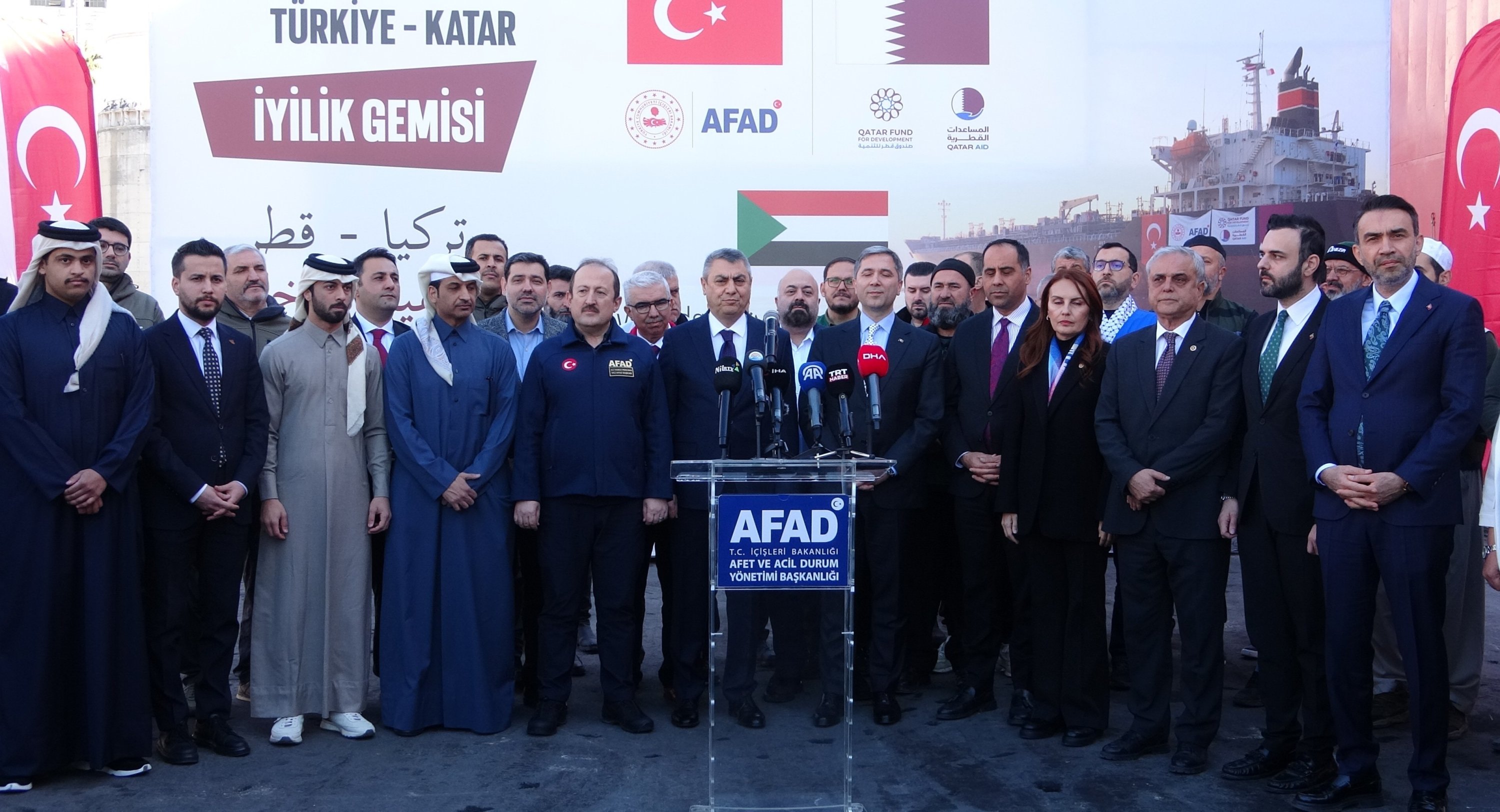
The Red Sea and the Horn of Africa have become the sharpest testing ground for this approach due to global trade disruption. The war in Sudan and the fallout of the Yemen conflict have turned this corridor into one of the world’s most contested maritime spaces. Analyses of the region show how external meddling, from Russia to Gulf states and Iran, has deepened conflicts in Sudan and Somalia by arming factions and pursuing narrow geopolitical agendas at the expense of local populations. In this crowded field, Türkiye’s intelligence presence is growing alongside that of Egypt, the United Arab Emirates and others, but with a different emphasis on working through state institutions and long-term partnerships rather than overt proxy warfare.
Underpinning this doctrinal shift is what Kalın calls a “preventive intelligence paradigm.” The National Intelligence Organization (MIT) is described as integrating human, technical and open-source intelligence, increasingly backed by artificial intelligence, to detect risks early and neutralize threats before they materialize. In 2025, MIT operated across a broad geography, from counterespionage to cyber defense and counterterrorism, in a way that connects domestic security to developments in regions such as Africa. This holistic security approach treats operations in Libya or Somalia not as distant expeditions, but as extensions of a national project aiming at a “terror-free Türkiye” and a safer periphery.
The strategic priority discourse is not only about special operations and intelligence collections. It is anchored in a dense web of trade and connectivity. Trade between Türkiye and Africa exceeded $37 billion in 2024, with Ankara openly targeting the $40 billion mark for 2025. Turkish contractors have completed roughly 2,000 projects worth about $100 billion across Africa, building infrastructure that directly shapes sea and land corridors. This is the economic layer of the same security vision: protecting investments, supply chains and transport routes that bind Istanbul to African markets.
The transformation since the early 2000s is striking. The trade volume between Türkiye and Africa has risen nearly eightfold since 2003, reaching around $40.7 billion by 2022, while the number of Turkish embassies on the continent jumped from 12 to 44. This diplomatic expansion has fed intelligence networks and vice versa. Embassies, military training missions and business forums create channels for information, influence and crisis management. Turkish Airlines’ network tells the same story in the skies. The flag carrier now flies to more than 60 destinations in approximately 40 African countries, turning Istanbul into a natural hub connecting African cities with Europe, Asia and the Middle East.
The three pillars of security, trade and logistics mutually reinforce each other. Intelligence cooperation and security partnerships help protect cargo routes, airlines and construction sites from terrorism and political instability. In return, expanding trade and air connectivity give Ankara leverage and local legitimacy when it engages African governments on sensitive security issues. In this sense, MIT’s new Africa doctrine is not an isolated security project, but it is part of a broader corridor strategy that links ports, airports and overland infrastructure to political influence.
Viewed through a wider geopolitical lens, Türkiye is trying to present a distinct “middle power” model in Africa’s crowded strategic landscape. The escalation of U.S.-China competition, the EU’s search for critical minerals and migration control, and Russia’s opportunistic security exports have produced an environment where African states face multiple, often conflicting offers of partnership. Ankara’s intelligence-driven engagement offers something different: relatively flexible security partnerships tied to trade, infrastructure and capacity-building rather than ideological blocs.
The nearly eightfold rise in trade and the dense diplomatic network give Türkiye leverage, but that leverage is not one-sided. African capitals use it to diversify away from overdependence on any single great power. In many cases, governments in the Sahel, the Horn or along the Red Sea invite Turkish security cooperation precisely because it can be balanced against Western, Russian, Gulf or Chinese footprints. However, African leaders are not passive in this story either. They calibrate agreements with Türkiye, in the fields from defense training to port investments, in ways that advance their own sovereignty and bargaining power in a multipolar environment.
For Türkiye, this creates both opportunity and risk. A doctrine that treats Africa as a strategic priority enhances Ankara’s global profile and opens doors in international forums where African votes matter. It also means that Turkish intelligence is now more exposed to the region’s complex security crises, from coups and insurgencies in the Sahel to maritime insecurity and proxy rivalries in the Red Sea. How Ankara manages these risks and avoids being drawn into the more destabilizing patterns of external meddling will shape whether its middle power model is seen as a stabilizing alternative or just another layer in an already crowded field.
Kalın’s statements indicate that the “invisible face” of Türkiye’s Africa policy will matter more and more: intelligence networks, preventive security tools and quiet diplomatic channels that underpin high-profile trade forums and summits. As trade volumes expand, Turkish Airlines adds routes and contractors build new infrastructure, the security architecture protecting these corridors will increasingly define the depth and durability of Türkiye-Africa ties.
Success in this field will not depend only on drones, special forces or cyber capabilities. It will require sustained trust with local partners, transparency around security agreements and economic projects, and a clear commitment to African ownership of security and development agendas. If Ankara can keep aligning its intelligence footprint with these expectations rather than slipping into opaque, purely transactional deals, its strategic priority doctrine in Africa will be more than a slogan; it will become a durable asset in a genuinely multipolar order.