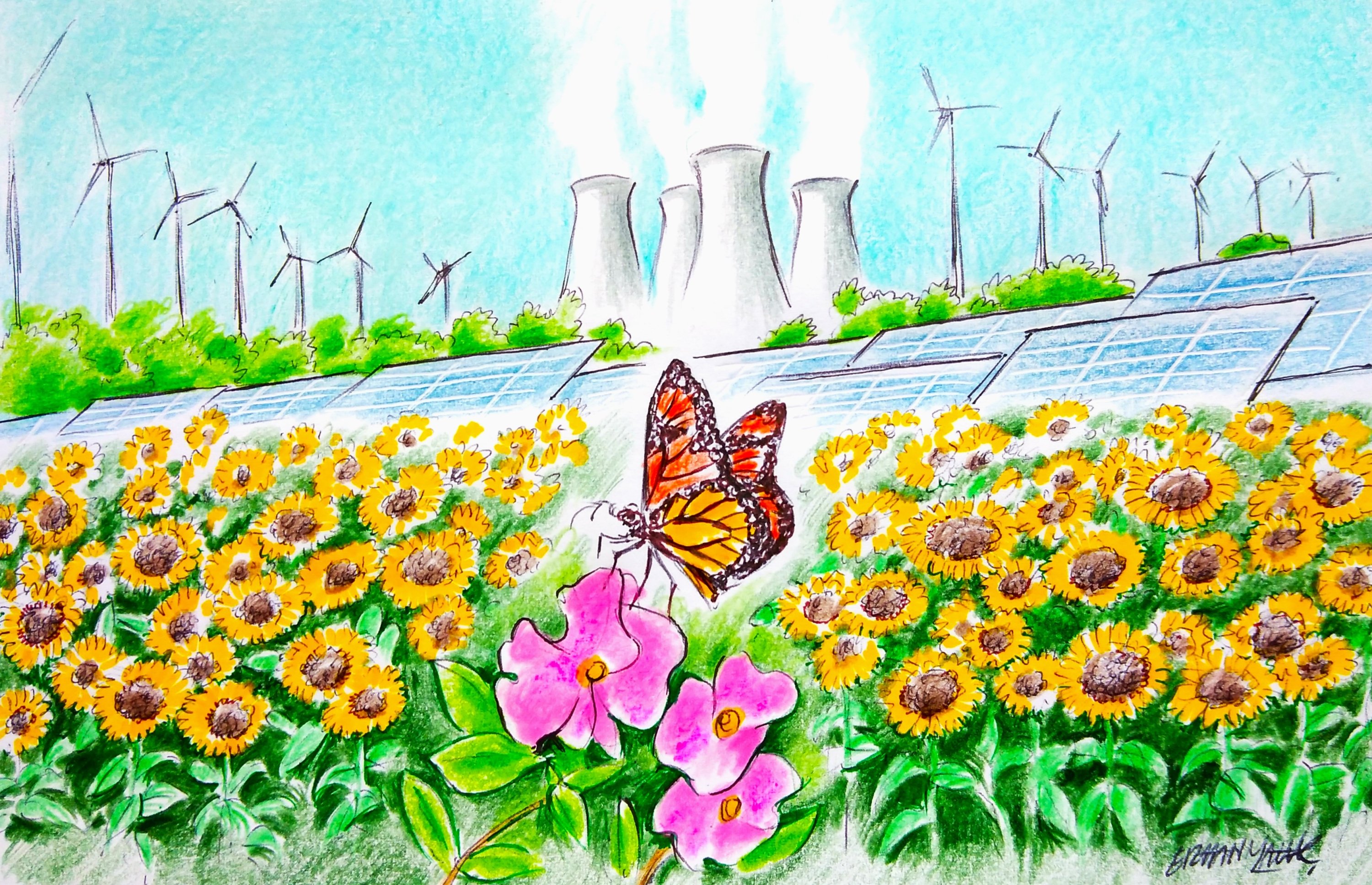
As Türkiye enters 2026, it is trying to manage three sources of pressure simultaneously in the energy sector. Electricity demand is growing rapidly. Supply security is fragile; dependence on imported natural gas, in particular, poses a risk. There is also a need for transformation in line with the 2053 net-zero target. Energy and Natural Resources Minister Alparslan Bayraktar explains this pressure with figures: “Today we consume approximately 350 TWh. We expect 1000 TWh in 30 years.” This statement highlights why all options, including nuclear, are once again on the table. Because the issue is no longer how many power plants. It is whether we can meet growing demand with a lower-carbon emission and a more resilient system.
In this context, nuclear energy is positioned not as a “sole solution” in Türkiye's energy mix, but rather as a tool that can fill several critical gaps in the system. The first gap is the need for “firm capacity” that can guarantee uninterrupted production when demand arises. Wind and solar power are growing rapidly in Türkiye. This growth is positive. However, because production depends on meteorology, the grid's need for balancing, reserve capacity and flexibility is also increasing at the same pace. Therefore, in policy terms, nuclear is seen as an option that can provide “backbone” production with a high capacity factor and contribute to system reliability.
The second gap is diversification against price and supply shocks in natural gas. Nuclear fuel is also imported. This will not change. However, in nuclear power, fuel costs do not fluctuate sharply in the short term like spot gas. Therefore, nuclear power offers a more predictable profile in terms of costs in the long term. This idea is also at the heart of the strategic literature presenting nuclear as a “relatively safe haven”: resilience against short-term market volatility.
The third gap is climate pressure. The share of coal needs to be reduced. As electrification increases, the growing demand must also be met with low-carbon sources. Türkiye's official plans clearly reflect this direction: the National Energy Plan sets a nuclear capacity target of 7.2 GW for 2035. This target reflects the pursuit of establishing firm capacity at a certain scale alongside a renewable-focused transition, rather than a claim of a “nuclear-based system.”
The Akkuyu Nuclear Power Plant (NPP) is where this strategy takes concrete form. Akkuyu is a strategic investment in terms of strengthening supply security, diversifying the electricity generation portfolio, and establishing long-term low-carbon production capacity. However, viewing Akkuyu solely as a production facility would be incomplete.
Being Türkiye's first NPP initiative also makes the project a “learning and transformation platform.” Institutional capacity building begins here. Regulatory competence matures. A nuclear safety culture takes root. Qualified human resources are developed. The experience gained in areas such as licensing, supervision, emergency preparedness, and operational safety has the potential to contribute directly to Türkiye's medium and long-term policy capacity. However, the implementation of Akkuyu under a “build-own-operate” (BOO) model highlights the project's economic and political dimensions.
This model places a significant portion of the investment financing and construction risk on the project company, while also bringing to the fore discussions of external dependency and risk sharing through the ownership structure, operational control, fuel supply chain, long-term procurement arrangements and pricing mechanisms. In other words, while Akkuyu aims to strengthen energy supply security, it also raises the question of who bears the risk. Precisely for this reason, Akkuyu has become an important reference case in academic studies and public policy assessments.
The multidimensional nature of Akkuyu also broadens the criteria for success. Success is not measured solely by the timely and technical completion of the plant. The strengthening of regulatory institutions is important. Transparency and accountability are critical indicators. Increasing local contribution, gaining knowledge and technology and managing long-term financial risks well are equally important. Because nuclear energy not only produces “megawatts,” but also institutional and governance capacity.
At this point, the re-emergence of the Sinop project must be read in conjunction with the Akkuyu experience. In recent months, messages regarding the “second power plant” have become clearer. According to statements reflected in the press, Rosatom stated that Sinop is suitable for a large four-unit power plant and that discussions are being held with Türkiye on this matter. In contrast, Ankara appears distant from the single supplier and single model approach.
The goal is to establish a more competitive framework. Bayraktar's public statements indicate that contacts with different actors are ongoing and that joint model options are being evaluated. This picture tells us that it is not only reactor technology that is decisive in Sinop. The contract structure, risk sharing, financing conditions, and governance model will be at least as critical as the technology.
The long-term responsibilities of nuclear energy are also part of this picture. When properly established, the issue of waste and decommissioning is not an “uncertainty” but a planned process that strengthens institutional capacity. A significant portion of spent fuel worldwide is safely stored temporarily. This storage is managed using pool and dry storage methods. As a permanent solution, deep geological repositories are progressing step by step in some countries through long-term licensing and public consultation processes.
If Türkiye aims to expand its nuclear program, it has the opportunity to establish a strong framework in this area at an early stage. It is important to develop a national waste management strategy. A transparent and sustainable decommissioning and waste fund must be designed. Site selection based on scientific criteria and social acceptance mechanisms must also be designed from the outset. Thus, waste and decommissioning cease to be a source of uncertainty and become a predictable and manageable governance process. Similarly, the issue of “external dependency” can be addressed not as an absolute threat but as a manageable design area.
Nuclear energy offers Türkiye a more diversified resource structure by reducing natural gas-heavy production. Of course, the nuclear program is linked to international supply chains in areas such as technology, operations, fuel cycle, critical equipment, and financing. However, with proper design and governance, these links can be controlled, even becoming an opportunity to strengthen the country's institutional capacity.
Akkuyu provides Türkiye with a significant learning experience in nuclear project development and operation processes. It also produces concrete lessons on how a more balanced framework can be established in new projects. Therefore, in new cases such as Sinop and İğneada, diversification in procurement and financing, fair risk sharing in contracts, increased participation of domestic industry and strengthening regulatory capacity can serve as an “insurance” function that increases strategic resilience.
All this discussion needs to be summed up in one final point: Nuclear energy should be considered not as a single power plant investment, but as a “system investment.” While rapidly increasing its renewable installed capacity, Türkiye must simultaneously strengthen its transmission grid, expand storage, develop flexibility services, and activate demand-side management. Therefore, the critical question is not whether nuclear power should exist, but rather: What strategic function will nuclear power serve in Türkiye's energy transition, and under what governance and contractual architecture will it be implemented?
If the goal is to increase low-carbon capacity, strengthen supply security, and reduce price and supply vulnerabilities linked to fossil fuels, nuclear investments can be designed with a model that makes public costs predictable and balances risk sharing. Transparent cost assessments are therefore crucial. A competitive procurement approach is therefore critical. Strong and independent regulatory capacity, confidence-building environmental impact assessment (EIA) processes, institutionalization of waste and decommissioning obligations at an early stage, diversification of supply and financing, and maximizing nuclear's contribution to the energy transition are key policy components. The situation is also quite clear in the climate field.
Türkiye's Second Nationally Determined Contribution, submitted to the United Nations Framework Convention on Climate Change (UNFCCC) on Nov. 9, 2025, clearly shows that climate transformation will accelerate in the coming period. During this period, the role of nuclear energy will only translate into a meaningful and measurable contribution if it is designed as part of a coherent whole, in line with a gradual phase-out of coal, accelerated growth of renewables, and grid investments. If this coherence is achieved, nuclear energy can support Türkiye's energy security. It can also contribute to climate goals. It complements renewables. It makes the system more resilient.