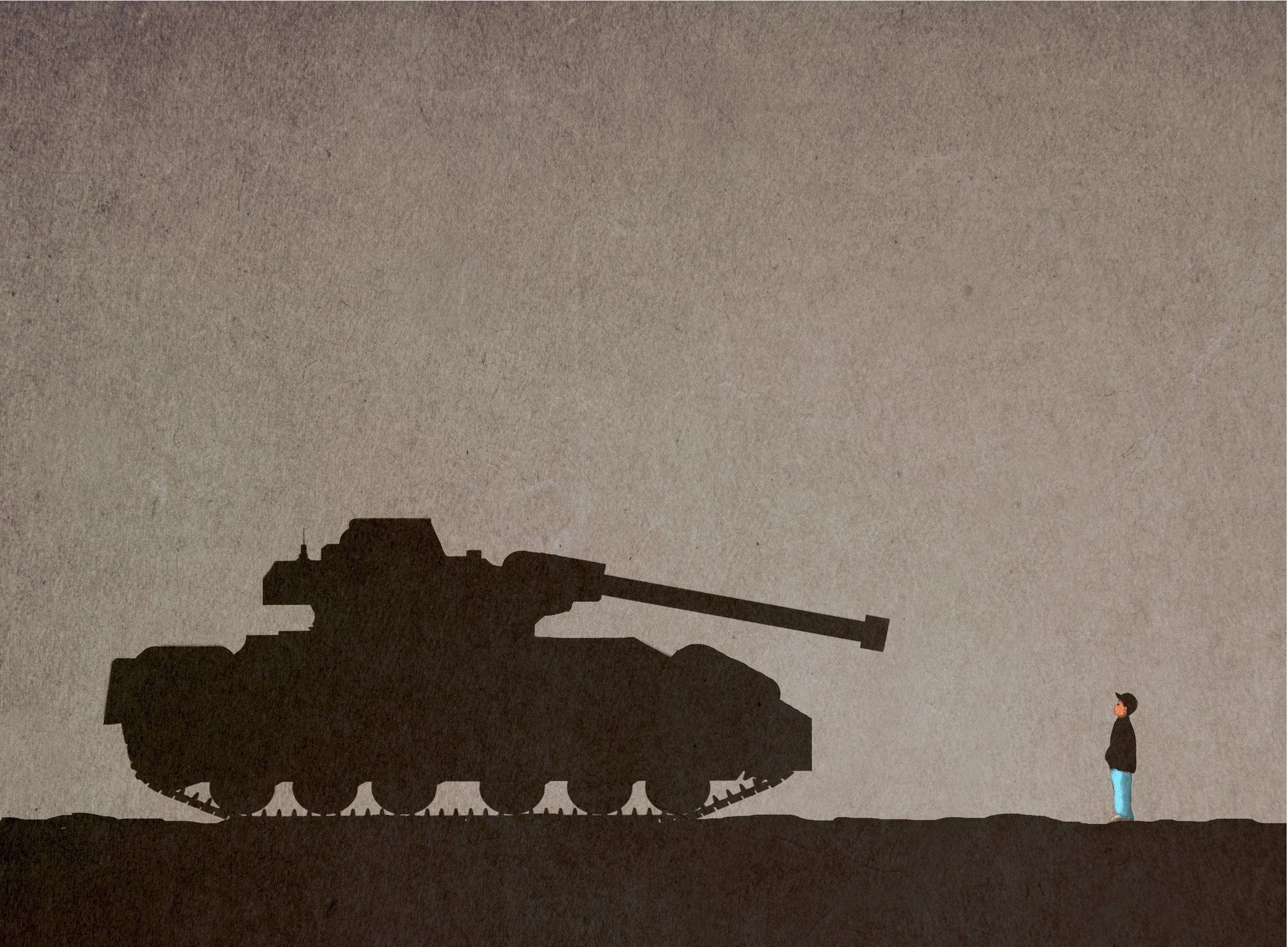
Pope Leo XIV's declaration in late May that the centuries-old doctrine of "just war" is now outdated constitutes one of the most uncompromising moral interventions by a pope in recent memory.
Previous pontiffs have condemned violence and called for peace, but constrained by their dual role as spiritual leaders and heads of state, they generally stopped short of challenging the doctrine itself.
Pope Leo, however, has openly challenged a doctrine that, since Augustine in the fifth century, has provided Christianity with a moral framework for the legitimate use of force and has profoundly influenced Western political thought, military ethics and international law.
The great powers of history, whether ancient empires or modern nation-states, have rarely abandoned war because of ethical objections alone. Instead, they have consistently presented their conflicts as necessary, defensive or morally justified. Indeed, the idea of a just war is almost as old as war itself. Long before it was formalized in Christian theology, nearly every major civilization developed its own framework to regulate violence, recognizing both the necessity and the dangers of organized conflict. Each sought to place ethical limits on violence, protect non-combatants, restrain rulers and subordinate force to a higher conception of justice, duty or social harmony.
Will the philosophical rejection of just war bring an end to war itself? It is uncertain whether human beings have truly overcome the age-old impulse of the powerful to dominate the weak, or the instinct for hegemony so deeply embedded in both individual and collective behavior. History offers little reason for confidence.
In the years leading up to 1914, many of Europe's leading intellectuals, economists and statesmen believed that industrial and military technology had made war so destructive that no rational nation would initiate one. This argument was famously articulated by Norman Angell in his 1910 book The Great Illusion, which maintained that the economic interdependence of modern capitalism had rendered major war obsolete and self-defeating. The cost of total war appeared so catastrophic that many assumed major conflict had become practically impossible.
Yet, World War I unfolded on a scale of mechanized slaughter previously unimaginable in human history. More than 15 million people perished, empires collapsed, and Europe emerged traumatized. One might have expected that catastrophe to serve as a permanent warning. Instead, scarcely two decades later, humanity descended into an even greater abyss.
World War II claimed an estimated 60 to 70 million lives and culminated in the atomic destruction of Hiroshima and Nagasaki. Together, the two world wars cost well over 80 million lives; perhaps the terrifying potential of modern warfare does not necessarily restrain human ambition, fear, hatred, or the pursuit of power.
If these horrors were insufficient to convince humanity of the futility of war, it is difficult to imagine what would. Since 1945, the world has rarely experienced a single year free from organized violence.
Power continues to seek moral legitimacy.
Since the attacks of Oct. 7, Israel has presented its military campaign as an existential struggle between civilization and barbarism, repeatedly invoking the right of self-defense and moral duty to eradicate terrorism. The United States has largely echoed this narrative, portraying its support for Israel and its own military actions as necessary measures to preserve security, stability and the rules-based international order.
The same governments that speak most forcefully about human rights, international law and the protection of civilians have presided over a war that has inflicted unprecedented devastation on Gaza, killing tens of thousands of people, destroying much of the enclave's civilian infrastructure, and displacing the overwhelming majority of its population. In Lebanon, repeated strikes have likewise resulted in civilian deaths and widespread destruction.
Political rhetoric reduces entire populations to potential threats, collectivizing a threat perception to rationalize unprecedented levels of societal suffering.
In the confrontation with Iran, Israel and the United States have justified military action as necessary to prevent a future threat posed by Tehran's nuclear and missile program. These arguments are advanced by states that already enjoy overwhelming military superiority.
The U.S. possesses the world's most powerful military and one of the largest nuclear arsenals in history, while Israel is widely believed to possess a substantial, though undeclared, nuclear capability alongside unmatched conventional military dominance in the region.
Civilian deaths are condemned when committed by adversaries and explained away when caused by allies. International law is invoked against opponents and reinterpreted when it constrains friends. Human rights are elevated as universal values in one context and treated as strategic inconveniences in another.
The persistence of such contradictions suggests that war is sustained by forces deeper than military necessity alone. If the unprecedented lethality of modern warfare were sufficient to deter conflict, war should already be an obsolete relic.
Presently, humanity possesses destructive capabilities that dwarf anything imagined by previous generations. According to the Stockholm International Peace Research Institute, global military expenditure has risen to approximately $2.9 trillion annually, the highest level ever recorded. At the same time, the world's nuclear powers collectively maintain more than 12,000 nuclear warheads, many capable of destroying entire cities within minutes.
This staggering investment comes at precisely the moment when climate change, environmental degradation, resource depletion and demographic decline pose challenges of genuinely existential proportions. These are threats that demand cooperation, restraint and a shared recognition of humanity's common fate.
The issue is not whether war can be morally justified, for history demonstrates that human beings have always found ways to justify it. Pope Leo's rejection of just war questions whether morality has ever truly succeeded in restraining power. Until that question is answered, the doctrine of just war may fade from philosophical debate, but war itself is unlikely to disappear from human affairs.