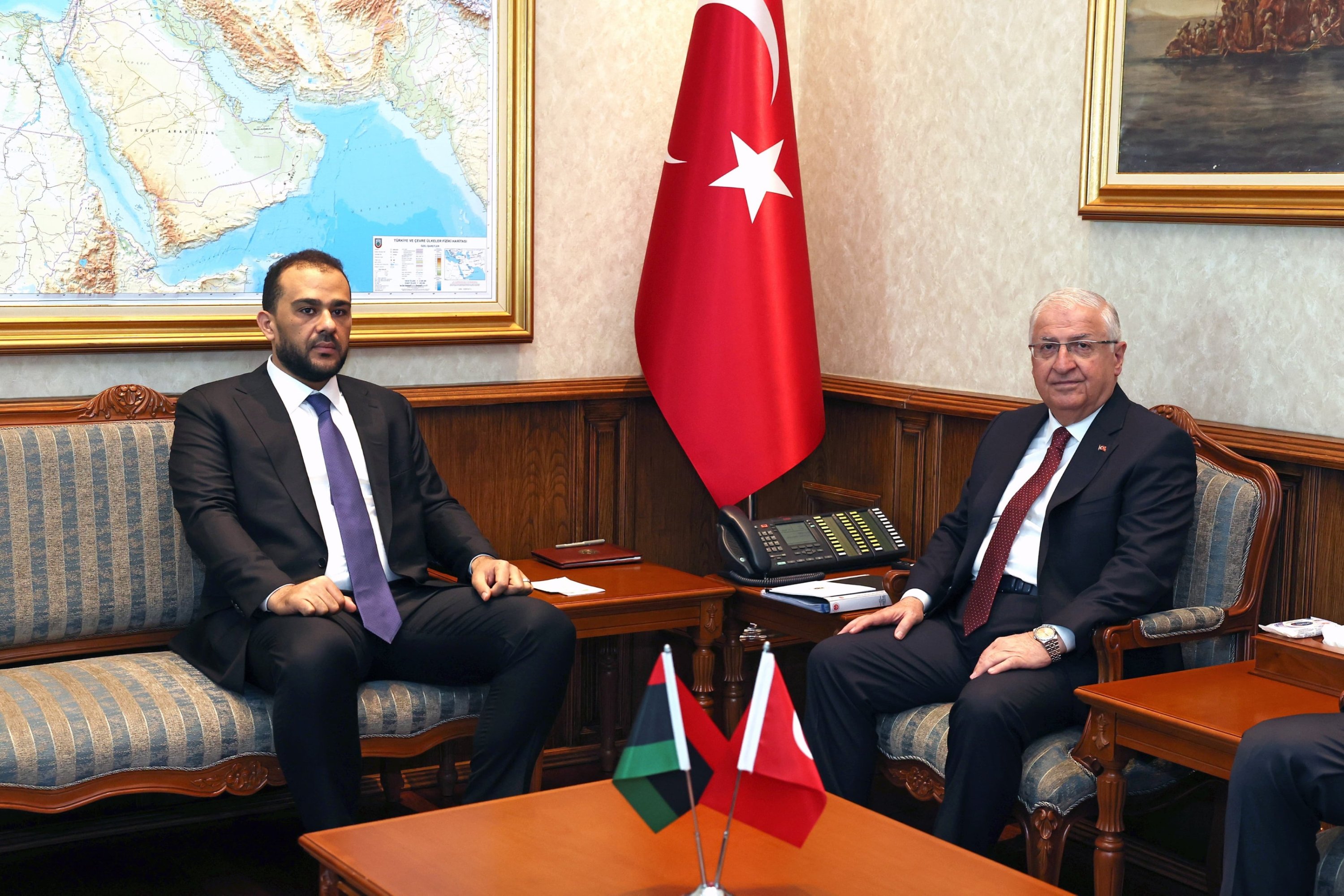
For an extended period, Libya's circumstances have been perplexing. Libya has recently emerged as a source of both local and regional tension, despite being nearly overlooked in the midst of the region's major crises, including the Gaza genocide, the Syrian mobilization, and the conflict between Iran and Israel.
While the issue of legitimate authority in the country exists, the clashes in Tripoli last May, the ongoing high tension in the capital, and the clashes between the military forces loyal to the Tripoli government and other groups garnered public attention for a period, Libya was not as prominently discussed as it had been in the past.
Greece continues to express apprehension regarding the maritime jurisdiction area delimitation agreement between Türkiye and Libya in 2019. Athens’ anxiety is further exacerbated by a recent assertion. Greece was concerned about Türkiye’s return to a broader perspective policy in Libya, its adaptation of its policy to the field conditions in the face of rapidly changing dynamics, and the rumors that the eastern side of Libya will also ratify the agreement made in 2019 as a result.
Greece, which has maximalist claims in the Eastern Mediterranean, is quite apprehensive as a result of Türkiye’s expansion of its political perspective, particularly in the east of Libya, and its emergence as an effective actor not only in the west but also in the east of Libya.
Ultimately, earlier this month, the Greek Foreign Minister visited Libya and engaged in a meeting with Khalifa Haftar. On the other hand, there is speculation that Egypt is exerting pressure on Haftar's faction in Libya via the United States to prevent the Türkiye-Libya agreement from being approved.
Türkiye is not trailing behind in the actors who will serve as diplomatic interlocutors for Haftar, despite the fact that it appears to have set aside its issues with him.
Despite the fact that they lack legitimacy, numerous actors, including the permanent members of the United Nations Security Council, have maintained dialogue with Haftar, in contrast to the legitimate government backed by the U.N., up until the present. In order to avoid risking its gains and to prevent the country from being dragged into greater chaos, Türkiye has taken these steps towards the eastern side of Libya, which is directly related to the Eastern Mediterranean issue, and in an environment where this status quo has been established by the main elements of the U.N. itself.
It is evident that the protagonists in the eastern region of Libya must collaborate with Türkiye in accordance with the conjunctural realities of the region as a result of this process. The approval of the maritime jurisdiction delimitation agreement between Türkiye and Libya by the parliament in eastern Libya will enable an equitable distribution of maritime jurisdiction in the Eastern Mediterranean, as opposed to Greece's unilateral maximalist assertions.
In 2019, it is crucial to emphasize that the U.N. endorsed the agreement between Türkiye and Libya in 2020. The rhetoric that Greece has developed in response to the 2020 agreement with Egypt, which followed the Türkiye-Libya Agreement, and the principle of equitable sharing in both the Aegean and the Eastern Mediterranean, which it is attempting to disrupt with anti-Türkiye motivation, is in conflict with the interests of not only Türkiye and Libya but also Egypt and other countries in the region. The media has reported that Greece, which is cognisant of this, will not only visit Haftar, with whom it has maintained a close relationship until today by adopting a copycat strategy and exploiting anti-Türkiye sentiment, but will also engage in discussions with the U.N.-backed government in Tripoli on July 15.
It is a significant actuality that Türkiye has intensified its cooperation with the U.S. in accordance with the U.S.' wishes following the election of President Donald Trump for a second term in the U.S. The security concerns of European countries in the aftermath of the Russian-Ukrainian conflict have also made Türkiye a very important potential ally for them. In addition Türkiye’s proactive foreign policy, military, political, and sociological responses in the region, as well as the developments in Syria, are presently of greater significance to all regional and global actors than Greece's maximalist assertions.
In this context, Türkiye’s capacity to stabilize Libya is significant in light of both historical and contemporary realities, as Russia, which has been one of the significant powers active in Libya until today, has lost power due to the Ukrainian front, and its regional policies have reached a deadlock with the overthrow of the Assad regime it supported in Syria.
Currently, Libya's most significant issue is the lack of a legitimate political protagonist. Türkiye has a significant and historic role to play in the preparation of a civilian constitution and a fair and legitimate election process by serving as a mediator between the two parties. In Libya, a government that is recognized by all and has no legitimacy issues can emerge if Türkiye complements the comprehensive relationship it has established with both the western and eastern sides of the country in the recent process with an inclusive constitution and if Ankara prevents third parties from sabotaging the process.
A process that will persuade all of the over 140 tribes, hundreds of armed groups, and groups with unique agendas can only be accomplished under the supervision of Türkiye. The unification of the armed forces will be the most critical and initial step in this direction. In a transition process of this nature, all parties are cognizant of the significant role that an actor such as Türkiye can play in establishing an egalitarian relationship with all parties in Libya, in contrast to crisis-opportunist countries like Greece.
It may be feasible for Türkiye to establish a process that is supported by the U.S. and the U.N., potentially in collaboration with Egypt and other countries in the region. Actors such as Greece, which prioritizes its own maximalist interests over Libya's political stability and has the potential to escalate the already high tensions in the Eastern Mediterranean, should be excluded from the Libyan process. In an environment where Israel’s genocidal policies are destabilizing the region on a daily basis, it will be crucial to ensure stability not only in Libya and the Eastern Mediterranean but also in the region if the countries of the region take responsibility for the process in Libya in coordination with Türkiye.