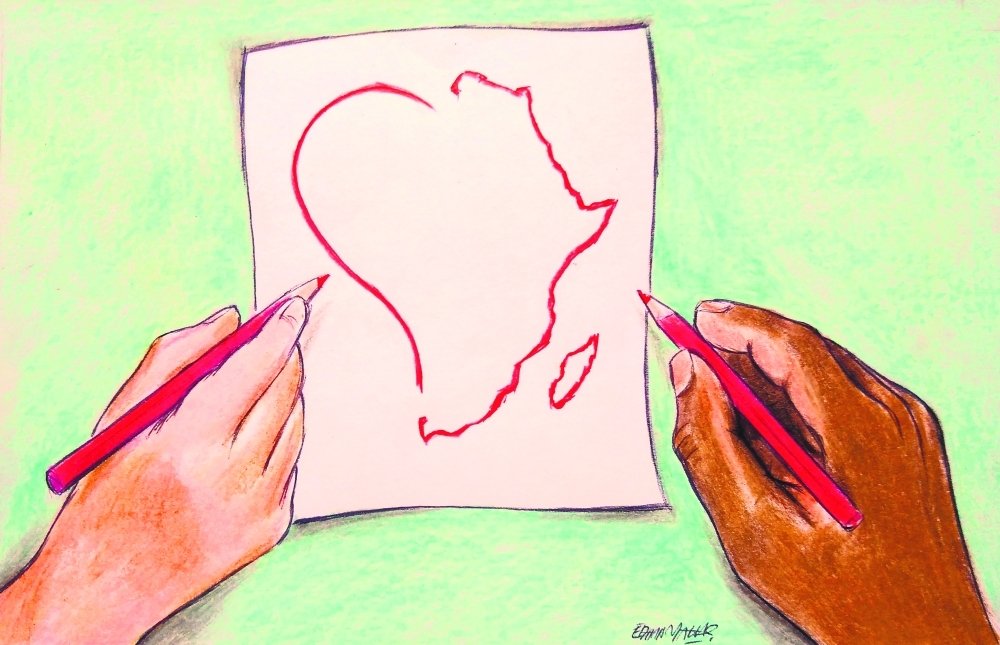
This semester, I have started teaching the Kiswahili language at Ibn Haldun University in Istanbul. It is a milestone, as it marks the first time a sub-Saharan African language has entered the academic curriculum in Türkiye and thus opens a new linguistic pathway for intercultural dialogue and understanding.
Language is more than a system of communication; it is a vessel and carrier of civilizations and a bridge between histories. Teaching Kiswahili in Istanbul – a city historically known as the meeting point of continents and cultures – offers an opportunity to connect Africa and Türkiye through linguistic, cultural and intellectual exchange. In the classroom, Kiswahili becomes not only a subject of study but also a medium for imagining new solidarities across the Indian Ocean and the Mediterranean worlds. It invites students and educators alike to rediscover the deep historical links between Eastern Africa and Anatolia.
Kiswahili, spoken by over 250 million people across East and Central Africa, carries in its words the echoes of global encounters. It is a language that grew from the long histories of trade, migration and conquest along the Swahili coast, from Mogadishu to Mombasa, from Zanzibar to Sofala, where African, Arab, Persian, Turkish and Indian influences mingled. Arabic vocabulary, Bantu grammar and Indian Ocean cultural idioms coexist in Kiswahili, making it one of the most cosmopolitan African languages. This hybridity positions Kiswahili as a language of dialogue between Africa and the wider world. Teaching Kiswahili in Istanbul, therefore, is not an accidental exercise, but a continuation of this cosmopolitan spirit.
Istanbul itself, once the capital of empires and a crossroads of civilizations, resonates deeply with this idea. The Ottoman Empire historically maintained extensive relations with the Swahili coast through trade, diplomacy and shared religious networks. Turkish merchants, scholars and travellers encountered East African societies through Islam, commerce and pilgrimage routes linking the Red Sea and the Indian Ocean. These exchanges, though often forgotten in modern historical narratives, form part of the connective tissue between the Horn of Africa and Anatolia. By introducing Kiswahili to Turkish students, these historical affinities are revived, making the classroom a living site of historical reconnection.
From a pedagogical perspective, teaching Kiswahili in Türkiye is also a form of cultural diplomacy. Kiswahili disrupts the Eurocentric language hierarchies that often dominate global education, where African languages are marginalized or exoticized. Instead, it affirms that African languages are legitimate mediums of thought, literature and philosophy. Turkish students who study Kiswahili are not only learning a language but also engaging with African ways of seeing the world – its proverbs, poetics and philosophies of community. Kiswahili expressions such as “utu” (humanity), “umoja” (unity), and “kujitegemea” (self-reliance) embody ethical values that resonate with universal human aspirations. These concepts mirror Turkish and Islamic notions of insanlık (humanity) and birlik (togetherness), revealing a shared moral grammar across civilizations.
In a world increasingly fragmented by nationalist and racial boundaries, language can become a quiet act of resistance. Language opens spaces where mutual recognition and empathy can grow. Teaching Kiswahili in Istanbul encourages Turkish students to encounter Africa not through the lens of pity or exotic curiosity, but through shared cultural kinship. They learn that Africa, like Türkiye, has ancient civilizations, complex histories and vibrant modernities. This pedagogical encounter challenges stereotypes and builds intellectual solidarity between people who have often been marginalized within Western modernity. In this sense, Kiswahili becomes a humanistic bridge that reimagines the relations between the global Souths, between Africa and Asia, beyond the frameworks imposed by colonial languages and borders.
Moreover, Kiswahili carries within it the promise of a decolonial education. Teaching Kiswahili in Istanbul enables both African and Turkish students to consider the global order from outside the dominant Western epistemologies. The shared experience of postcolonial modernity, its struggles with identity, dependency and global inequality, creates fertile ground for comparative reflection. When Turkish students read Swahili literature such as Shaaban Robert’s humanist essays or Euphrase Kezilahabi’s existential poetry, they encounter philosophical questions about freedom, modernity and spirituality that are not foreign to Turkish intellectual traditions. Kiswahili teaching thus becomes a dialogue between two post-imperial worlds seeking to redefine their place in global thought.
The classroom experience itself often embodies this exchange. Turkish students approach Kiswahili with curiosity, sometimes amused by its melodic rhythm, but soon find themselves enchanted by its logical structure and expressive power. They learn greetings like “Hujambo?” and “Habari gani?” – phrases that open not just conversations – but new ways of relating. Through songs, proverbs and storytelling, they discover an African world that is both distant and familiar. The learning process becomes an intercultural encounter grounded in respect and wonder.
Ultimately, teaching Kiswahili in Istanbul is more than an academic exercise; it is a moral and civilizational project. This embodies the belief that languages can heal divides and restore the dignity of human diversity. As Africa and Türkiye deepen their political and economic relations in the 21st century, cultural and linguistic exchange must accompany this partnership. Kiswahili can play a central role in that process – serving as a cultural bridge that fosters mutual understanding and solidarity between peoples.
In the words of a Swahili proverb, “Lugha ni nguzo ya jamii,” language is the pillar of community. Teaching Kiswahili in Istanbul, then, is an act of building communities between Africa and Türkiye, grounded not in power or profit, but in the recognition of shared humanity. It is a gesture toward a future in which civilizations meet not as rivals, but as companions in the pursuit of knowledge, justice and human flourishing.
Our motto is: bir lisan, bir insan; iki lisan, iki insan – one language, one person; two languages, two people.