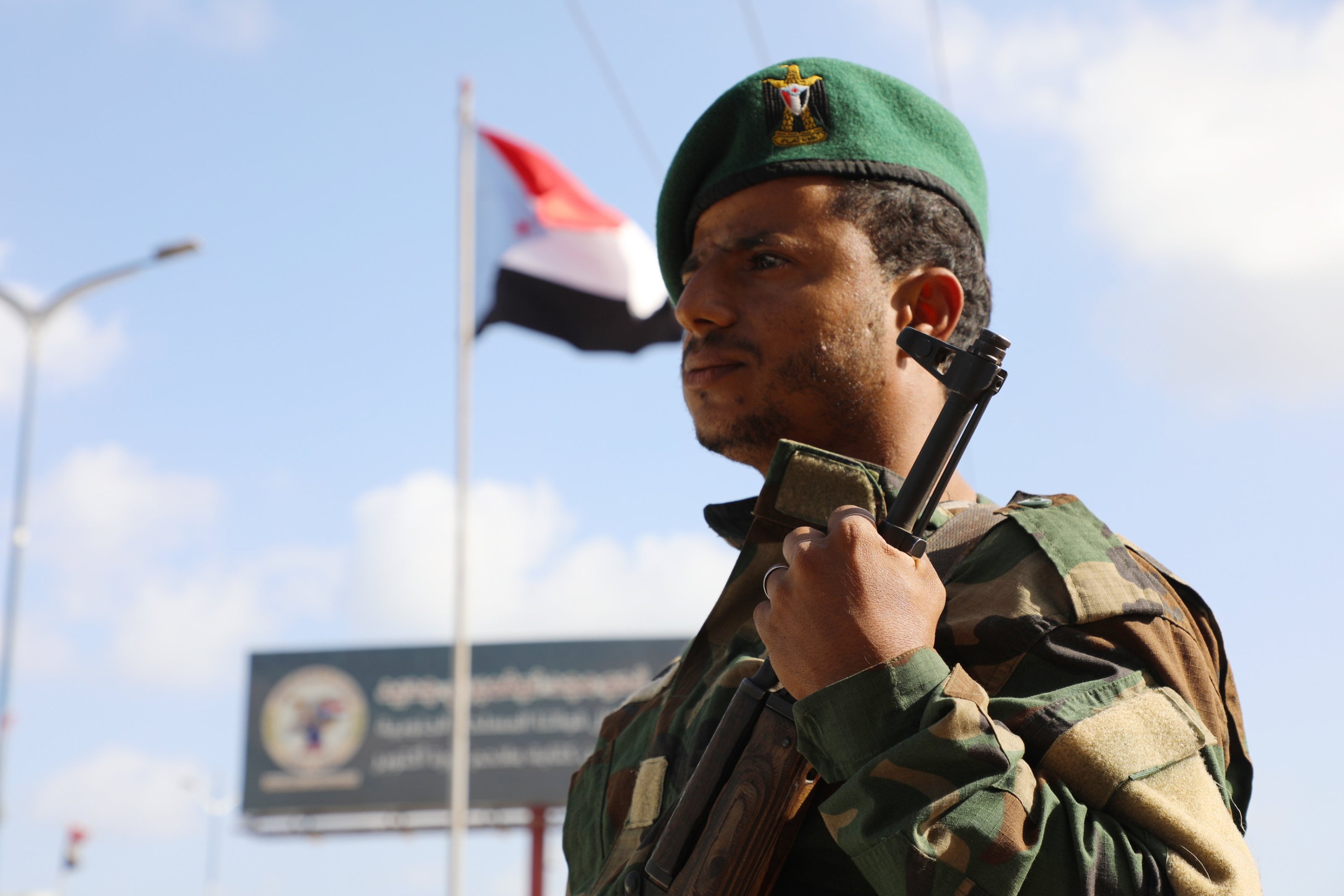
After Saudi Arabia’s bombing of Yemen’s Mukalla port, allegedly used to transfer armed vehicles to the UAE-backed Southern Transitional Council (STC), long-standing fractures within the Saudi Arabia-United Arab Emirates alliance resurface. This alliance, which has historically constituted one of the region’s most enduring strategic blocs, has mostly played an essential role in influencing Middle Eastern affairs. Apart from the Iran-Syria alliance, which finally disappeared following the Syrian Revolution in 2024, the Saudi-UAE alliance remained another long-term alliance in the Middle East. Mostly aimed at curbing Iranian influence, reversing the momentum of the Arab uprisings, and retaining a strong anti-Ikhwan position, this status-quo bloc extended its influence across the Middle East, the Horn of Africa and beyond through a combination of state and non-state alignments.
Yet, like other regional alliances, the Saudi-UAE bloc has its own inherent Achilles’ heel that sometimes complicates its unity and resilience. Yemen long represented the most sensitive fault line in this partnership, and the recent Yemen encounter differs from previous vicious cycles and managed disagreements, as this time, there is potential to risk the maintenance of the established Riyadh-Abu Dhabi alliance.
While former disagreements over Yemen’s political and military management were contained to secure broader cooperation, the recent regional situation seemed to change Saudi Arabia’s reading of the relevant calculations associated with emergent divergences. The UAE’s expanding ties with Israel, its increasingly divergent position in Sudan and the Horn of Africa in general, and its deepening support for another separatist actor, which recently tried to capture the territories bordering Saudi Arabia, that is STC in Yemen, together reshaped the strategic context where Yemen is assessed by Saudi Arabia.
Previously, the disputes over Yemen were not generally considered as challenging Saudi Arabia’s hegemonic position in Yemen or the Gulf at large. However, when coupled with arising disagreements in various regional theaters, Saudi decision-makers appeared to interpret the UAE’s positioning as gradually incompatible with their alliance patterns. This recalibration might explain Saudi Arabia’s unique direct action against alleged UAE-backed military assistance to the STC. While this episode hardly evokes the collapse of the Saudi-UAE partnership, as some analysts already suggested, it still does reflect a transformation in its nature and now more fragile internal dynamics.
In addition to its confirmation of the emergent regional divergence for some time between Saudi Arabia and the UAE, the long-standing Yemen-based chasm can hardly be overlooked in jeopardizing this alliance as well. In other words, this bloc has an inherent structural weakness that mostly endangers its survival in that Saudi Arabia is highly sensitive to its "near abroad" or "periphery" policy, within which Yemen enjoys a strategic focal point.
To clarify, at the core of the Yemen dispute lies a traditional divergence over how the two states perceive local actors and their political objectives. Initially, following their 2015 intervention to repel the Iranian-backed Houthis, Saudi Arabia and the UAE gradually adopted divergent strategies. The UAE aligned itself closely with the separatist STC, whereas Saudi Arabia backed Yemen’s central government and the protection of Yemeni territorial unity. From the STC’s perspective, both the Houthis and the central government, closely associated with the Ikhwan-linked Islah Party, generate similar threats to southern long-term interests toward a more autonomous and even independent existence. This convergence between Emirati and STC priorities reinforced Abu Dhabi’s support for southern autonomy, in contrast to Riyadh’s preference for negotiated unity. Therefore, alongside several controlled frictions between Riyadh and Abu Dhabi, their local allies in Yemen are periodically involved in military-political conflicts, sometimes complicating alliance relations.
Growing initial fractures urged the Riyadh regime to seek alternative ways. In that sense, Saudi Arabia’s recent normalization process with Iran and its efforts to engage the Houthis, resulting in the creation of the Presidential Leadership Council, reflect a broader attempt to stabilize Yemen through the inclusion of all conflicting sides rather than fragmentation. However, continued STC advances into strategically significant areas such as Hadramout and al-Mahra, bordering Saudi Arabia and implying severe weakening of the Saudi-backed central government, were perceived in Riyadh as crossing the critical red lines. Viewing Yemen as part of its near periphery and Hadramout and al-Mahra as significant to its energy interests and border security, Saudi Arabia interpreted the UAE’s persistent backing of STC separatism as an apparent challenge to its regional calculations. Saudi Arabia’s warning to Abu Dhabi and the subsequent Emirati de-escalation efforts indicate that neither side pursues an outright rupture for now.
The subsequent swift advance of Saudi-backed forces into territories long dominated by the STC, particularly strategic places like Aden and Mukalla ports, has now shifted the Yemeni map largely to Houthi- and government-held areas. In this way, after a prolonged period in the Yemeni civil war, Riyadh appeared to consolidate control over most Yemeni territories except those held by the Houthis, ultimately extending its reach to Yemen’s maritime regions and thereby securing its Red Sea policies as well.
This new dynamic apparently indicates that the UAE opted to thaw and restore relations with Riyadh at the expense of the STC’s territorial claims in Yemen, even at the risk of undermining its long-term cooperation with southern actors. Nevertheless, the episode still underlines deep-seated discontent over regional order, separatism and alliance discipline; moreover, as evidenced by previous events, the local and regional power balances in Yemen, along with patterns of territorial control in the area, remain highly liable and fragile to change, which strains any definitive analysis on the future of developments. To conclude, Yemen thus emerges as a principal display through which the evolving nature of Saudi-UAE relations can be most clearly observed, one with potential implications extending from the Red Sea to the Horn of Africa, Sudan and the Gulf region.