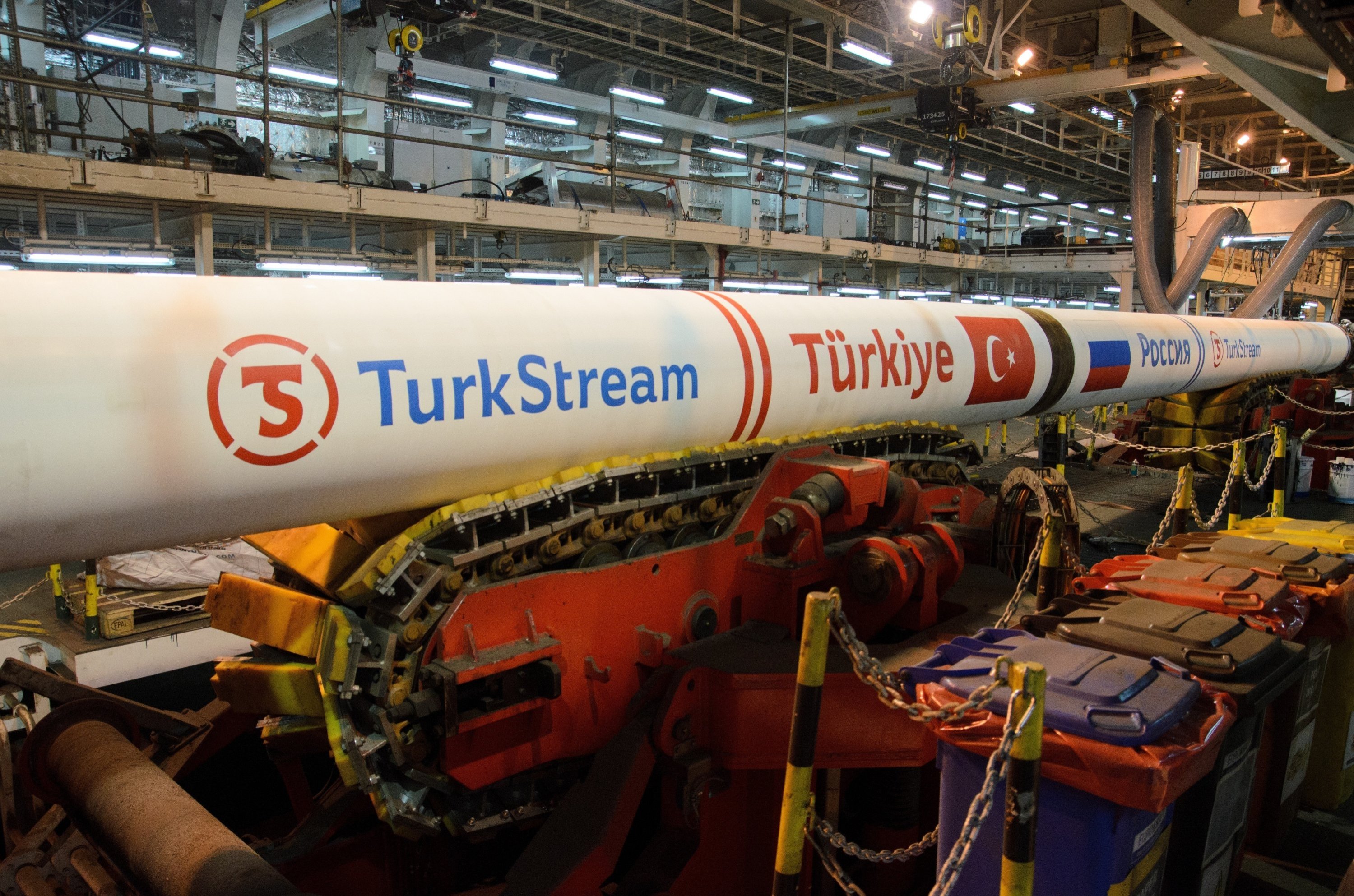
TurkStream is not a new pipeline. But right now, it is one of the most consequential energy infrastructure projects in Europe. Built by Gazprom in partnership with BOTAŞ and launched in January 2020, it was designed to bypass Ukraine, carrying Russian gas under the Black Sea to Türkiye and onward into Southeast and Central Europe. Its route is straightforward but strategic. From Russia to Türkiye, then through Bulgaria and Serbia into Hungary, it delivers gas directly into a region where alternatives have steadily narrowed.
At a time when traditional routes have been disrupted, the war in Ukraine cutting key transit corridors and instability in the Middle East raising new risks for global supply chains, TurkStream has quietly become one of the last functioning arteries keeping gas flowing into parts of Europe.
On April 5, Serbian President Aleksandar Vucic said explosives had been discovered near infrastructure linked to the pipeline, just a few hundred meters from its route near the Hungarian border, close to Kanjiza. The devices were described as having “devastating power.”
The investigation is ongoing but Serbian authorities have not attributed responsibility to any state actor. What investigators have indicated is limited: a possible suspect with military training has been mentioned, along with claims that the explosives were U.S.-made, though no evidence has been publicly presented.
What is clear is not who placed the explosives, but what they represent. Critical energy infrastructure is no longer insulated from geopolitical pressure.
This is not without precedent. Europe has already witnessed what disruption looks like. The sabotage of the Nord Stream pipelines in 2022 fundamentally altered the continent’s energy map. Investigations by Sweden, Denmark and Germany concluded the explosions were deliberate but responsibility has not been definitively established. Various theories have emerged, including suspicions of a pro-Ukrainian group, potential Russian involvement and the possibility of a state-level covert operation, yet none have been conclusively proven. Since then, pipelines, LNG terminals and undersea cables have increasingly been viewed through a security lens rather than purely economic infrastructure.
The logic is simple. Disrupt a pipeline, and you do not just cut supply. You reshape markets, raise prices and shift political leverage.
With tensions involving Iran raising concerns about the Strait of Hormuz, through which roughly a fifth of global energy flows, markets are already on edge. Oil prices have surged, and gas markets are reacting in parallel. Supply uncertainty is back, and with it, volatility.In that environment, infrastructure like TurkStream is no longer just about energy delivery. It becomes strategic insurance.
Since the start of the war in Ukraine, its importance has grown quietly but steadily. As transit through Ukraine declined and other routes became politically or physically constrained, TurkStream remained operational. For countries like Hungary and Serbia, it has been a reliable, and in some cases essential, supply line.
That reliability now carries weight beyond volumes. It shapes negotiating power, pricing stability and political room for manoeuvre.
For Europe, this creates an uncomfortable reality. The long-term objective has been to reduce dependence on Russian energy. But the short-term constraints are just as clear. Alternatives, whether LNG, renewables or new pipeline routes, require time, investment and infrastructure that cannot be built overnight.
Which leaves a gap. And TurkStream helps fill it.
For Türkiye, this moment reinforces a strategy years in the making. Positioned between producers and consumers, it has steadily built its role as an energy hub. TurkStream is central to that position, but it is not the only element. Pipelines from Azerbaijan, LNG capacity and regional interconnections all feed into a broader ambition.
At the same time, Ankara has maintained working relations across geopolitical lines. Ukrainian President Volodymyr Zelenskyy is often in Türkiye, underscoring deepening ties in defense, trade and diplomacy.
That dual engagement is not accidental. It reflects a deliberate attempt to remain indispensable. Türkiye’s approach to emerging risks around energy infrastructure has been cautious but strategic. It has treated pipelines not only as economic assets, but as geopolitical ones, requiring both protection and careful political balancing. Avoiding escalation while ensuring continuity of supply has become central to its position. If tensions in the Middle East deepen and supply pressures continue, the importance of pipelines like TurkStream will only grow. Not because Europe wants it to, but because, at least for now, it may have little choice.
What we are seeing is not a temporary adjustment. It is a structural shift. TurkStream is no longer just a pipeline under the Black Sea. It is becoming one of the defining lines of Europe’s energy reality.