One of the hallmarks of the 21st-century international system is the pursuit of influence beyond national borders. In his famous article Neoclassical Realism and Theories of Foreign Policy, Gideon Rose of the Council on Foreign Relations (CFR) argues that actors, regardless of how they define their interests, seek greater influence abroad and pursue it to the extent possible. Today, the political landscape shaped by this pursuit is characterized by a struggle for influence. The competition for dominance in various regions of the world, particularly among great powers, remains ongoing. Central Asia is one such region, thanks to its geopolitical significance and abundant fossil fuel reserves. The influence of Russia and China, two major powers vying for dominance in the region, continues to grow.
Russia’s Central Asia strategy is shaped by its economic, political and military interests. The overarching goal in all three areas is to consolidate Moscow’s presence in the region and ensure its long-term influence. While Western-based academic literature often suggests that Russia is losing influence in Central Asia, the reality is more nuanced. Although Moscow’s dominance is facing challenges, it has not entirely diminished.
According to statistics from the World Integrated Trade Solution (WITS) of the World Bank, as of 2022, Central Asia accounted for approximately 6% of Russia’s total exports, which amounted to $492 billion, with the region receiving $28 billion in exports. This data, covering only five countries (Kazakhstan, Kyrgyzstan, Uzbekistan, Tajikistan and Turkmenistan), indicates that Russia maintains significant economic ties with Central Asia. A notable detail in the World Bank statistics is that Kazakhstan and Uzbekistan alone accounted for nearly $24 billion of the $28 billion exports to the region. This means these two countries alone represent 86% of Russia’s trade with Central Asia, highlighting a decline in bilateral trade relations with the other three nations.
Russia is no longer the sole hegemon in Central Asia, as it was during the Soviet era. Countries in the region now pursue more independent foreign policies and participate in political alliances that Moscow would not have previously tolerated. A key example is the active involvement of Central Asian states in the Organization of Turkic States (OTS), a rising geopolitical entity that reflects their increasing autonomy.
To counteract its declining influence, Russia has introduced new consultative mechanisms, such as “meetings of secretaries of security councils,” alongside military cooperation agreements to reinforce its strategic ties. However, the greatest challenge to Russia’s influence in Central Asia comes from China, its so-called ally in the broader competition with the West over global governance. Beijing’s expanding economic presence and growing diplomatic engagements in the region increasingly position it as a formidable rival to Moscow’s historical dominance.
In his 2013 report, The Fight for Influence: Russia in Central Asia, Russian political scientist Alexey Malashenko posed the question, “Who Challenges Russia in Central Asia?” and identified three key actors: China, the U.S., and Islam. While this article focuses on Russia’s and China’s strategies in Central Asia, it is important to clarify that Malashenko’s reference to Islam primarily pertains to Türkiye, which stands as one of the most significant military, economic and political actors in the Muslim world.
To fully grasp how China’s growing presence in Central Asia also threatens its supposed ally, Russia, it is helpful to examine foreign trade statistics. According to World Integrated Trade Solution (WITS) statistics, China’s total exports in 2022 amounted to $3.316 trillion, nearly seven times the total exports of Russia in the same year. Moreover, as of 2021, China had surpassed Russia in trade with Central Asia, reaching $29 billion in exports to the region.
Beyond trade, China has also emphasized political engagement with Central Asian countries. The China-Central Asia Summit, initiated by Beijing, has been held five times since its initiation in 2021, with the participation of the foreign ministers of China, Kazakhstan, Kyrgyzstan, Tajikistan, Turkmenistan and Uzbekistan. While officially framed as an economic development initiative, the summit’s underlying objective is to strengthen China’s strategic foothold in Central Asia.
Launched in 2013 as a key component of China’s rising power strategy, the Belt and Road Initiative (BRI) has engaged two-thirds of the world’s population and accounts for over half of global gross domestic product (GDP), with 155 participating countries and projects spanning more than 70 nations over the past 12 years. The Central Asian branch of the project aims to revive the historic Silk Road and strengthen East-West trade.
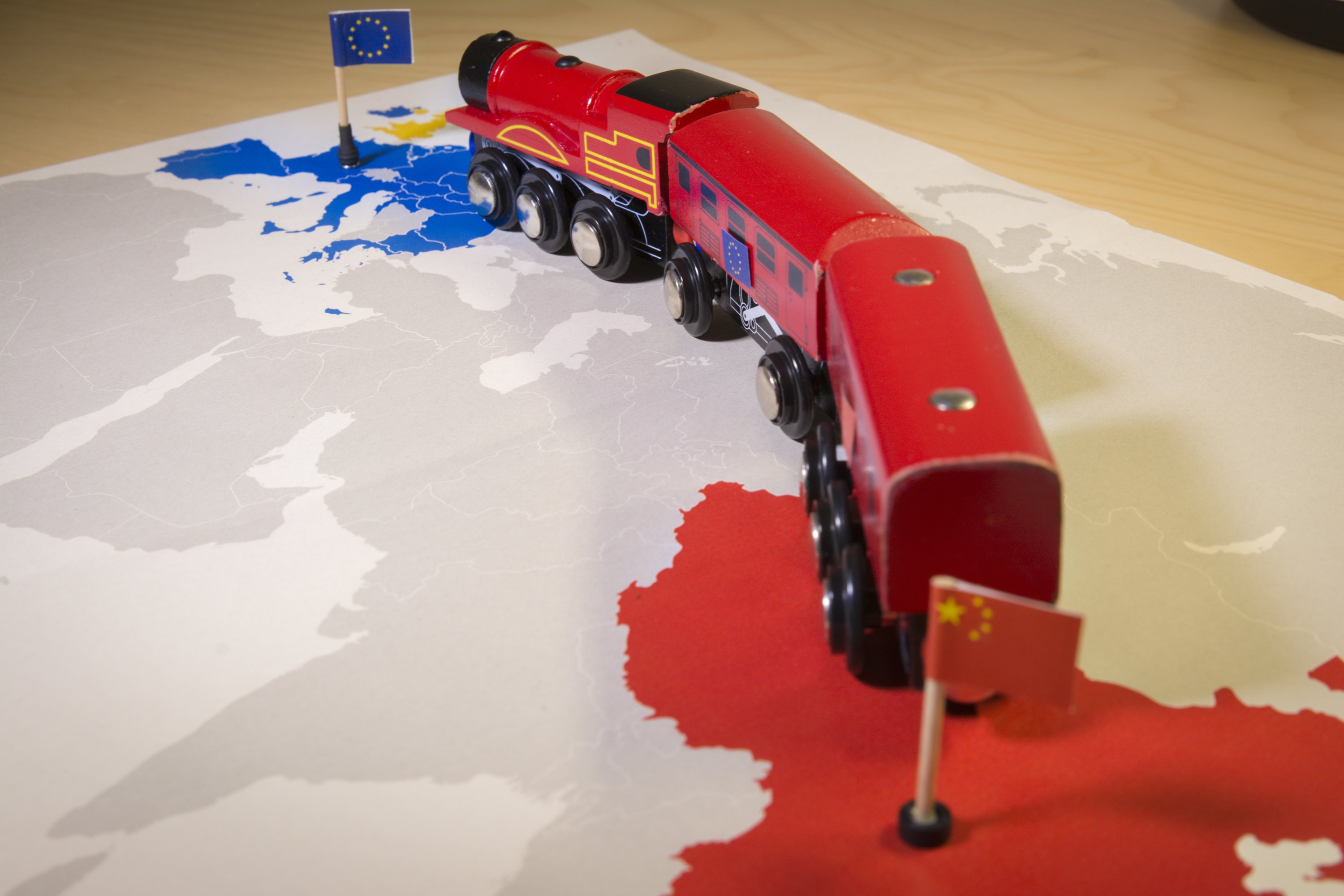
The project includes six major land routes and the Maritime Silk Road. The first of these, the “New Eurasian Land Bridge” (NELB), forms a railway network beginning in China’s Xinjiang Uyghur Autonomous Region. It extends through Kazakhstan, passes north of the Caspian Sea into Russia, and continues to Eastern Europe and Germany.
The second route, known as the “China-Central Asia-West Asia Corridor” (CCAWAC), begins in Xi’an, northern China, and extends through Xinjiang, Kyrgyzstan, Uzbekistan and Turkmenistan. From there, it crosses the Caspian Sea to the Caucasus, continues through Türkiye to the Balkans, and ultimately reaches Central Europe.
While the BRI is often seen as a tool for China’s global hegemony, the official strategy document, "The Belt and Road Initiative: A Key Pillar of the Global Community of Shared Future," released by China’s related State Council, asserts that the initiative is not solely a national strategy but rather a new paradigm for international cooperation.
The ongoing struggle for influence between Russia and China in Central Asia is fueling a rivalry that has yet to be officially defined. Some analysts argue that China’s economic-driven ambitions in the region do not pose a direct threat to Russia. However, Prussian Gen. Carl von Clausewitz likened the relationship between pure economic power and political power to “the relationship between a swordsman and the art of fencing.” This perspective suggests that economic growth alone is insufficient for long-term influence unless it is translated into political power – a notion that holds true, but only for a limited period. History has repeatedly shown that economically powerful actors eventually convert their economic strength into political influence.
The evolving geopolitics of Central Asia have sparked growing discussions about the potential dangers of a Russia-China rivalry in the region. However, given their deep commercial ties and mutual interest in balancing global governance, such concerns remain premature – at least for now. On the other hand, initiatives such as the India-Middle East-Europe Economic Corridor (IMEC) Project, supported by the U.S. and presented by the West as an alternative to China’s Belt and Road, the Development Road Project, in which Türkiye emerges as an international actor with a new vision, and the Middle Corridor, also known as TITR (Trans-Caspian International Transport Route), will inevitably drive rivalry for strategic superiority in a “war of corridors” in the new era.