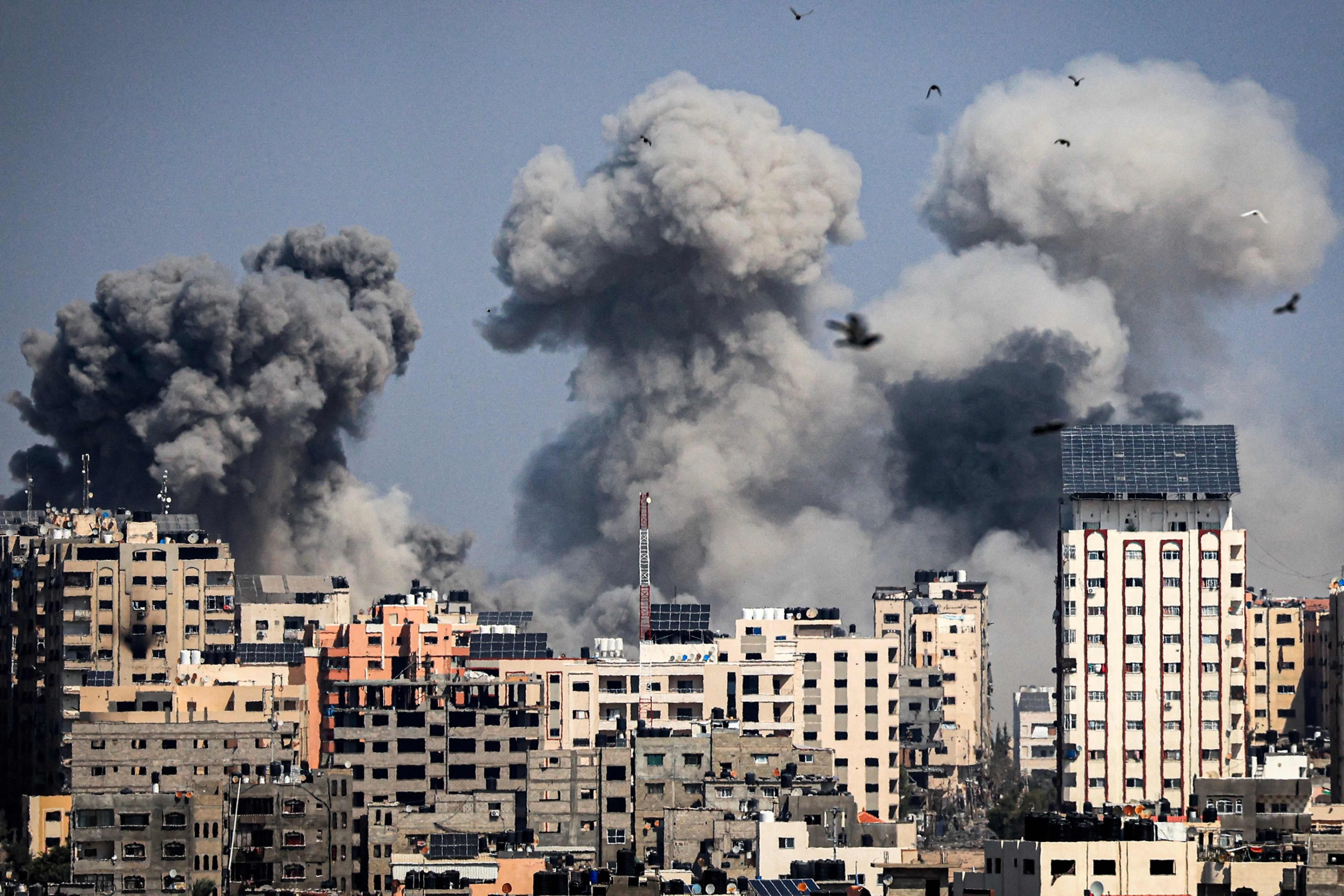
The unexpected ground and air assault by Hamas into Israel on Oct. 7 sent shock waves throughout the region. This incident carries profound geopolitical implications and necessitates a balanced and professionally analytical examination of the key actors, their motivations and the potential consequences.
Hamas has undertaken a daring mission that would challenge even a well-organized state army. Their adoption of air missile attacks combined with ground tactical movements signifies a significant departure from their conventional operational methods. However, this shift alone may not guarantee strategic victory over Israel, given Israel's substantial military superiority and technological advancements. This raises a pivotal question: What were their objectives?
There are three plausible scenarios, which are not mutually exclusive:
Expanding the conflict: Hamas leadership may anticipate that by exposing Israel's vulnerabilities, they could escalate this conflict, potentially involving other Palestinian factions and even drawing in Iran.
Iranian influence: Hamas might be acting in alignment with Iran's ambitions to confront Israel. Given Iran's proactive role in the region, it's not unthinkable that they made a similar miscalculation as the Russians did in Ukraine.
Disrupting diplomacy: It is possible that Hamas aims to disrupt U.S.-led negotiations between Saudi Arabia and Israel. Likewise, they could not accept the reality of the Abraham Accords between Israel and the United Arab Emirates (UAE) and Bahrain, signed in September 2020. Similarly, the Camp David Accords between Egypt and Israel since 1979 are examples of regional peacekeeping and mutual respect. It appears that Hamas could not accept the normalization of relationships with Israel. The critical question remains, at what cost?
Despite their tactical gains, Hamas faces formidable challenges in sustaining their efforts. Israel's overwhelming military might, in terms of both manpower and technology, makes it unlikely that Hamas can maintain their initiative. Given Hamas' designation as a terrorist organization, Israel is expected to receive broad international support, whereas Hamas is unlikely to garner significant backing beyond the diaspora, Iran and a few others who do not have any relationship with Israel.
Given the uncertainty surrounding Hamas' clear objectives, it would be prudent for them to consider the factual reality. Israel is a formidable regional military power. Leading Arab nations such as Egypt, Bahrain, the UAE and Saudi Arabia provide a compelling example of recognizing this reality by normalizing mutual relationships with Israel. If the denial continues, more Palestinians and Israelis will die.
Hamas and the Palestinian Islamic Jihad are part of so-called Iran’s "Axis of Resistance." Iran has been building their capabilities in recent years to impose greater military pressure on Israel.
Iranian leadership refers to the “Axis of Resistance” as a coalition of state, semi-state and non-state actors. This alliance includes Hezbollah, the Assad regime in Syria, the Houthi movement in Yemen and various militias across the Middle East, all of which receive substantial financial, material and political support from Iran. Non-Palestinian members of this coalition, such as Hezbollah in Lebanon, have expressed solidarity with Hamas and have already begun to intervene independently. Iran's primary motivation behind supporting these proxy and partner militias is to encircle Israel.
Many observers have noted that Iran is taking a proactive role in asserting regional dominance. It has embraced an offensive regional strategy to adapt to modern conflicts and enhance its external objectives more effectively. Iran's evolving threat perceptions and growing confidence in its defensive capabilities have led to a shift in how it views its regional role, focusing on hybrid warfare rather than conventional methods. Iran is building a more capable and cohesive coalition of state security services and foreign militias to execute its offensive concepts, employing both conventional and unconventional means to threaten its adversaries.
Israel was caught off guard by the Hamas attack, creating a profound sense of national shock. Two key factors have contributed to Israel's vulnerability:
Deterrence erosion: Historically, Israel's greatest strength has been its ability to deter threats effectively. However, complacency can erode deterrence, and this attack exposed Israel's vulnerability, potentially emboldening other non-state actors within the "Axis of Resistance." Furthermore, it is surprising to see that, for over 48 hours, Hamas militants continued to battle Israeli forces inside Israeli territory. All eyes are on intelligence services' failure, which extends beyond gathering intelligence. Historically, Israel's intelligence was a leader in HUMINT (human intelligence). Along with Israel's technological advancements, intelligence technology has replaced the uniqueness of collecting human intelligence. Retired Israeli Gen. Amir Avivi has argued that Hamas understood that Israeli intelligence heavily relies on technology. Therefore, Hamas targeted the roots of communication and secrecy, avoiding any technological involvement. Consequently, Israel's military and security services failed to piece together an accurate picture of Hamas' intentions.
Internal divisions: Israel currently grapples with internal political and social divisions, which have impacted its readiness. Mass protests and divisions over political decisions have raised concerns about the military's capacity to respond effectively.
These developments have exacerbated Israel's frustration, with Israeli President Benjamin Netanyahu already declaring a state of war. Therefore, international diplomacy must play a pivotal role in mitigating tensions and preventing Israel from taking impulsive actions while striving to restore its national pride.
Türkiye occupies a critical role in de-escalating the situation and promoting peace in the region. Furthermore, the reactions and statements of Muslim-majority countries are crucial in preventing further escalation. Türkiye's pragmatic approach, given its proximity to conflicts and refugee crises, positions it as a leader in seeking peaceful solutions. With multiple border conflicts and millions of refugees to manage, Türkiye's geographic location and diplomatic capabilities uniquely qualify it as a leader in promoting peaceful solutions to conflicts. By doing so, Türkiye can rally other regional nations, bilaterally or through the Organization of Islamic Cooperation (OIC), to prevent further regional escalation. President Recep Tayyip Erdoğan has emphasized the need for justice and peace, recognizing the toll of prolonged conflict on all parties involved. Türkiye's complex relationship with Israel, as a significant trade partner and critic of Israeli settlements in the West Bank, places it in a unique position to contribute to de-escalation efforts.
The surprise attack by Hamas on Israel on Oct. 7 introduces a complex interplay of actors with significant geopolitical implications. The balance of power, motivations and diplomatic endeavors will mold the trajectory of this conflict. The engagement of regional actors such as Türkiye and other Arab countries will be pivotal in maintaining stability and averting further escalation in this volatile region. However, if rational thinking and diplomacy fail, we must anticipate further casualties among both Palestinians and Israelis, along with the complete devastation of the Gaza Strip, making the prospect of sustaining normal life untenable.