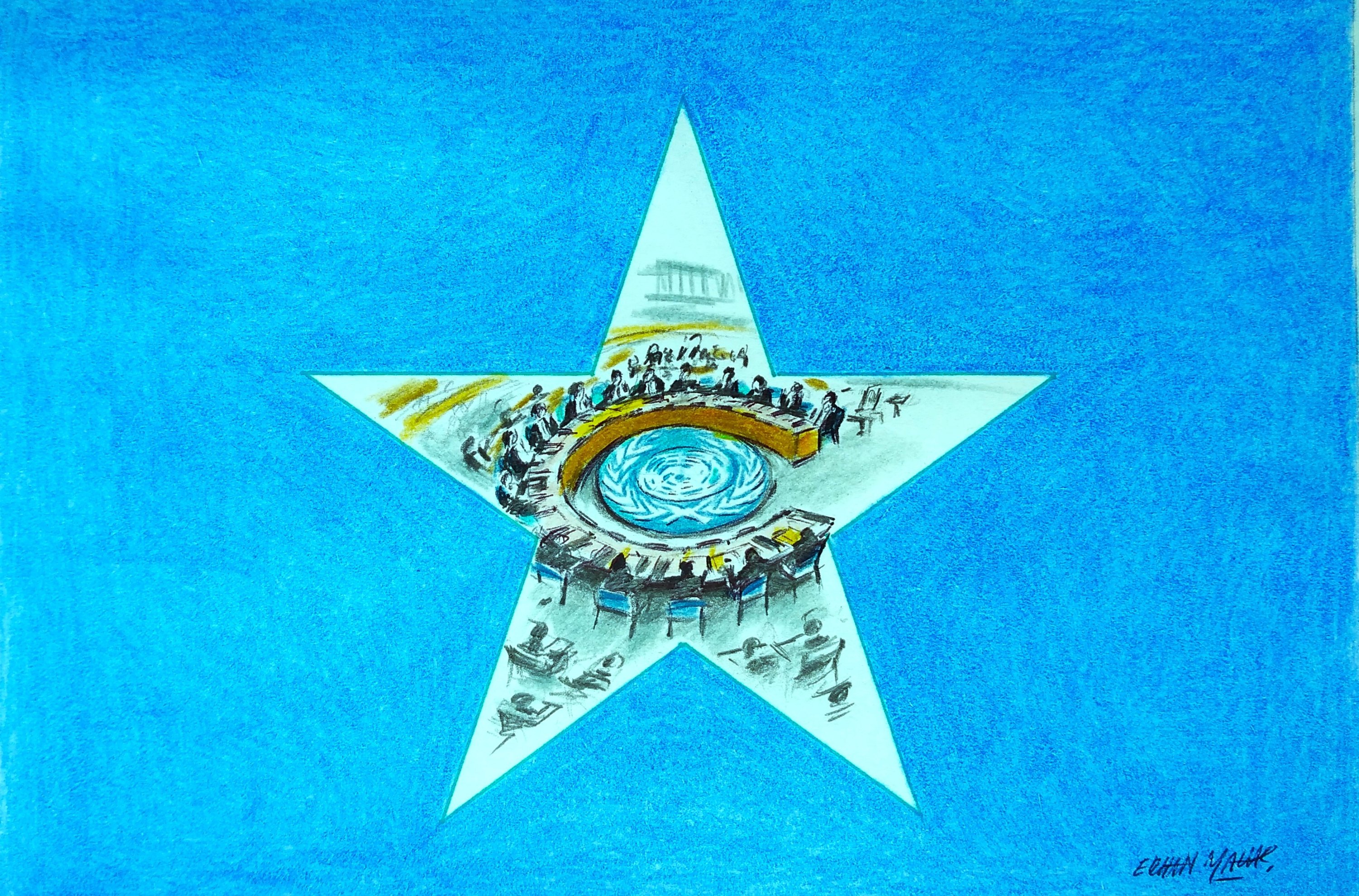
Somalia was elected to serve on the U.N. Security Council as a non-permanent member for the second time since independence in 1960 and assumed its seat on Jan. 1, 2025. Somalia joined Denmark, Greece, Pakistan and Panama in serving on what is considered the most powerful global political and diplomatic council entrusted with steering the world toward peace, stability and sustainable development for the next two years.
Although the new non-permanent members do not enjoy the powerful and heavily dramatized veto power that makes global headlines, the idea is that they will represent not only their regions but the rest of the world in all meetings to advance the key objectives of the U.N. Indeed, the question of equity and balance regarding this now ancient exclusive power of veto held by the permanent five members of the Security Council (U.S., China, the U.K., France and Russia) is highly debated and arguably needs reform given the modern global realities today. The strong argument that if the U.N. and its systems are to have any credibility going forward, they must promote and safeguard their lofty founding democratic principles by ensuring an equal voice for all nations needs to be addressed quickly and with the seriousness it deserves.
However, non-permanent members can and have played a key role in representing the voices of their nations, regions and the rest of the world in major U.N. debates. While they may be simply diplomatic inclusivity window dressing to present a mirage of political equality in the heavily polarized, unequal and divided world we live in today, the non-permanent seats in themselves are some progress from what they used to be when global decisions were only made by the supposed winners of World War II and much of the majority of the U.N. member states today were still colonized or part of the Soviet Union.
It was surprising to see some of the negative reactions in the media when Somalia won the U.N. Security Council seat because I was closely following the determined efforts of the Somali government in this endeavor from the beginning and expected it to be welcomed by all. The overwhelming message from misinformed critics was that the council is now a joke if Somalia can join.
This is a misguided and regressive view of international politics and diplomacy, anchored in ignorance and arrogance. It also increasingly manifests itself in a new age of confrontational and nationalistic power politics where might is prioritized over what's right. This post-World War II winners-take-all governance mentality is not even discussed openly in international politics and relations courses at universities anymore, let alone used as a basis for criticizing a nation like Somalia, which has achieved so much in such a short space of time to escape a difficult past of conflict and state collapse.
The Security Council is mandated to advance global peace and security and has a long history of involvement with Somalia during the nearly three decades of civil strife and through the current state-building process. Only last year, the U.N. lifted the three-decade arms embargo on Somalia and the council authorized the African Union Stabilisation and Support Mission in Somalia (AUSSOM) to replace a larger operation from Jan. 1, 2025. Ironically, this is the day Somalia officially took its seat as a non-permanent member. Far from symbolic, this is a real opportunity for Somalia to be in the same room that has been deciding its future for nearly three decades while it shouted from the sidelines.
Somalia’s membership will provide a valuable opportunity for other members to hear and learn unique lessons in nation-building, fighting international terrorism, effective humanitarian actions, strengthening multilateralism, and what does not work in conflict-affected, post-conflict and fragile states in terms of peacebuilding and sustainable development. It will also amplify the voices of nations facing similar challenges, including those in the Group of Seven Plus and least-developed category status.
Somalia has a strong track record of delivering economic reforms and achieved debt relief through the Highly Indebted Poor Countries Initiative (HIPC) in December 2023. This is not just a story of numbers and simple implementation of prescribed reforms by the International Monetary Fund (IMF) but a lesson in what can be achieved even in the most challenging situations when there are strong partnerships, political will and public support for escaping unsustainable crippling debts that most of the developing world faces today and achieving financing for development.
At the U.N., there is a desperate need to find global solutions to everyday challenges, including the devastating impact of climate change, increasing conflicts and global debt, which hampers development spending and economic growth to spur job creation and attain sustainable development. Somalia has a unique interwoven story and experience to share in this space and will be able to contribute prominently to the international dialogue and solutions going forward as part of the Security Council.
Overall, Somalia is in the council because it won its seat like all the other members through a rigorous, transparent diplomatic and democratic process. This is the real explanation and the only explanation is if the rules of the U.N. are observed. In this regard, it is no different from all the other members who have held this position or are occupying it now. However, Somalia’s unique contribution to the council and international security and peace is its credible and authentic voice, which showcases its national lived experience and its current efforts to transform itself for the betterment of its citizens. This is needed more than ever in a conflict-ridden and polarized world threatened by external shocks, including climate change.