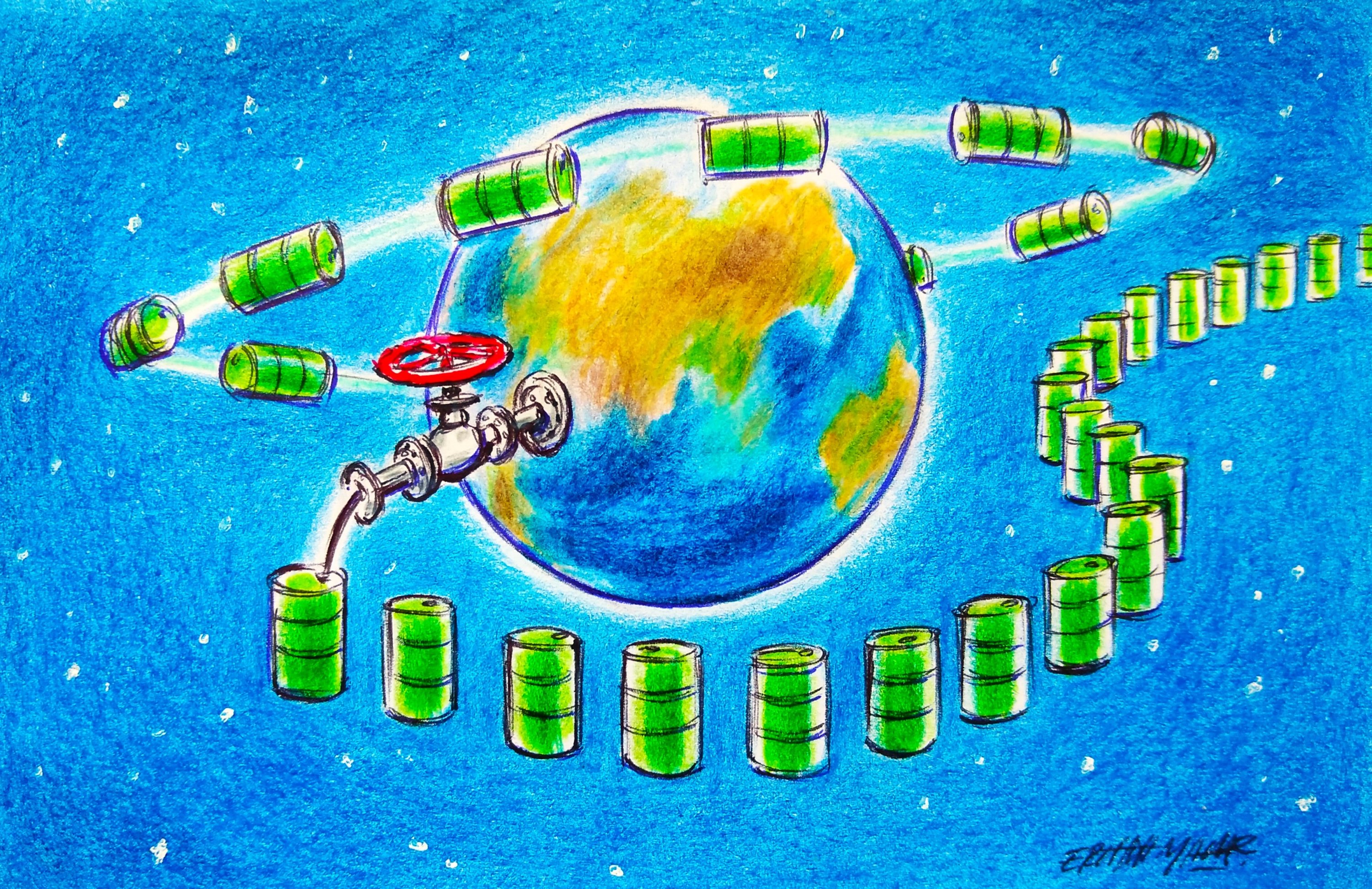
In the new energy equation that has emerged following the U.S.-Israel war against Iran, the key question is no longer how many dollars a barrel of oil costs, but how prepared the world is for the next geopolitical crisis. The answer is not found on price screens but in strategic reserves and storage facilities. Although the U.S.-Iran agreement has pushed oil prices lower, it has not replaced the strategic and commercial inventories consumed during the conflict. As a result, while the market is now facing cheaper oil, the global energy system has become more fragile from an energy security perspective than it was before the war.
At the most critical stage of the conflict, the International Energy Agency (IEA) launched one of the largest coordinated emergency interventions in its history. Member countries agreed to release a total of 400 million barrels of oil to the market. The primary objective of this move was not to permanently lower prices but to prevent physical supply disruptions from harming the global economy. In other words, throughout the war, the market remained balanced not only through new production but also through the release of oil held in storage.
According to Bob McNally, founder and president of Rapidan Energy Group and former White House energy adviser, the central issue facing markets after the war is not a shortage of supply but the repricing of energy security risks. In this context, countries may seek to rebuild their strategic and commercial reserves regardless of immediate consumption trends, creating a new inventory cycle that supports physical oil demand in the coming years.
From an energy security standpoint, the primary concern is not the depletion of stocks themselves but the additional demand pressure that may emerge if stock replenishment coincides with ongoing oil consumption. If IEA member countries begin repurchasing hundreds of millions of barrels simultaneously, this could create structural upward pressure on oil prices through late 2026 and into 2027. For this reason, the current decline in oil prices should not be interpreted as evidence that inventories are at comfortable levels.
On the contrary, rebuilding strategic reserves effectively brings a portion of future demand forward. This reflects a well-known dynamic in the energy security literature, where today’s market relief creates tomorrow’s stockpiling demand. Recent projections suggest that total oil inventories across Organisation for Economic Co-operation and Development (OECD) countries could fall to approximately 2.3 billion barrels by the end of 2026. This level is considered one of the lowest inventory positions recorded in recent years. Rising global demand during the summer months is also accelerating inventory drawdowns and increasing market vulnerability.
Europe’s current oil inventories do not point to an immediate supply crisis. Nevertheless, the system is operating with a smaller safety margin than in previous years. Strategic reserves continue to meet IEA obligations and provide protection against potential supply disruptions. However, recent stock releases have significantly reduced Europe’s crisis buffer. As a result, European countries will likely need to repurchase hundreds of millions of barrels in the coming years to strengthen energy security. This will create an additional source of demand beyond normal consumption requirements. The oil released from strategic reserves today is effectively becoming tomorrow’s additional demand.
For Türkiye, the risk is no longer limited to the possibility of a closure of the Strait of Hormuz. A more critical issue may be the global race to rebuild inventories once stability returns to the waterway. Türkiye purchases oil from the same physical market as the world’s largest energy importers. Therefore, the key question is not how much oil Türkiye currently holds but at what cost it will be able to secure supplies during a period when global inventories are being rebuilt.
Following the war, not only Europe but also major Asian importers are moving to replenish their reserves. As Japan, South Korea, China and European countries rebuild the strategic and commercial inventories used during the conflict, global oil demand may increase regardless of economic growth trends. In this context, energy corridors extending through Türkiye toward the Mediterranean, particularly the Iraq Ceyhan Oil Pipeline, are becoming increasingly important not only as transit infrastructure but also as strategic routes capable of supporting post crisis inventory rebuilding efforts.
For reserves to be replenished in a meaningful way, global oil supply must first return to normal conditions. The first determining factor is the security of the Strait of Hormuz. While stability in the strait remains essential for global energy security, it is no longer the sole factor shaping market confidence. Growing geopolitical volatility demonstrates that supply security cannot rely exclusively on existing routes. As a result, a diversified logistics structure supported by alternative corridors has become a necessity within the energy security architecture.
The second factor is the availability of spare production capacity in the Gulf region. Saudi Arabia and Kuwait, in particular, provide the most important supply buffer for the global oil market. The production flexibility of the United Arab Emirates also contributes to this structure despite its departure from the Organization of the Petroleum Exporting Countries (OPEC). However, this capacity must simultaneously meet global consumption needs while supporting the rebuilding of strategic reserves. Therefore, it cannot be directed entirely toward stock replenishment.
The third factor is the pace of Iran’s return to the market. Before the war, Iran’s oil production stood at approximately 3.3 million to 3.5 million barrels per day. While sanctions relief could allow additional supplies to enter global markets, the net increase may remain limited because existing export channels are already heavily oriented toward Asia. As a result, the impact of Iran’s reintegration will depend not only on production capacity but also on the reshaping of global trade flows. Against this backdrop, three broad scenarios can be identified for the period ahead.
Under the optimistic scenario, the Strait of Hormuz becomes fully secure, Iranian exports normalize, OPEC+ production increases and global demand remains below expectations. In such a case, strategic reserves could be replenished within two to three years, allowing oil prices to remain relatively stable.
Under the middle scenario, geopolitical risks persist, but physical supply flows continue uninterrupted. In this case, inventory rebuilding would take place over a longer period, creating a sustained yet manageable upward pressure on prices.
Under the pessimistic scenario, new disruptions occur in the Strait of Hormuz, Iranian exports fail to recover as expected and efforts to replenish strategic reserves accelerate simultaneously. In such a case, even without a physical supply deficit, oil prices could come under significant pressure because consumption demand and stockpiling demand would be competing for the same barrels at the same time.