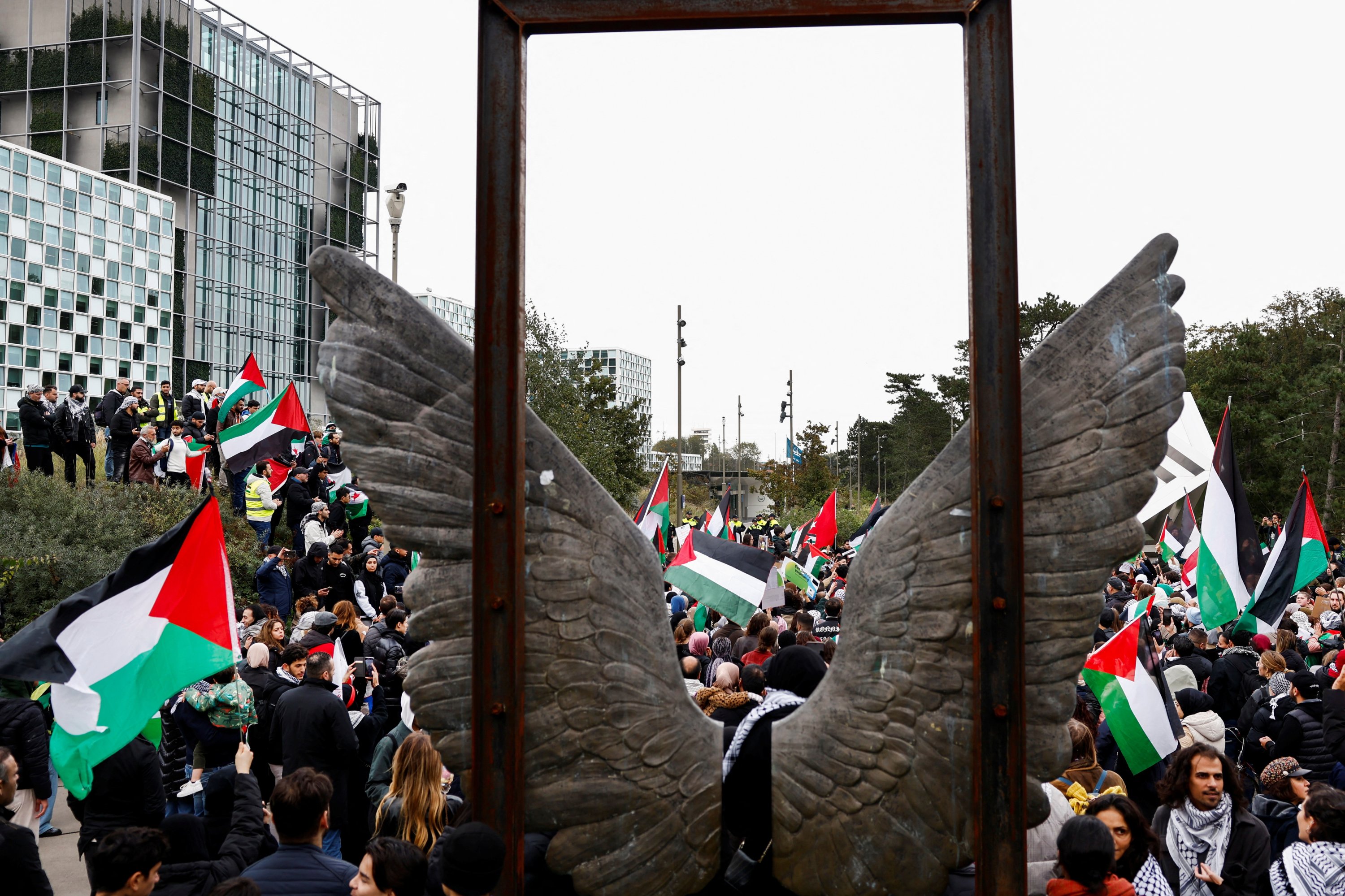
A global recession seems imminent given the assaults on the world economy one after the other: the unprecedented COVID-19 global pandemic, the Russia-Ukraine conflict and now one of the most lethal Middle Eastern conflicts of all times. The Israeli-Palestinian conflict not only has the potential to disrupt trade routes, impact energy prices and trigger geopolitical uncertainties, but also leaves us with apprehensions about the face-off between the world’s strongest economies.
The recent escalation in the Middle Eastern crisis and the resulting geo-political unrest have left investors biting their nails as they fear the repercussions of the conflict. Global geopolitical tensions significantly influence how people perceive economic growth and help them decide whether to invest their money. Simultaneously, tariffs, trade barriers and other sanctions lead to trade disruptions that adversely affect businesses depending on international trade. Given the ambiguity regarding what lies ahead, there can be a significant reduction in consumer spending and business investment, since both parties may become reluctant to indulge in economic activity during these turbulent times. Similarly, governments may also revise policies as a response to geopolitical tensions – such as amendments in fiscal or monetary policies affecting overall economic growth.
Having said that, all the above scenarios rely extensively on unknown future forecasting. However, pundits opine that further escalation may pull Iran –a major oil-producing country – into direct conflict with Israel, which is certainly a setback for the oil markets given Tehran’s proximity to key oil shipping routes in the Persian Gulf. This could lead to concerns about oil supply disruptions leaving a dent in global energy costs, affecting transportation, manufacturing and various industries that rely heavily on oil.
With the Middle East being a pivotal hub for international trade, experts also weigh in on disruptions in regional trade. This would not only disrupt supply chains but would also sabotage the flow of goods and services to and from neighboring countries. According to a recently published Bloomberg report, a direct conflict between Israel and Iran could cause a massive blow to the world economy, leading to an inevitable global recession with sinking risk assets and soaring inflation. Also, if Tehran decides to shut down the Strait of Hormuz – the gateway of one-fifth of the world’s daily oil supplies –the production capacity in Saudi Arabia and the UAE would not be able to bear the brunt.
Apart from threats to regional trade and disruptions in oil supply, there is another factor that can lead us to multifaceted economic impacts and massive geopolitical distress. The world’s two biggest juggernauts, China and the U.S., have different, if not opposite, stances on the raging Isreali-Plaestinian conflict.
China has generally towed to a neutral stance, calling for a two-state solution through peaceful negotiation, while exhibiting concerns over the humanitarian situation. Beijing had the same response even after the recent escalations. However, in a latest, rather bold move, Beijing reportedly omitted Israel from its digital maps with many speculating that this might be on the heels of the ongoing Israel-Palestine conflict. The reports were later rebuffed by the Chinese officials, stating that “the maps may not display the names or flags of some territories due to limited space.” In 1988, Beijing was among the first countries to acknowledge Palestine as an independent state.
After the Oct. 7 Hamas attack, Israel openly censured Beijing’s response, stating that it lacked “sympathetic gestures,” while experts believed that the response was befitting given Chinese foreign policy in the Middle East and its approach to resonate with the rest of the Arab world.
On the contrary, the U.S. has been historically supportive of Israel, being the biggest donor of military aid since Israel’s foundation in 1948. The Biden-led administration has constantly backed Israel in its conflict against Hamas. The arms and funding provided by the U.S. have reportedly killed thousands of Palestinians and made several others in the besieged Gaza Strip.
The soaring tensions in the Middle East, with the world’s two biggest superpowers gliding on the opposite ends of the sea, are a major threat to the world economy. Any bitterness or rift between the two could turn the tide, or rather trigger an inexorable cyclone, that could plunge us into the rut of a global recession. This goes without saying: Any conflict between the two would escort us to an economic slowdown with disrupted financial markets, fluctuations in currency values and volatility in financial assets – especially when we consider the size of the U.S. and Chinese economies. This would eventually have a negative domino effect on the other economies of the world.
Getting down to brass tacks, the persisting tensions between Palestine and Israel are of significant concern, as this will eventually shape intertwining regional and international politics impacting the world economy in the long run. The strife between the two countries does not only deter financial investments but also cripples economic development, wrecking education and health care systems. Successful navigation through this conflict by the countries in power will not only decide the future of the region but will also determine the future of the world.