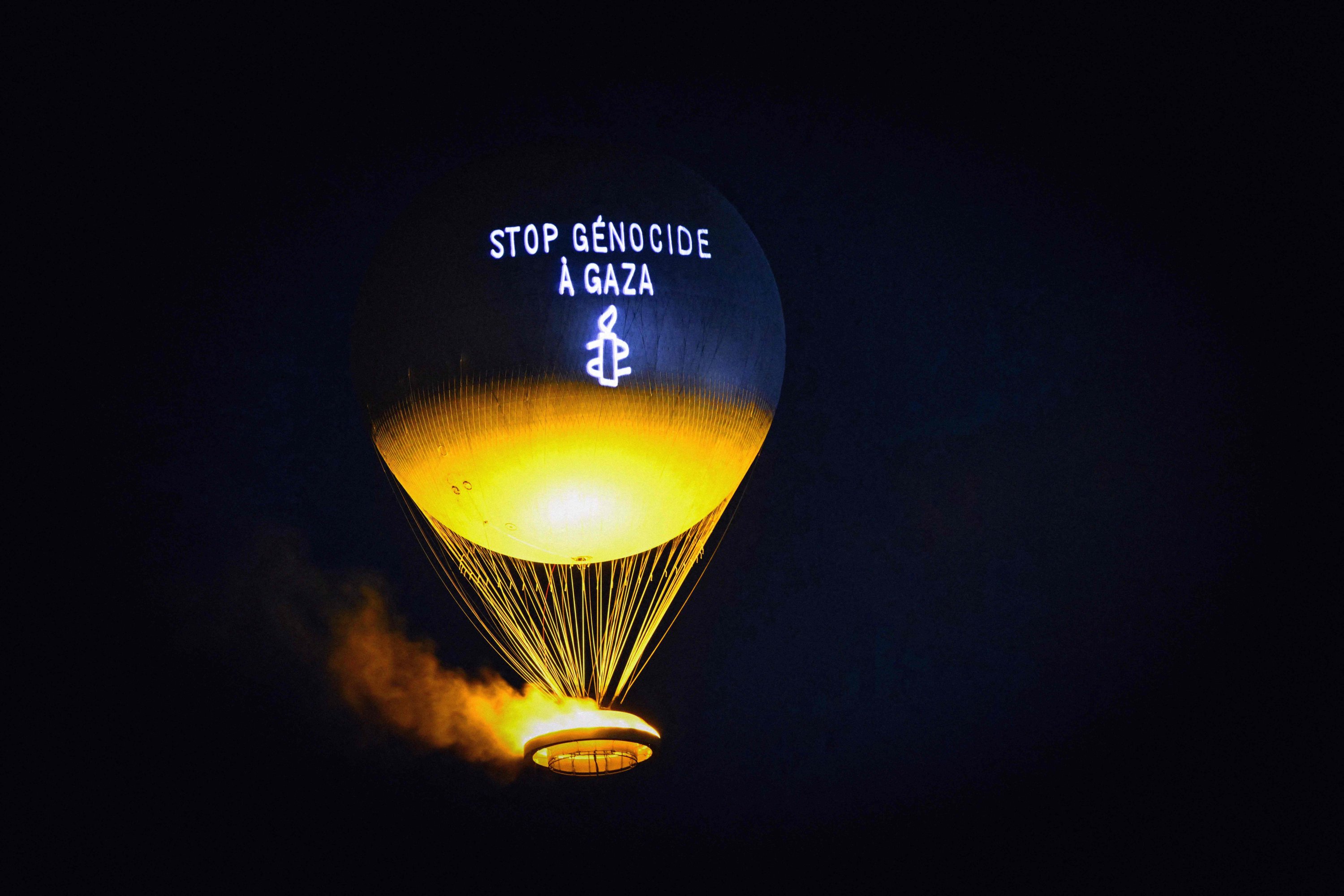
A few days ago, I tuned into the Piers Morgan Uncensored show on YouTube and I was ensnared in a fierce academic debate over the weight of the word “genocide” in the context of Israel’s actions in Gaza. On that episode, Canadian law professor William Schabas, a leading expert on international law, squared off against legal scholar Jeffrey Lax. Lax opened the debate confidently claiming: “No state has ever been convicted of genocide, not in Darfur, not even in Bosnia v. Serbia,” implying that international courts consistently shield states from this label. As per the definition of genocide, Lax says the intent needs to be clear in the case of genocide, and there should not be any other reasons to commit the killings.
As a Bosnian, who is still frustrated and upset about our case against Serbia, I was eager to hear the response.
Schabas struck back by saying how he was appalled when Israeli officials said that if they wanted to kill all the Palestinians in Gaza, they would when responding to genocide accusations: “You don’t have to show that every last person is targeted for extermination,” he argued. “It is enough to show intent to destroy a substantial part of the group.” For him, the siege and bombardment of Gaza, starvation tactics, more than 50,000 civilians killed, paired with senior officials’ dehumanizing rhetoric, suggest that such intent may well exist.
The term genocide was coined by Raphael Lemkin in 1944, combining the Greek genos (people) with the Latin occidere (to kill). Four years later, the U.N. General Assembly adopted the Genocide Convention, defining it as acts committed with the intent to destroy, in whole or in part, a national, ethnic, racial or religious group. This includes killing, causing serious harm, creating unbearable living conditions, preventing births, or forcibly transferring children.
However, proving intent at the state level has always been a steep mountain to climb.
Let’s go back to previous horrific parts of our history that Lax used as an example to defend Israel in its International Court of Justice (ICJ) case that South Africa brought forward in December 2023.
In Darfur, in 2003, genocide was committed by both the Sudanese government and allied Janjaweed militias against the Fur, Masalit and Zaghawa populations. Estimates suggest the conflict killed between 200,000 and 300,000 people and displaced more than 2.7 million. Despite this staggering toll, Sudan as a state was never convicted; the indictment by the International Criminal Court (ICC) targeted former President Omar al-Bashir personally, not the state itself. No state brought Sudan before the ICJ on genocide charges, but the government faced international sanctions and there were several U.N. Security Council resolutions, but not a formal ruling.
During the war in Bosnia-Herzegovina in the 1990s, Bosnian Serb forces, backed by Belgrade and the regime of former President Slobodan Milosevic, perpetrated campaigns of ethnic cleansing across the country killing more than 100,000 people culminating in the genocide of more than 8,397 Bosnian Muslim men and boys, and around 600 women and children, in Srebrenica, recognized by both the International Criminal Tribunal for the Former Yugoslavia (ICTY) and the ICJ.
When Bosnia-Herzegovina brought a case against Serbia at the ICJ, the 2007 ruling acknowledged that genocide occurred but concluded Serbia was not directly responsible; rather, it had failed to prevent or punish the atrocities. Nonetheless, in 2022, the ICJ’s final revision reaffirmed that Serbia had “the ability to, and did, influence the perpetrators of the crime” and thus bore partial responsibility for not preventing the genocide. This revised stance deepened the legal and moral complexity of state culpability and still fell short of labeling Serbia as a direct perpetrator in full legal terms.
The ICJ is often accused of being more political than judicial. The Bosnia-Herzegovina case also suffered from obscured evidence. Florence Hartmann, a former spokesperson for the ICTY, later revealed that critical documents from Serbia’s Supreme Defense Council, potentially proving state involvement in the Srebrenica genocide, were deliberately concealed.
“The tribunal allowed this in deference to Serbia’s so-called ‘vital national interests,’” Hartmann wrote. She argued that this concealment fatally undermined Bosnia-Herzegovina’s case against Serbia at the ICJ, which then concluded the state was not directly guilty of genocide. To her, this was not just a legal flaw but a political decision designed to shield states from liability. She condemned the move as political: a denial of justice to victims and a strategy to protect a state from heavy reparations.
“For me, this is an issue of freedom of speech and the right to transparently inform the public about what is a matter of public interest,” Hartmann said. “Five judges of the ICTY Appeals Chamber willingly become accomplices ... there is no access to documents.”
Srebrenica mothers continued their fight, and many in the Balkans feel betrayed by the international courts to this day.
Today, we are hearing similar criticism since South Africa filed an 84-page application accusing Israel of committing genocide in Gaza. The court in January 2024 issued interim measures: Israel must prevent genocidal acts, punish incitement and allow humanitarian aid. But it stopped short of ordering a cease-fire. Things have only worsened since then, culminating in the unprecedented catastrophe.
As of mid-August 2025, more than 50,000 Palestinians have been killed, the majority women and children. Israel rejects the genocide charge as “absurd” and insists it is acting in self-defense. South Africa counters that the evidence of intent and destruction is overwhelming.
If history is any guide, this case, too, may falter on the question of intent. States are reluctant to convict other states, knowing that one day the precedent might ensnare them as well. However, justice delayed or denied has consequences that extend beyond the courtroom, and this must change.
Historians Vladimir Dedijer and Antun Miletic, in their haunting volume "Genocide Against Muslims 1941-1945," warned that genocidal processes long predate German politician Adolf Hitler and the Holocaust. The U.N. Convention (1948) defines genocide as acts committed with the intent to “destroy, in whole or in part, a national, ethnic, racial, or religious group.” However, this precise legal framework can shield states, even as individuals, such as those in the case of Bosnia-Herzegovina, for example, are brought to justice.
In the Balkans, the ICJ’s refusal to convict Serbia of genocide has allowed revisionists to flourish. Young generations in Bosnia-Herzegovina and Serbia are left divided, unable to unite around a shared memory of the past. As Hartmann put it, the truth was buried in sealed archives, while survivors are forced to live with denial.
For Serbia’s future, it would have been better if the ICJ had ruled differently, acknowledging state responsibility for Srebrenica, not merely a failure to prevent it. Like in the case of the holocaust, only by facing uncomfortable truths can societies begin to heal.
That is why the word genocide matters. It is not just a legal abstraction debated on television panels. It is about whether nations confront their darkest chapters or rewrite them to fit the politics of the present.
As Dedijer reminded us decades ago, the principle must be to write history “as it really was, without bias or favoritism.” Anything less risks condemning us to repeat the same mistakes.
Here lies Lax’s point: proving state intent, beyond individual criminal liability, is an almost insurmountable task under the Genocide Convention. As Schabas explained, that does not negate the occurrence of genocide; it only highlights how difficult it is to pin on a state.
The Balkans stand as a warning. Because Serbia evaded a complete genocide verdict, new generations face unrest and revision. Nationalist narratives have proliferated, denial persists and reconciliation falters. If the ICJ had found Serbia fully responsible for the Srebrenica massacre, perhaps smoother paths toward healing might have emerged.
Today, the same danger looms. If international courts allow politics to dilute the meaning of genocide, history is vulnerable to reinvention, often to the advantage of the powerful.
Jeffrey Lax may be right that no state has ever been convicted of genocide. But William Schabas is right too: That precedent is incomplete, not incapable of change.
As Florence Hartmann revealed, courts can choose convenience over candor. But justice demands courage. South Africa’s case may offer an opportunity for states to finally be held accountable not merely as individuals, but as collectives responsible for mass destruction.
The truth matters, not just for victims in Gaza, Bosnia-Herzegovina or Darfur but for building pathways beyond conflict. Because if the state wasn't held to account before, it doesn’t mean Israel shouldn’t be.