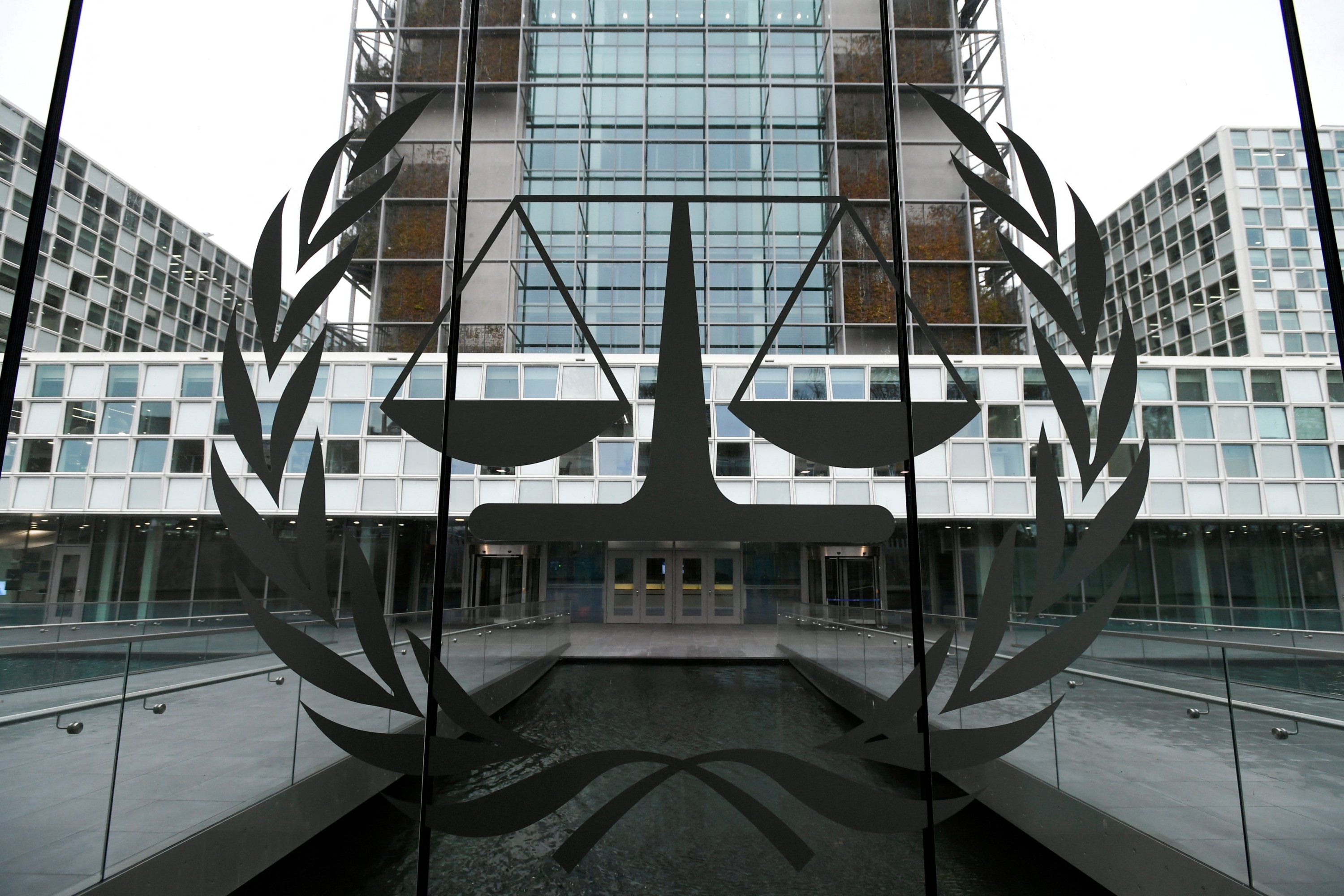
Last week, the International Criminal Court (ICC) finally issued arrest warrants for Israeli Prime Minister Benjamin Netanyahu and former Israeli Defense Minister Yoav Gallant for “the war crime of starvation as a method of warfare” and “the crimes against humanity of murder, persecution, and other inhumane acts.”
The accusations are doubtless shocking, yet perhaps not as shocking as the fact that the reactions of world leaders to them can still diverge after more than a year of genocide in Gaza. Some remain firmly committed to following a pragmatic path, as when a spokesperson for German Chancellor Olaf Scholz expressed his difficulty in imagining how “arrests could be carried out in Germany on this basis” – the difficulty was due, as usual, to that very grim chapter in “German history.”
One wonders if history can indeed reduce international agreements to mere words, however. For if their enforcement is simply a matter of how history has tarnished a nation – as Günter Grass described in his infamous poem, by “a stain that can never be removed” in Germany’s case – then they cannot be binding in any meaningful way. As Thomas Hobbes put it in his grand dictum, “Agreements without swords are but words.” Of course, it ought to be equally clear that swords can also destroy agreements, along with those who dare to uphold them, as we witness today.
In fact, the chief prosecutor of the ICC, Karim Khan, had told CNN’s Christiane Amanpour in an interview a few months ago that he was threatened by “some elected leaders” not to issue the warrants in question. One senior leader reminded him of the original purpose of the court, i.e., that it was “built for Africa and for thugs like Putin.” Crucially, it was certainly not built to hold accountable the leaders of the empire and its allies, for they had mightier swords that no agreement could stand against.
The divergent reactions to the ICC’s decision illustrate, according to EU top diplomat Josep Borrell, that “we are at a critical juncture.” As critical as the juncture may be, however, the empire seems to harbor no intention of supporting the autonomy of the ICC and its decisions, despite Borrell insisting that the decisions are “legally binding” and that “there is no pick and choose.” Perhaps half-heartedly, but definitely with a hint of frustration, the EU’s foreign policy chief declared in a tweet in defense of the ICC that “threats against it are unacceptable, including from U.S. Senate.”
What threats was Borrell talking about? Well, there are too many to list here. And somewhat strikingly, they include threats against “less favored” allies of the empire too. For example, Republican Senator Lindsay Graham, the prototypical war hawk, was extremely blunt: “To any ally, Canada, Britain, Germany, France ... if you try to help the ICC, we are going to sanction you.”
Thankfully, though, Graham’s threats were relatively restrained, focusing solely on “crushing” the economies of those nations whose governments were foolish enough to respect the rule of law. However, Republican Senator Tom Cotton, another tenacious guardian of the empire, was more aggressive in his reaction. As what he deemed “a friendly reminder,” he emphasized that, “The American law on the ICC is known as The Hague Invasion Act for a reason,” recommending law-abiding nations to “think about it.”
These developments may suggest that a great schism is emerging between the empire and its satrapies in Europe. Perhaps it is plausible at this time to speculate that the attitude of the upcoming U.S. government toward the war in Ukraine is a significant factor in this. At any rate, as opposed to the empire’s “unwavering” and “ironclad” support for Israel and any government that would lead that country, European nations apparently fear losing the very apparatus that they are otherwise keen on using to lecture the rest of the world. For they might in fact lose it if they repeatedly ignore its verdicts when these turn out to be rather inconvenient for the arbiters of “the rules-based international order.”
Importantly, there have been notable exceptions to the EU’s official position. Always the outlier in European politics, the Hungarian government expressed its discontent with the ICC’s decision, with Prime Minister Victor Orban going so far as to invite Netanyahu for a state visit to Budapest, almost as if to make a statement. Of course, Netanyahu was pleased by Orban’s radical stance, especially when the former was confronted with widespread condemnation. His satisfaction with Hungary’s position was paralleled by his contempt for those who take the ICC seriously: “Against the shameful weakness of those who have lined up alongside the outrageous decision against the State of Israel’s right to defend itself, Hungary – like our friends in the U.S. – has shown moral clarity and steadfastness on the side of justice and the truth.”
Here, the phrase “shameful weakness” is instructive, particularly considered in the context of Netanyahu’s earlier comments. In 2018, this major criminal put out a long statement in which he described how “the weak crumble, are slaughtered and are erased from history while the strong, for good or for ill, survive” and how “the strong are respected, and alliances are made with the strong, and in the end, peace is made with the strong.” The strategy seems to have been clear all along: As the strong have got the mightiest sword, alliances must be made with them, so that one could have access to a tool that can both create and destroy agreements, whenever and whichever is needed.