Daily Sabah logo

Politics
Diplomacy Legislation War On Terror EU Affairs Elections News Analysis
TÜRKİYE
Istanbul Education Investigations Minorities Expat Corner Diaspora
World
Mid-East Europe Americas Asia Pacific Africa Syrian Crisis Islamophobia
Business
Automotive Economy Energy Finance Tourism Tech Defense Transportation News Analysis
Lifestyle
Health Environment Travel Food Fashion Science Religion History Feature Expat Corner
Arts
Cinema Music Events Portrait Reviews Performing Arts
Sports
Football Basketball Motorsports Tennis
Opinion
Columns Op-Ed Reader's Corner Editorial
PHOTO GALLERY
JOBS ABOUT US RSS PRIVACY CONTACT US
© Turkuvaz Haberleşme ve Yayıncılık 2025

Daily Sabah - Latest & Breaking News from Turkey | Istanbul

  • Politics
    • Diplomacy
    • Legislation
    • War On Terror
    • EU Affairs
    • Elections
    • News Analysis
  • TÜRKİYE
    • Istanbul
    • Education
    • Investigations
    • Minorities
    • Expat Corner
    • Diaspora
  • World
    • Mid-East
    • Europe
    • Americas
    • Asia Pacific
    • Africa
    • Syrian Crisis
    • Islamophobia
  • Business
    • Automotive
    • Economy
    • Energy
    • Finance
    • Tourism
    • Tech
    • Defense
    • Transportation
    • News Analysis
  • Lifestyle
    • Health
    • Environment
    • Travel
    • Food
    • Fashion
    • Science
    • Religion
    • History
    • Feature
    • Expat Corner
  • Arts
    • Cinema
    • Music
    • Events
    • Portrait
    • Reviews
    • Performing Arts
  • Sports
    • Football
    • Basketball
    • Motorsports
    • Tennis
  • Gallery
  • Opinion
    • Columns
    • Op-Ed
    • Reader's Corner
    • Editorial
  • TV
  • Opinion
  • Columns
  • Op-Ed
  • Reader's Corner
  • Editorial

Tunisia’s Kais Saied: Coup leader, outsider or divider?

by Abdennour Toumi

Jul 26, 2021 - 2:14 pm GMT+3
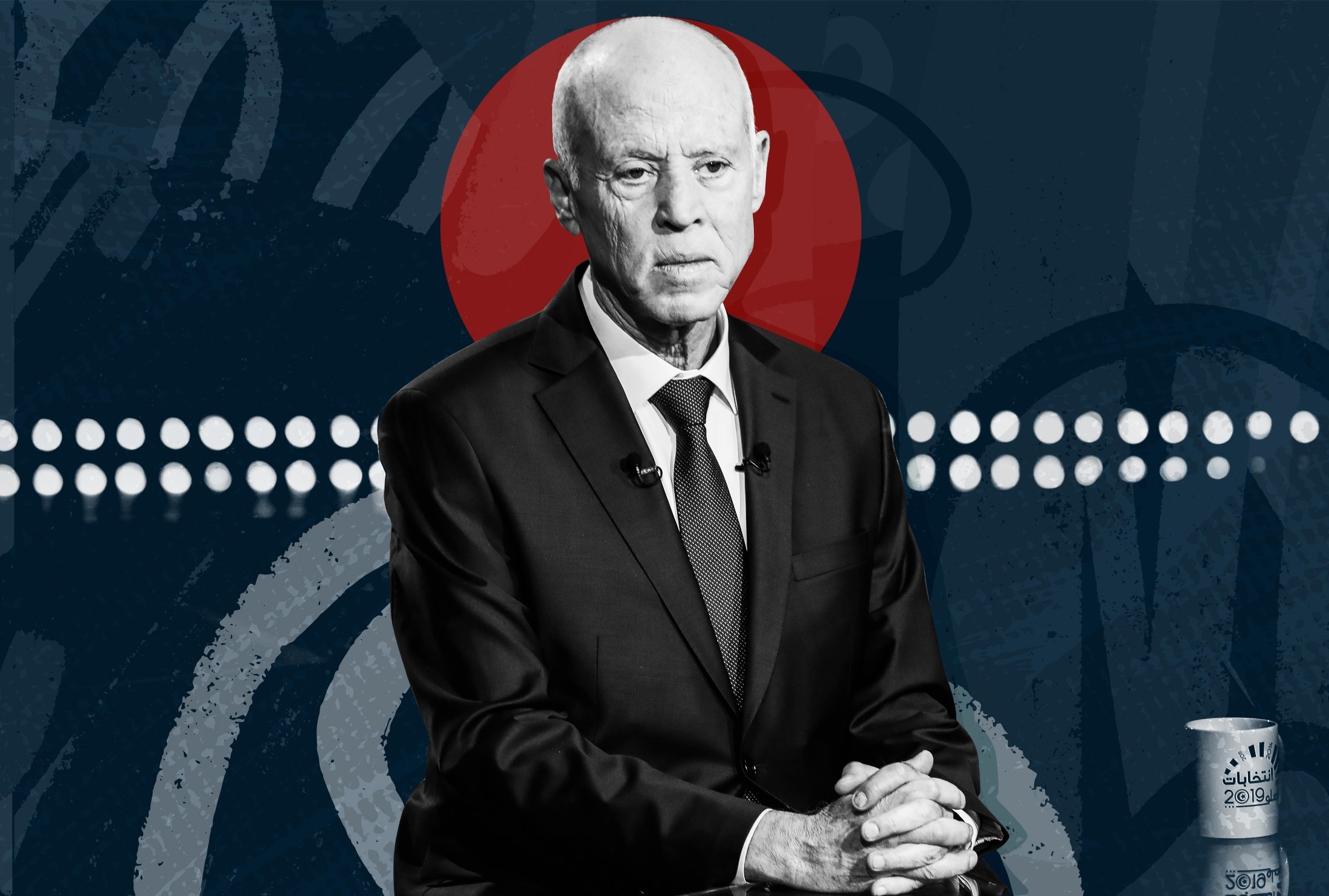
Daily Sabah photo illustration shows Tunisia's President Kais Saied.
by Abdennour Toumi Jul 26, 2021 2:14 pm

Regardless of how the story ends, Saied's coup only serves to weaken democracy in Tunisia

There is different Tunisian exceptionalism that has left analysts wondering about the country's domestic politics. One may think that Tunisian politics is local; however, it’s indeed anything but local.

The country’s President Kais Saied was elected in 2019. In the spirit of the Jasmine Revolution, Saied obtained a comfortable victory from the conventional political parties, notably the Ennahdha party. He described his election victory as a new revolution.
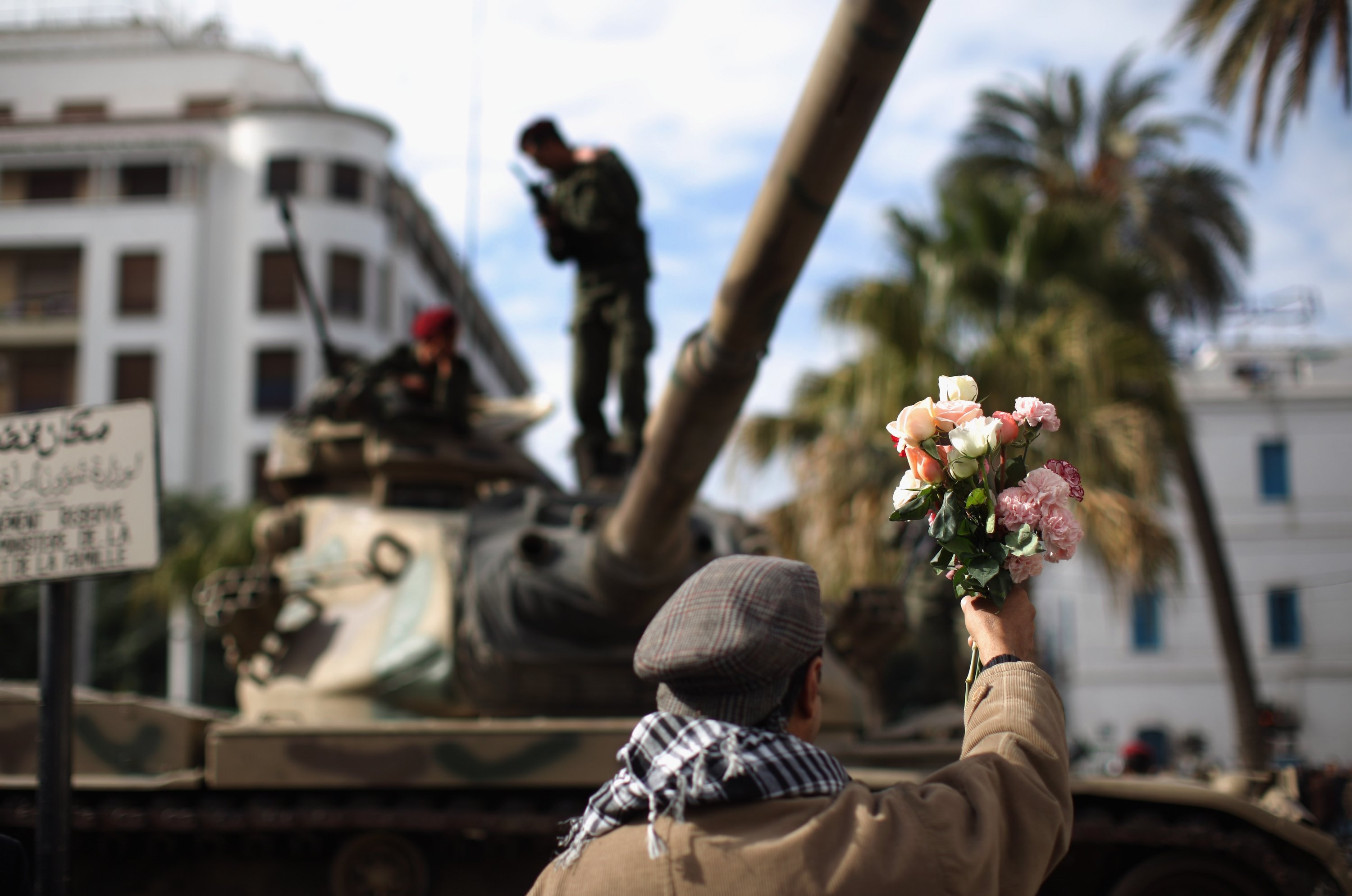
A demonstrator offers flowers to soldiers on their tank as an uneasy peace hangs over Tunisia, in Tunis, Tunisia, Jan. 21, 2011. (Photo by Getty Image)

Saied, a former constitutional law professor, did not have a political party that he could rely on in parliament.

Back in 2019, he was almost like a lame duck president because the country’s constitution does not give the president large executive power, while the very same rules authorize the government for the daily administration issues. In other words, the Tunisian president could only watch the military and foreign affairs domain.

Nearly two years after his election, Saied’s term in office has created political tensions and divisions. On Sunday night, Saied dismissed the government and froze parliament.

The power struggle

A coup was orchestrated by a president who has the ability to read between the lines of a fragile constitution established to trim Ennahdha’s wings and limit its influence in the new Tunisia (post-former Tunisian President Zine El Abidine Ben Ali).

The president used Article 80 of the 2014 Constitution in the context of exceptional circumstances.

He implicitly enhanced the role of the military in the political arena, which is a new imperative in Tunisian politics.

Even former President Habib Bourguiba did not do it – to the contrary he sidelined the military, using the police and its domestic intelligence instead. Later, late Gen. Ben Ali ousted him in 1987.

Saied thinks that he can govern with a technocrat government because under these constitutional conditions called exceptional circumstances, governing is easier.

After a decade of democracy, or at least a learning process of participative democracy in the Middle East and North Africa (MENA) region, Tunisia has run into a dead-end.

Saied acted like another authoritarian leader in the region, sacking legitimate MPs and the government, despite all the negative signs that both branches have been sending to the voters.

Saied's representation

Saied’s bold announcement to sack the executive and legislative branches was allegedly based on a terrible COVID-19 vaccine campaign and on Sunday’s demonstrations across the country calling for the resignation of the government and chanting anti-Ennahdha slogans.

This political alibi was considered a U-turn by analysts. So far, Tunisians have done much to diminish autocratic tradition but did not do enough to create room for a stronger democracy, good governance and economic prosperity – something the masses have been waiting for for decades.

Saied is using his last card, thinking he can break through and get a free hand to lead. Yet Tunisians have nothing to lose now and are determined to fight for freedom. Therefore, we are likely to witness massive protests and turmoil over the next few days.

In a nutshell, Saied misread the real meaning of the Jasmine Revolution and made a great miscalculation.

What went wrong?

A decade later, Tunisians feel their dream has evaporated but the youth is still hopeful of a better life. Years have passed, but Tunisia is still struggling to fully establish a constitutional court to serve as a strong legal tool for a balanced atmosphere in the country.

Tunisia got trapped between two ways of thinking: a dilemma that has been striking deep division between the elite and masses on one hand and the arrogant secularists and conservatives/traditionalists on the other.

Unlike in Turkey, which showed political maturity and democracy a real red line in the face of the 2016 attempted coup, the political thought in Tunisia has left Arab states perplexed.

.
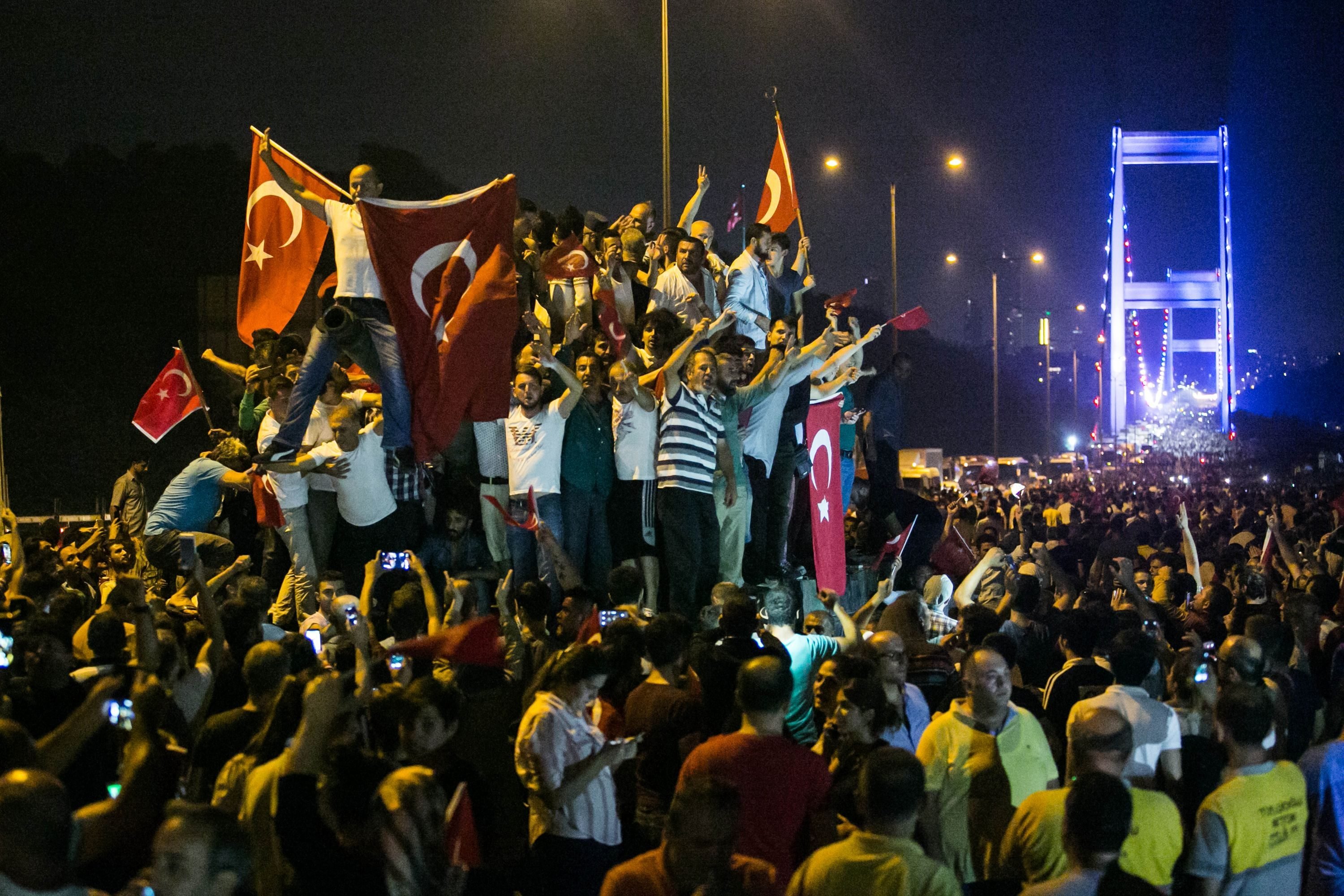
People take to the streets near the Fatih Sultan Mehmet bridge during the resistance against the coup plotters, Istanbul, Turkey, July 16, 2016. (AFP Photo)

Consequently, Tunisians have these two choices: To either take the road that millions of Turks took on the night of July 15 or surrender like Egyptians to the coup of Abdel-Fattah el-Sissi in 2013.


About the author
Senior consultant at Middle East and Africa Strategic Institute (MEA) in Paris, France
The views and opinions expressed in this article are solely those of the author. They do not necessarily reflect the editorial stance, values or position of Daily Sabah. The newspaper provides space for diverse perspectives as part of its commitment to open and informed public discussion.
  • shortlink copied
  • Last Update: Jul 26, 2021 4:15 pm
    KEYWORDS
    coup in tunisia kais saied ennahda mena region jasmine revolution
    The Daily Sabah Newsletter
    Keep up to date with what’s happening in Turkey, it’s region and the world.
    You can unsubscribe at any time. By signing up you are agreeing to our Terms of Use and Privacy Policy. This site is protected by reCAPTCHA and the Google Privacy Policy and Terms of Service apply.
    No Image
    Shelling in Ukraine raises tensions
    PHOTOGALLERY
    • POLITICS
    • Diplomacy
    • Legislation
    • War On Terror
    • EU Affairs
    • News Analysis
    • TÜRKİYE
    • Istanbul
    • Education
    • Investigations
    • Minorities
    • Diaspora
    • World
    • Mid-East
    • Europe
    • Americas
    • Asia Pacific
    • Africa
    • Syrian Crisis
    • İslamophobia
    • Business
    • Automotive
    • Economy
    • Energy
    • Finance
    • Tourism
    • Tech
    • Defense
    • Transportation
    • News Analysis
    • Lifestyle
    • Health
    • Environment
    • Travel
    • Food
    • Fashion
    • Science
    • Religion
    • History
    • Feature
    • Expat Corner
    • Arts
    • Cinema
    • Music
    • Events
    • Portrait
    • Performing Arts
    • Reviews
    • Sports
    • Football
    • Basketball
    • Motorsports
    • Tennis
    • Opinion
    • Columns
    • Op-Ed
    • Reader's Corner
    • Editorial
    • Photo gallery
    • DS TV
    • Jobs
    • privacy
    • about us
    • contact us
    • RSS
    © Turkuvaz Haberleşme ve Yayıncılık 2021