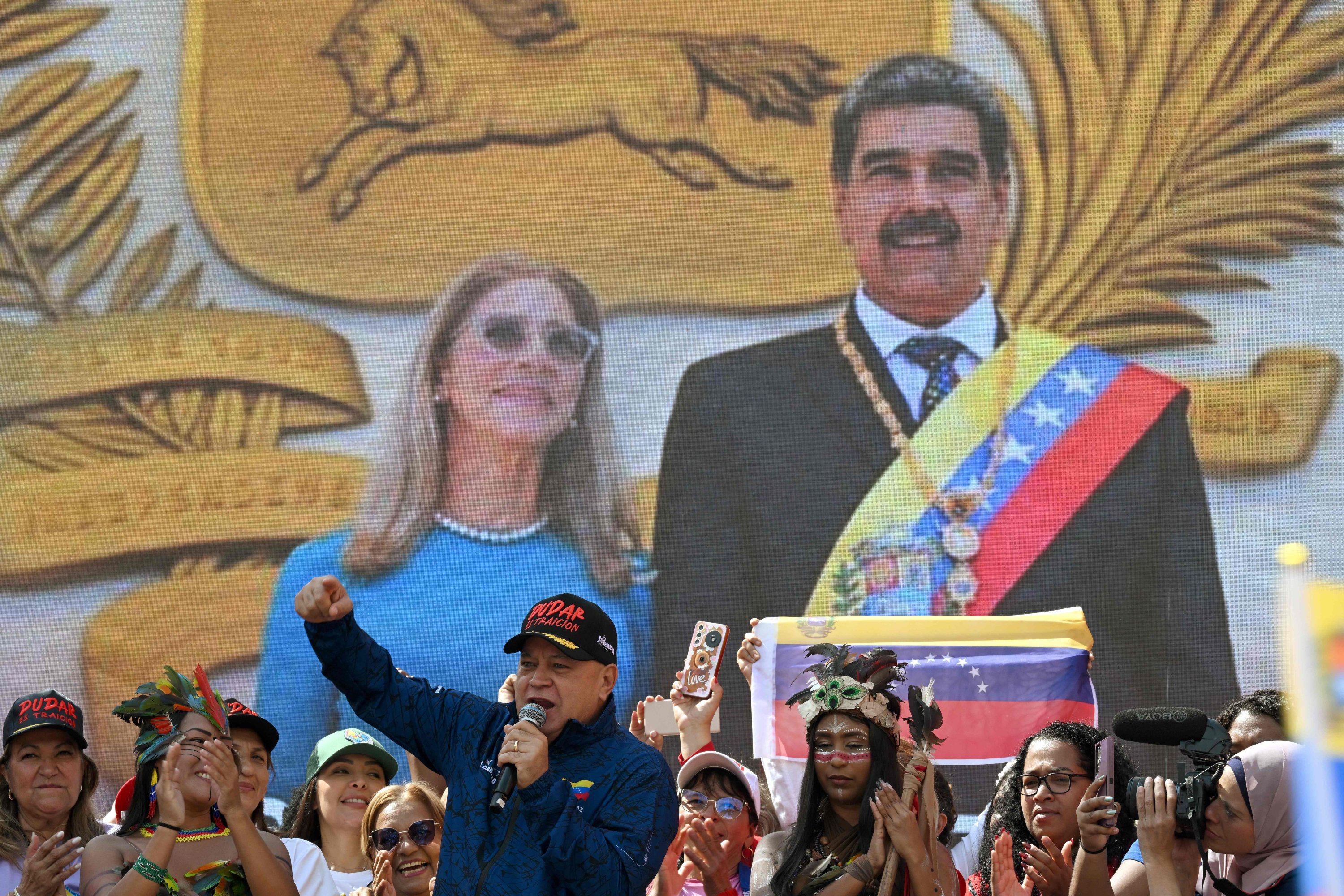
Latin America has occupied an uneasy space in the U.S. worldview, close enough to feel familiar, yet rarely treated as fully autonomous in U.S. strategic thinking. From the Cold War onward, Washington has often approached the region less as a group of sovereign nations and more as an informal sphere of influence. Few countries illustrate this tension more clearly than Venezuela, now officially known as the “Bolivarian Republic.”
Understanding Venezuela’s significance to U.S. policymakers requires unpacking that title. “Bolivarian” invokes Simon Bolivar, the 19th-century revolutionary who spearheaded anti-colonial independence movements across much of northern South America. In contemporary Venezuelan politics, Bolivarianism has come to signify national self-determination, redistribution of wealth, resistance to external control, and regional independence from U.S. dominance. Under Hugo Chavez and later Nicolas Maduro, this ideology materialized in a state-driven economic model, tight control over strategic industries, particularly oil and an openly confrontational posture toward Washington, including during U.S. President Donald Trump’s presidency.
That confrontation intensified during Trump’s first term. His administration adopted a “maximum pressure” approach toward Caracas, combining sweeping sanctions, diplomatic isolation and recognition of an opposition leader as Venezuela’s rightful president. Trump frequently spoke of Venezuela’s oil wealth needing to be “opened up,” language that many critics saw as revealing motivations that extended beyond democratic concern to resource access. After leaving office, Trump claimed that Venezuela would have been “taken over” had he remained president, later faulting President Joe Biden for not pursuing that course. Whether bluster or intent, such remarks revived long-standing fears in Latin America of a return to blunt, unilateral intervention.
These anxieties are rooted in history. The U.S. has long regarded Latin America as its strategic “backyard,” a perception codified through doctrines and policies dating back well before World War II, most notably the Monroe Doctrine. Under this framework, U.S. interventions were routinely portrayed as protective or stabilizing, even when they involved toppling elected governments.
The failed Bay of Pigs invasion in 1961 remains one of the most emblematic episodes of U.S. interventionism. Cuba itself held limited economic value for the U.S., lacking major natural resources that could be easily exploited. Its strategic importance was primarily ideological. A communist government just 90 miles from U.S. shores was intolerable in the atmosphere of Cold War anxiety and McCarthyism that dominated American politics in the early 1960s. Conceived as a covert operation to overthrow Fidel Castro’s revolutionary government, the invasion ended in humiliation for Washington and pushed Havana decisively into the Soviet orbit. The scandalous U.S. military failure later became a case study in elite decision-making circles, yet the lesson policymakers drew was not that intervention itself was misguided, but that it required more careful planning and control. Consequently, regime-change efforts – both covert and overt – continued throughout the Cold War and persisted well beyond it across Latin America.
Beyond Cuba, U.S. intervention in Latin America took many highly visible forms, often combining political pressure, covert action and economic engineering. In Guatemala in 1954, the CIA helped overthrow the democratically elected government of Jacobo Arbenz after it threatened U.S. corporate interests, particularly those of the United Fruit Company. In Chile, U.S. involvement reached a different dimension after the 1973 coup that toppled President Salvador Allende. Following the rise of Augusto Pinochet’s military dictatorship, U.S.-trained “Chicago School” economists – disciples of Milton Friedman – were brought in to redesign Chile’s economy along strict free-market lines, emphasizing privatization, deregulation and austerity. While praised by some as a neoliberal “success story,” these policies were implemented under authoritarian rule and accompanied by widespread repression, highlighting how economic ideology often advanced alongside political coercion. Similar patterns of intervention, support for military regimes and influence over economic policy appeared in countries such as Nicaragua, El Salvador and Argentina, reinforcing the perception across the region that U.S. involvement prioritized strategic and ideological goals over democracy and human rights.
The logic underpinning these actions has not been confined to Latin America. Critics frequently point to the 2003 U.S. invasion of Iraq as a parallel case in which intervention was justified through contested claims. The George W. Bush administration alleged that Iraq possessed weapons of mass destruction, presenting this as an urgent threat to global security. These claims were strongly promoted by Israeli leadership at the time, including Prime Minister Benjamin Netanyahu, and were adopted by U.S. policymakers as a central rationale for war. The invasion toppled Saddam Hussein – an outspoken opponent of Israel and U.S. regional influence – but subsequent investigations found no evidence of active weapons of mass destruction programs. For many observers, the absence of such weapons confirmed that the allegations had been exaggerated or fabricated, reinforcing the perception that strategic dominance and regional power, particularly the strengthening of Israel’s position in the Middle East, were key, if unstated, objectives.
Venezuela today represents a contemporary chapter in this long-running struggle. U.S. pressure on Caracas has unfolded alongside a broader strategic shift articulated in the most recent National Security Strategy, the first issued by the new Trump administration. That document emphasized a reassertion of U.S. hegemony in the Western Hemisphere, calling for greater concentration of political, economic and military focus on Latin America while deprioritizing other regions of the world. Rather than signaling restraint, this strategy reflected a return to hemispheric dominance, positioning Latin America once again as the primary arena for American power projection. Within this framework, Venezuela emerged not simply as a diplomatic problem, but as a central test of Washington’s ability to reimpose authority in its traditional sphere of influence.
Any escalation would unfold within a complex international environment. Russia and China have expanded their economic and diplomatic engagement with Caracas, while European governments, though critical of Maduro, remain cautious about unilateral coercion or military action. A U.S.-led push against Venezuela could provoke significant global backlash, further testing Washington’s already strained international credibility. Instead of isolating Caracas, such a move might leave the United States increasingly isolated, particularly among countries that favor multilateral solutions over force.
Washington defends its hardline approach by pointing to allegations of corruption and drug trafficking involving Maduro and his inner circle, charges that warrant serious examination. Yet across Latin America, these justifications often sound familiar: moral rhetoric layered over deeper strategic and economic interests. Venezuela holds the world’s largest proven oil reserves, along with other valuable resources, making influence over the country an enduring, if often unstated, objective.
Paradoxically, U.S. pressure has also bred resistance. Over the past century, Latin America has repeatedly produced political movements – leftist, nationalist and populist – that define themselves in opposition to American power. From Cuba and Nicaragua to Chile and Venezuela, such movements draw legitimacy precisely from resisting external interference. Each heavy-handed action reinforces the belief that regional sovereignty remains under constant threat.
From the Bay of Pigs to Baghdad, and now to Caracas, the pattern is difficult to ignore. U.S. interventions, whether military, economic or political, have seldom delivered the stability or democratic outcomes they promised. More often, they have deepened mistrust, empowered rival global powers, and strengthened identities rooted in resistance to U.S. dominance and waves of hate against the American people who have nothing to do with those political decisions. If Washington truly seeks a more constructive relationship with Latin America and beyond, it must finally abandon the illusion of control and confront the long-term costs of its own interventionist history.