The collapse of the Bashar Assad regime, along with all its institutions, in the final days of 2024 marked not only the end of authoritarian rule but also the beginning of a challenging period in Syria, one marked by the construction of a new state and the restructuring of the bureaucratic structure, particularly security. With Ahmed al-Sharaa's forming a new government and election as interim president, the process of public order and political transition in Syria began to be carried out simultaneously.
However, the rapid establishment of a new government in Syria created serious challenges, particularly in terms of security and administrative capacity. The lack of security forces in major cities like Damascus and Aleppo prompted the Damascus government to create new security forces through accelerated training. These steps were the first and essential steps in the process of state reconstruction.
Therefore, the government deferred direct intervention in external problems threatening public order, prioritizing internal consolidation and the construction of temporary institutions. Crises with actors such as the Israeli-backed Druze militia in Suwayda and the terrorist organization YPG in northeast Syria were envisioned to be resolved over time. However, the recent Suwayda crisis demonstrated that postponing the problems does not produce a lasting solution.
The local conflict of interest between Israeli-backed Druze militias and Arab Bedouins constituted the initial spark for what has since escalated into large-scale confrontations. According to open sources, the Damascus government believed it had received tacit approval for an intervention in Suwayda during recent meetings with Israeli delegations in Azerbaijan. Therefore, it is assumed that the Syrian Army is openly involved in Suwayda. However, it is stated that this "green light" has been misinterpreted. Statements by U.S. Secretary of State Marco Rubio, in particular, appear to confirm these claims. However, the Damascus government denies these allegations.
When Damascus deployed its security forces to the region, Druze militias directly supported by Israel responded with ambush attacks. The clashes rapidly escalated, and the Syrian Army initially managed to regain control over Suwayda through the deployment of reinforcements. However, this control proved short-lived. Israel first intervened with warning shots and subsequently launched direct airstrikes. Several critical government buildings in Damascus, including the People’s Palace where Ahmed al-Sharaa was present, were targeted and bombed. According to media reports, over 800 soldiers were killed and more than 1,000 were wounded. In the wake of these significant losses, the Damascus regime was compelled to withdraw from Suwayda following negotiations conducted through intermediaries.
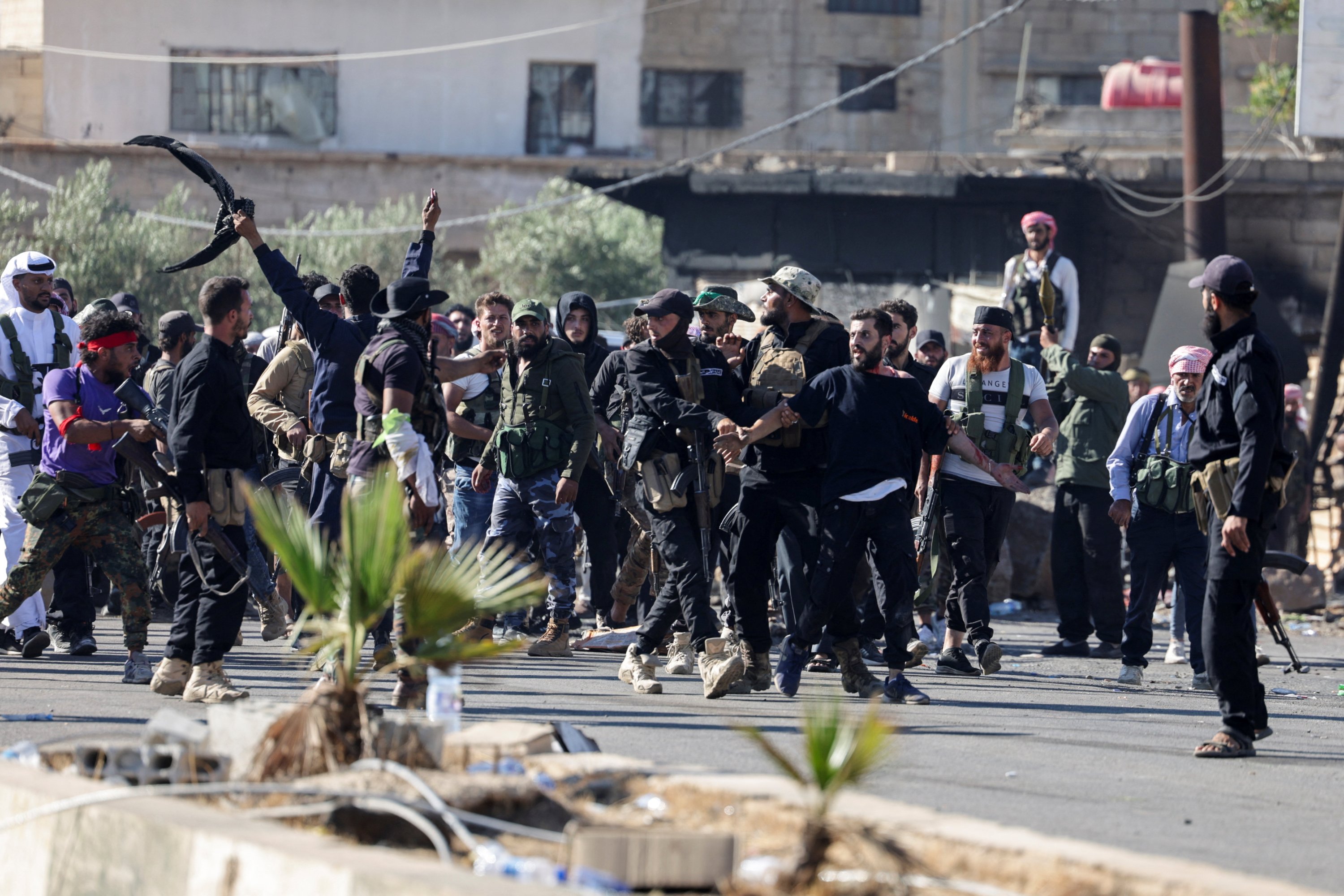
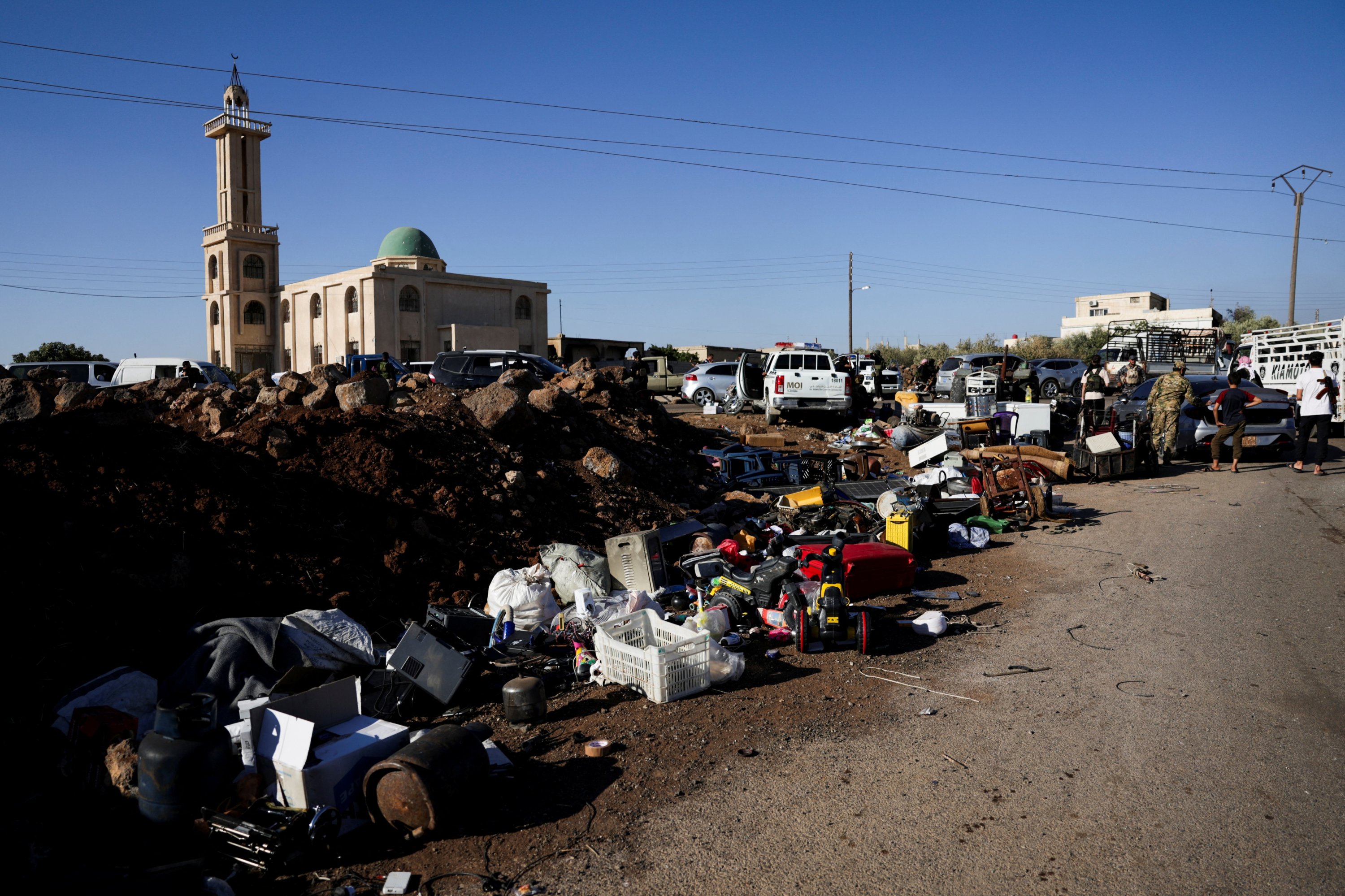
Following the withdrawal of Syrian government forces, Israeli-backed Druze militias reentered the city and reportedly carried out systematic acts of violence against Sunni Arab civilians. Residential areas were set on fire, civilians were killed, and numerous accounts of sexual violence, including rape, were reported. In response to the rapid dissemination of these reports, tribal groups across the country mobilized their lightly armed units independently and dispatched them to the region. Within a short span of time, thousands of Bedouin tribal fighters had arrived in Suwayda. While their advances, particularly in rural areas, are increasingly evident, new reinforcements are on the way, as confirmed by images frequently appearing in the media.
However, it is important to emphasize an important distinction at this point: not all Druze are involved in these attacks. There is a significant segment of the population acting in coordination with Damascus. The destruction of Druze leader Leys al-Balus' home and the grave of his father by Druze militias demonstrates that the Israeli-backed militias have completely been out of control. These elements, led by Sheikh Hikmat al-Hijri, who opposes the Syrian government, are effectively attempting to terrorize the city and the country. Images of slain Arab tribesmen being hanged in public squares and displayed in front of vehicles or in their trunks constitute one of the reasons why Arab tribespeople flocked to the region with such outrage.
As of July 18, the Syrian Presidency announced its intention to deploy forces to Suwayda to restore public order; however, the Israeli-backed militias have rejected this initiative. Therefore, the conflict in Sweida risks irreversible consequences. Indeed, the rejection of this approach by the Israeli-backed Druze militias has prevented the Arab tribes from withdrawing, and the tribal elements have decided to continue their attacks on the city.
By supporting the Druze militia, Israel is not only taking a position in Suwayda; it also claims to shape the political architecture of the country. Israel's goal is not only border security but also the destabilization of the new order being established in Damascus under the leadership of Ahmed al-Sharaa. Among Israel's objectives are the collapse of public authority, the failure to build a new Syria, and the sabotage of the investment processes that Western countries, especially the U.S., have been pursuing with high hopes since the revolution.
Its aim is to prevent Türkiye, a key actor in Syria, from taking part in the construction of a new Syrian state and, in particular, the Syrian Army. It should not be forgotten that the T4 base in Homs, where Türkiye is planned to be deployed, was subjected to Israeli airstrikes. It aims to disrupt the positive atmosphere established by U.S. President Donald Trump, President Recep Tayyip Erdoğan, and Gulf leaders regarding the Syrian issue, thereby repositioning the U.S. in line with Israel's priorities and interests in Syria policy.
Therefore, Israel's aggression is not only a security problem; it is also a violation of sovereignty, a war crime, and blatant sabotage. Israel has not only violated international law but also orchestrated massacres of civilians through the militia groups it supports. This situation is a clear alarm to the countries in the region.
The most urgent priority today is to reestablish public order in Suwayda. The mobilization of tribal forces driven by motives of revenge risks triggering a new humanitarian catastrophe. Preventing this requires the restoration of security in the city under the leadership of the Damascus government. The disarmament of Druze militias and ensuring their crimes are not left unpunished is crucial for justice.
Furthermore, an international diplomatic effort must be undertaken to curb Israel’s unrestrained aggression. Regional countries, primarily Türkiye, should take measures to support the new Damascus government and deter Israeli provocations. Otherwise, the revolutionary momentum achieved in Syria risks being undermined by internally instigated conflicts fueled by Israel.