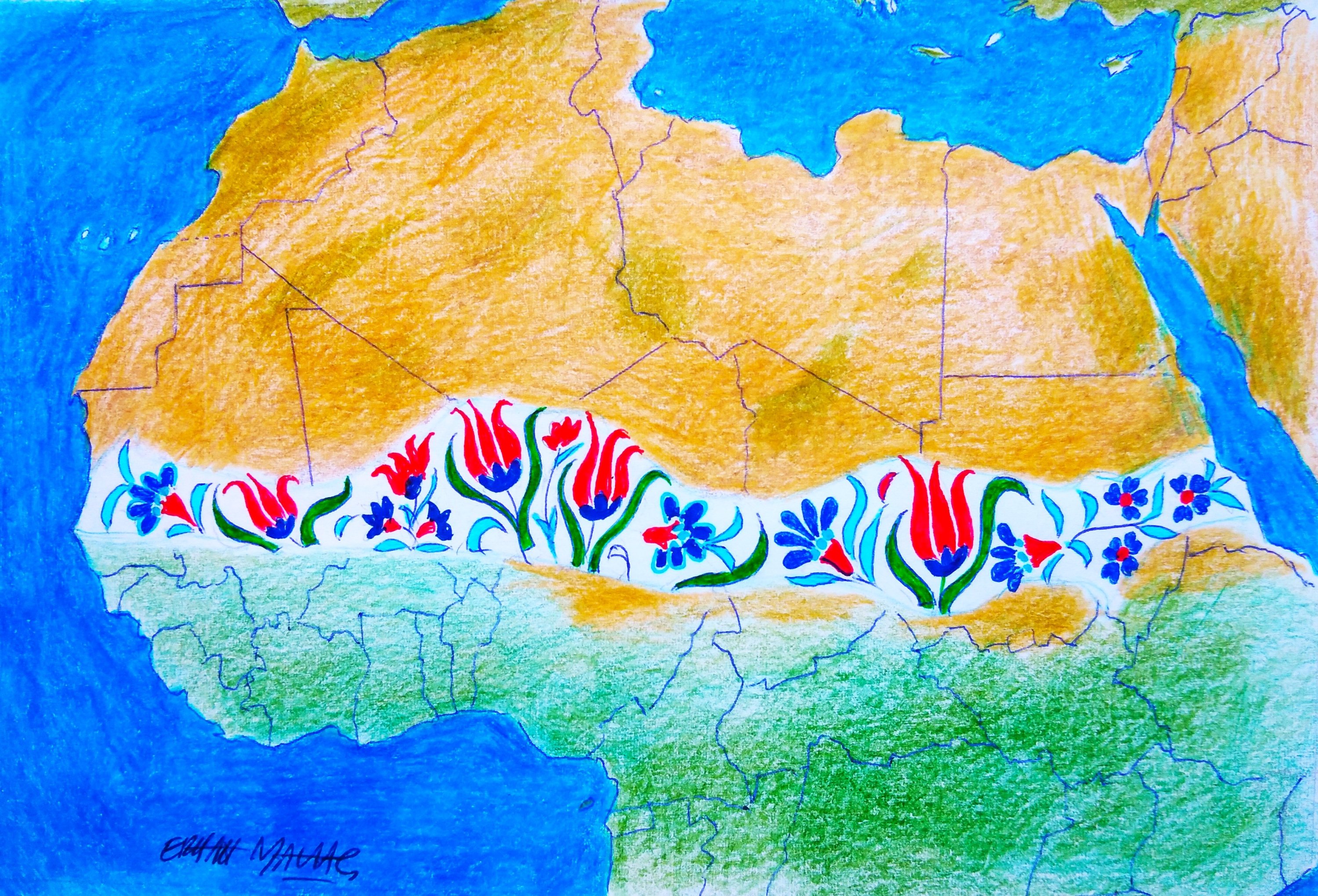
As Western alliances crumble in the Sahel, Türkiye is forging a new strategic axis stretching from the Mediterranean to the Atlantic, offering a partnership model built on autonomy and mutual respect.
For decades, the conventional wisdom in Western capitals has been that West Africa requires “guidance” and “aid” to maintain stability. That assumption has now collapsed. The region’s political landscape has changed in ways that render old intervention models obsolete. While traditional powers grapple with the loss of their once-unquestioned dominance, a vast strategic zone stretching from the Sahel to Senegal, Morocco and the Mediterranean is quietly being reconfigured. At the center of this transformation is Türkiye. Ankara’s expansion is a strategic response to this transformation, making it a key player shaping the new geopolitical landscape.
To understand why Türkiye is succeeding, one must first accept the total failure of the previous security architecture in the Sahel. The coups in Mali, Burkina Faso and Niger were not isolated incidents of unrest; they were a systemic rejection of the status quo. Western observers often dismiss these events as symptoms of democratic backsliding, missing the deeper reality: African states are actively shopping for real partners. While former colonial powers face a legitimacy crisis, Türkiye stands out precisely because it carries no historical baggage. Ankara’s approach is devoid of the moralizing tone that often accompanies Western engagement. By balancing military support with political respect, Türkiye offers what the region has lacked for decades: predictability.
A physical transformation on the map mirrors Türkiye's emergence in Africa. Morocco’s Atlantic Initiative is not merely a commercial proposal; it is a geopolitical artery designed to bypass the instability of the interior by linking the Sahel directly to the Atlantic Ocean. This project rewrites the logic of African connectivity. Türkiye has positioned itself as the natural partner in this new architecture. Ankara’s deep ties with Rabat allow it to project power and logistics capabilities from the Mediterranean deep into the Atlantic coast. Every Turkish-built port, highway and logistics hub in Senegal, Mauritania or the Ivory Coast is a tangible stake in this future. While others talk about development, Türkiye is pouring concrete, effectively integrating itself into the region’s economic nervous system, backed by trade volumes that have soared to over $40 billion.
There is a fundamental misunderstanding in the West regarding Türkiye’s defense cooperation in Africa. It is often reduced to the sale of drones. In reality, African capitals are not just buying hardware; they are buying independence. Unlike Western military aid, which often comes with heavy political strings and operational restrictions, Türkiye offers a model of “strategic autonomy.” Ankara’s focus on capacity building through military academies, police reform and technology transfer resonates because it treats African security forces as sovereign entities capable of managing their own defense. This is critical in a region where state capacity has been hollowed out by years of dependency.
This approach positions Türkiye as a pragmatic “Third Way” beyond great power rivalry. West African leaders face a shrinking menu of strategic options. On one side lies the Western model, increasingly viewed as paternalistic. On the other hand are China and Russia. While Beijing offers infrastructure, its loans often spark fears of “debt traps.” Russia provides regime security through paramilitaries, but this creates dependency rather than state capacity. In this polarized landscape, Ankara acts as a unique geopolitical hybrid: a NATO member with NATO-standard military capabilities, yet a diplomat that speaks the language of the Global South. When Turkish companies build a railway, they do so through competitive bidding rather than opaque state-to-state lending. Similarly, Türkiye’s security assistance focuses on institutionalizing the army rather than deploying mercenaries.
Crucially, this hard-power expansion is underpinned by a sophisticated soft-power offensive. The success of Turkish defense systems captures headlines, but the durability of Ankara’s influence rests on its societal integration. Institutions such as the Turkish Cooperation and Coordination Agency (TIKA) and the Maarif Foundation serve as force multipliers. By educating the next generation of West African elites in Turkish universities and delivering health care services directly to underserved communities, Ankara builds a reservoir of public goodwill. In a region where anti-foreign sentiment is rising, the Turkish flag is predominantly associated with solidarity. This grassroots legitimacy creates a symbiotic relationship where security cooperation and societal development reinforce one another.
The competition for West Africa is no longer just about influence; it is about survival and energy security. As Europe scrambles to diversify away from Russian energy, the Atlantic corridor has become a vital theater. Here, too, Türkiye distinguishes itself through a model of shared risk. Instead of the extractive, one-sided energy deals of the past, Ankara proposes joint ventures and integrated pipeline security. Even regional institutions are feeling the pull of this new dynamic. The Economic Community of West African States (ECOWAS), once the undisputed arbiter of regional stability, has been paralyzed by internal divisions following the coups. Into this void, Türkiye brings a capacity for defense diplomacy that talks to all sides. Ankara reads the room correctly: it seeks equilibrium, not dominance.
The West has no choice but to confront this new truth. The era of dictating terms to West Africa is over. The complex interplay of rapid urbanization, a youth-driven demographic boom and the harsh realities of climate change will define the region’s future. Türkiye is not watching these dynamics from a distance; it is shaping them on the ground.
Fundamentally, Türkiye’s deepening footprint represents a durable strategic realignment. This is not a temporary dip in Western influence but a structural change in how the Global South chooses its partners. Anchored in respect and backed by hard power, Ankara’s strategy suggests that the future of the Atlantic corridor will look very different from its past. By weaving together diplomacy, investment and societal outreach, Türkiye is helping to forge a partnership model that genuinely mirrors Africa’s aspirations for autonomy, whether the old powers like it or not.
*Ph.D. candidate specializing in African geopolitics and the Sahel region, global politics and foreign policy analyst at the Ankara Center for Crisis and Policy Studies (ANKASAM), currently based in Morocco.