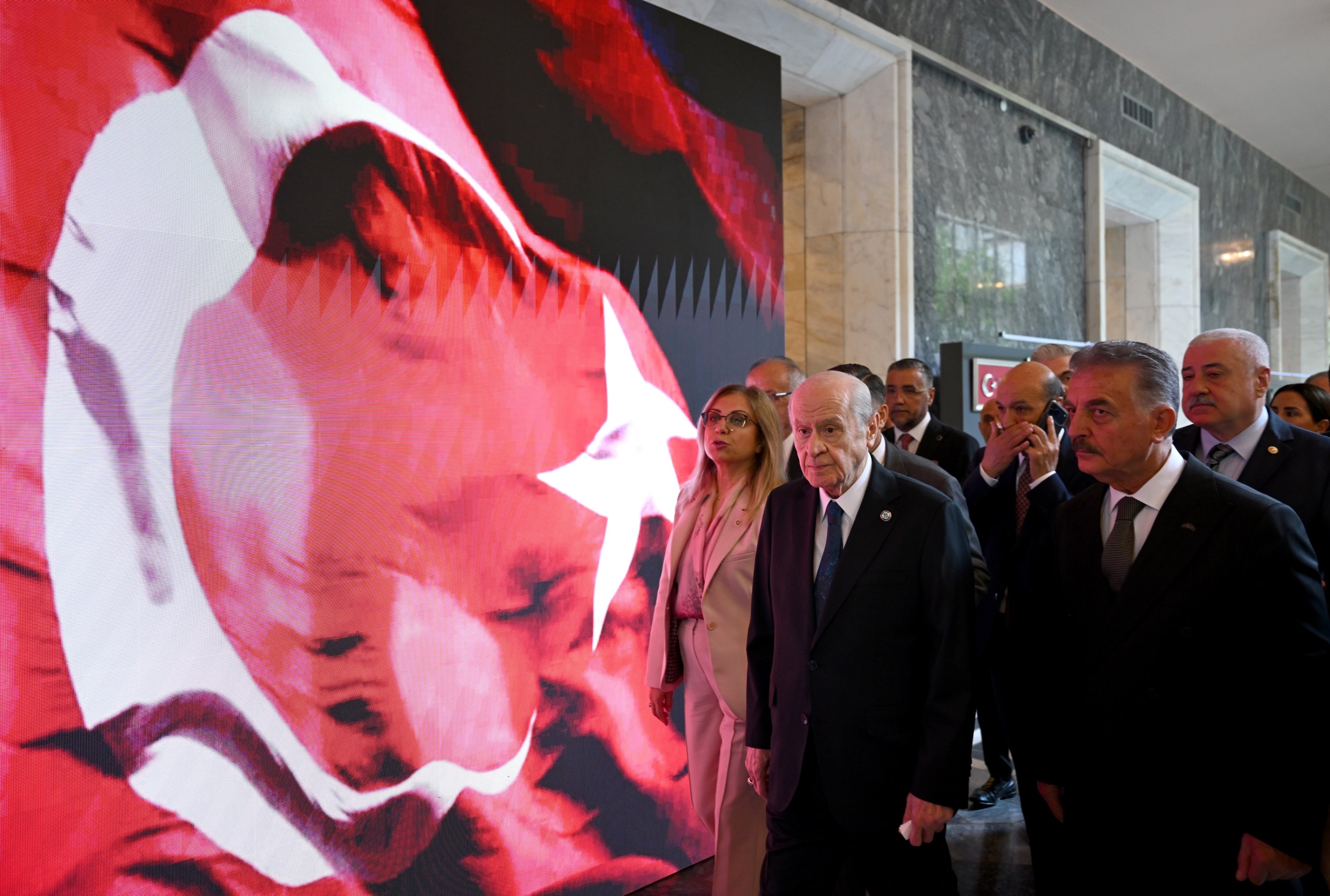
“Türkiye’s place is not in the waiting room of Europe,” Nationalist Movement Party (MHP) leader Devlet Bahçeli said Tuesday.
The government ally lamented that the European Union acted with political calculations instead of seeing the reality about Türkiye. “Türkiye’s membership process has been assessed based more on political judgment than technical criteria,” he told a parliamentary group meeting of his party in Ankara. “They blocked chapters of accession, postponed their responsibility and have not fulfilled their promises while Türkiye’s fair expectations have been overshadowed by (Europe’s own) agenda,” he said.
Bahçeli’s remarks are a reflection of Türkiye’s oft-repeated frustration with the bloc and come at a time when Türkiye strives for another shot at membership as the continent explores collaboration options, especially for security in the shadow of the Russia-Ukraine conflict. Earlier this month, Türkiye hosted a NATO summit attended by EU heads of state and government. The summit was also an occasion for Türkiye to call for more cooperation with European Union countries, especially in defense.
The MHP itself has been a target of European Parliament reports critical of the country, with calls for the criminalization of Ülkü Ocakları or Idealists’ Clubs, known as Grey Wolves in Europe, an affiliate of the party.
“Europe narrowed its strategic horizon by keeping Türkiye in its waiting room. They think Europe will remain strong by excluding Türkiye, but I suggest they see the security and stability challenges they face now. Europe is increasingly facing a strategic uncertainty,” Bahçeli stated.
Bahçeli also hit out at Greece’s stance on Türkiye’s relations with the European Union. “It is neither smart nor sustainable to limit Europe’s security with political calculations of Athens,” he said.
“Third countries cannot hold Turkish-European relations hostage,” Bahçeli added. Greece and the Greek Cypriot administration often oppose Türkiye’s ambitions for EU membership or the expansion of security and defense cooperation between the bloc and Ankara.
“No country has the right to present its own problems with other countries as a joint security challenge for the entire Europe,” he underlined.