According to official figures, Türkiye has 190 political parties. This number may sound incredibly high and can be reduced to below 100 if you don’t count parties whose membership numbers are only a few dozen, as well as parties with only one branch or office and a sign. Still, Türkiye is rich in democratic tradition, with new parties being established almost every two years, although few parties can make it to parliament.
Here are some of the major parties that have endured closure lawsuits, military juntas and tectonic shifts in voters’ preferences.
In power since 2002, the ruling AK Party is a true survivor of Turkish politics, which was often interrupted by coups. Weathering a closure lawsuit and multiple attempts to overthrow its governments, the party is the most successful in the brief history of democracy in the country in terms of its winning streak. It won seven consecutive legislative elections and broke the unfortunate tradition of short-lived coalition governments that had run the country since the 1970s.
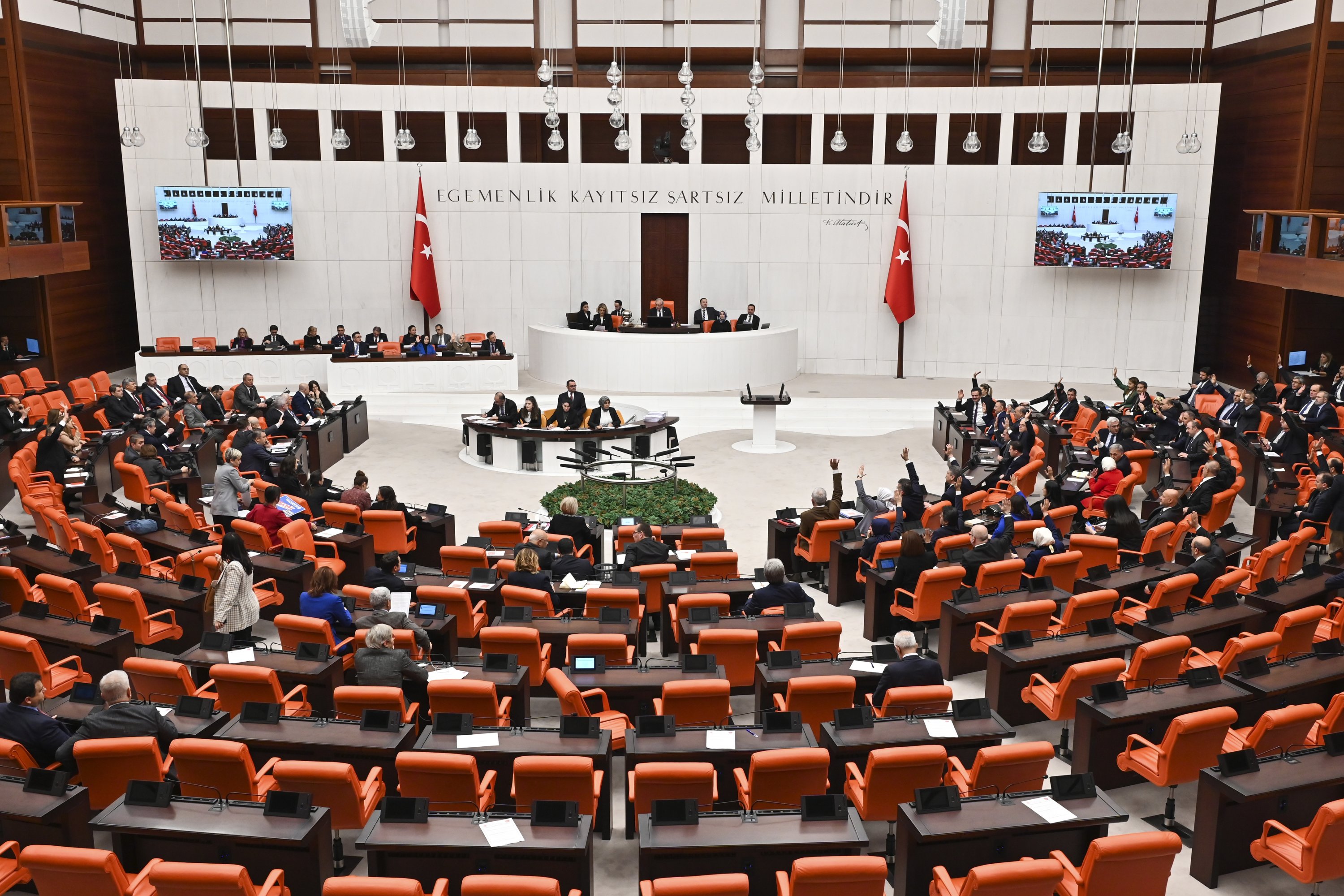
The party, which currently has 277 seats in the 600-seat parliament, has more than 11.7 million members, according to official figures, making it one of the largest parties in the region where Türkiye is located.
The AK Party was founded by an assorted mix of politicians, mostly from parties that pursued right-wing, conservative politics, but it managed to attract voters from the opposite side of the political spectrum with an all-embracing approach. With the decline of other right-wing and conservative parties, the party grew more and more over two decades.
The party’s leader is President Recep Tayyip Erdoğan, who established it with fellow politicians, mainly from the now-defunct Welfare Party (RP), where Erdoğan first rose to prominence as a skilled orator and then as mayor of Istanbul. Erdoğan later handed the chairmanship of the AK Party to Prime Minister Ahmet Davutoğlu when he was elected president, as a president could not be the chair of a party under the former presidential system. He returned to the chairmanship in 2017 after Türkiye switched to an executive presidential system. The party’s logo is a lightbulb emitting seven rays, which represent the seven geographic regions of Türkiye.
The AK Party received 35.62% of the parliamentary vote in the last legislative election, held in 2023, and the only election in which it suffered a serious setback was the 2024 municipal elections, when the party lost several strongholds and failed to take back Istanbul Municipality, which it had run for years. Still, the party managed to receive 35.49% of the vote and won 24 provincial and 357 district municipalities in the 2024 local elections.
The party is a member of the People’s Alliance, which it first set up with the Nationalist Movement Party (MHP) during the 2018 elections.
Founded in July 2026, the New Party (YP) is the second-largest party in the Turkish Parliament, with 91 lawmakers. Its chairman is Özgür Özel, former chairman of the Republican People’s Party (CHP).
YP became a main opposition party within days of its foundation by former CHP members.
It is a product of infighting within the CHP. When a court ordered the reinstatement of Özel’s predecessor in the CHP over allegations of vote-buying in a 2023 intra-party election, Özel was forced out of office in May 2026. After vowing to pursue a legal battle, Özel changed his mind within days and announced the establishment of YP.
YP touts a new political vision seeking to attract voters antagonized by the CHP, but it also claims a commitment to the principles of the social democratic CHP. As Özel announced in his declaration of the party’s foundation, YP aims to establish a “Türkiye Alliance with conservative, nationalist, Kurdish and social democratic circles.” The party’s logo is plain text reading “Yeni” (New in Turkish), with the letter N bearing a striking resemblance to the logo of a certain international streaming platform.
MHP is one of the oldest nationalist parties in Türkiye and was founded in 1969 when its founder, former military officer Alparslan Türkeş, changed the name of his Republican Peasants’ Nation Party. Türkeş is considered the father of modern Turkish nationalism, which had been confined to the margins of politics during the final days of the Ottoman Empire and the early years of the Republic of Türkiye.
The party’s current leader is Devlet Bahçeli, who was elected in 1997, one month after Türkeş’s death. Bahçeli won successive intra-party elections and boosted MHP’s vote share in the 1999 elections from 8.1% to 17.9%, securing a seat in the coalition government as deputy prime minister.
Like most political parties, MHP was closed by the military junta following the 1980 coup. It was reopened in 1993 under its current name after a separate party founded by former MHP members was dissolved.
In the last general elections, held in 2023, MHP won more than 10% of the vote and secured 50 seats in parliament. After allying with the AK Party in 2018, the party did not field any presidential candidates in subsequent elections.
MHP’s logo is three crescents against a red background.
The party is also associated with the Idealists’ Club, which evolved into a foundation from a nationalist movement that lost many members during the political turmoil of the 1970s and the executions carried out by the military junta after 1980. Idealists, known as “ülkücüs” in Turkish, are called Grey Wolves in Europe, where they had many members in the past.
DEM was founded in 2012 through the merger of several small left-wing parties and, over time, evolved into a party that served as a continuation of now-defunct parties that sought to associate themselves with the Kurdish community. DEM changed its name from the Green Left Party to its current one and is currently co-chaired by Tülay Hatimoğulları and Tuncer Bakırhan. It is currently the third-largest party in parliament, with 56 lawmakers.
The party is known for its close links with the terrorist group PKK and played a role in the Terror-Free Türkiye initiative launched by MHP leader Devlet Bahçeli in 2024. DEM lawmakers served as messengers, carrying messages from the PKK’s jailed ringleader Abdullah Öcalan to the public, which led to the PKK’s announcement of its dissolution in 2025.
CHP is Türkiye’s oldest party and was founded by the Republic of Türkiye’s first president, Mustafa Kemal Atatürk. Before the establishment of YP, it was the main opposition party, but currently, it has only 44 lawmakers in parliament, lagging behind DEM and MHP.
Its current chair is Kemal Kılıçdaroğlu, who unsuccessfully ran against incumbent President Recep Tayyip Erdoğan in the 2023 general elections.
The party briefly ran the country after Atatürk’s death in 1938 but lost to the Democrat Party in the 1950 elections. Since then, it has never managed to win an election, although it maintained its status as a strong opposition party up until the foundation of YP.
CHP pursues a “social democratic” ideology and is currently in the process of holding a new congress that may prolong Kılıçdaroğlu’s tenure.