The terror-free Türkiye initiative, which aims at the dissolution of the terrorist group PKK, will likely take new turns next year. It may spell a definitive end for decades of terrorism, but hurdles remain, a chief adviser to President Recep Tayyip Erdoğan warned.
Mehmet Uçum, who also serves as the acting chair of the presidency’s judicial policies, released a lengthy social media post on Sunday and said those who failed to achieve their goals through terrorism should not adhere to the idea that they can now achieve the same goals through laws and democracy. His message was directed at the terrorist group, which claimed to fight for a so-called autonomous “Kurdistan” for Türkiye’s Kurdish community in southeastern Türkiye.
The initiative's architects, namely President Recep Tayyip Erdoğan and government ally Devlet Bahçeli, head of the Nationalist Movement Party (MHP), have insisted that it is not a bargaining process with the PKK. They have repeatedly said that it is a unilateral process and would not involve succumbing to any demand by the terrorist group.
The PKK, nevertheless, tries to portray the initiative merely as a switch to a “democratic” struggle from “armed struggle.” Uçum said the definition of integration was clear, and no main pillars of the state should be open for debate.
“Those who interpret Öcalan’s Feb. 27 statement differently and think they could pave the way for dividing Türkiye through laws and democracy will fail,” Uçum said. The PKK’s jailed leader, Abdullah Öcalan, moved the initiative forward with his call in February, which urged the PKK to dissolve itself.
“As has often been emphasized, democratic politics can expand, and our democracy can advance and grow stronger through the steps taken during this period and through reform-minded approaches in the integration phase. Once weapons are fully abandoned and systematic terrorism is eliminated, any issue compatible with unity and integration can be addressed on a democratic basis,” Uçum said.
“No one should try to exploit this opportunity for other purposes or damage this historic chance; otherwise, those who attempt it will be the ones who lose. There can be no democratic demands under the shadow of weapons. Social cohesion cannot be achieved with language that undermines national unity,” he added.
Uçum stressed that the PKK should not allow its own members or others to sabotage the initiative, “through impossible demands and provocative, destructive rhetoric.”
“It is also essential to take a clear stance against those guided by imperialist actors or exploitative states that have brought nothing to the region but blood and tears,” he said.
“In this final stretch, exposing and neutralizing the systematic intellectual and operational sabotage attempts and all those behind them has become a priority. It is evident that intensive efforts are required to prevent sabotage, remove those responsible, and block future attempts,” he added.
Earlier this week, President Recep Tayyip Erdoğan acknowledged the risks the initiative has faced. Erdoğan told a parliamentary group meeting of his Justice and Development Party (AK Party) last Wednesday that more “mechanisms” would emerge as the initiative neared its goal.
“Those who won’t have jobs when the terrorism is over will work to thwart the end of terrorism, but we are aware of this, and we are prepared,” Erdoğan said.
Uçum reminded everyone of these remarks and urged caution.
The chief adviser said everyone should now focus on the next important stage of the initiative. “We are now waiting for a legal, political perspective based on the upcoming comprehensive report of the parliamentary committee,” he said.
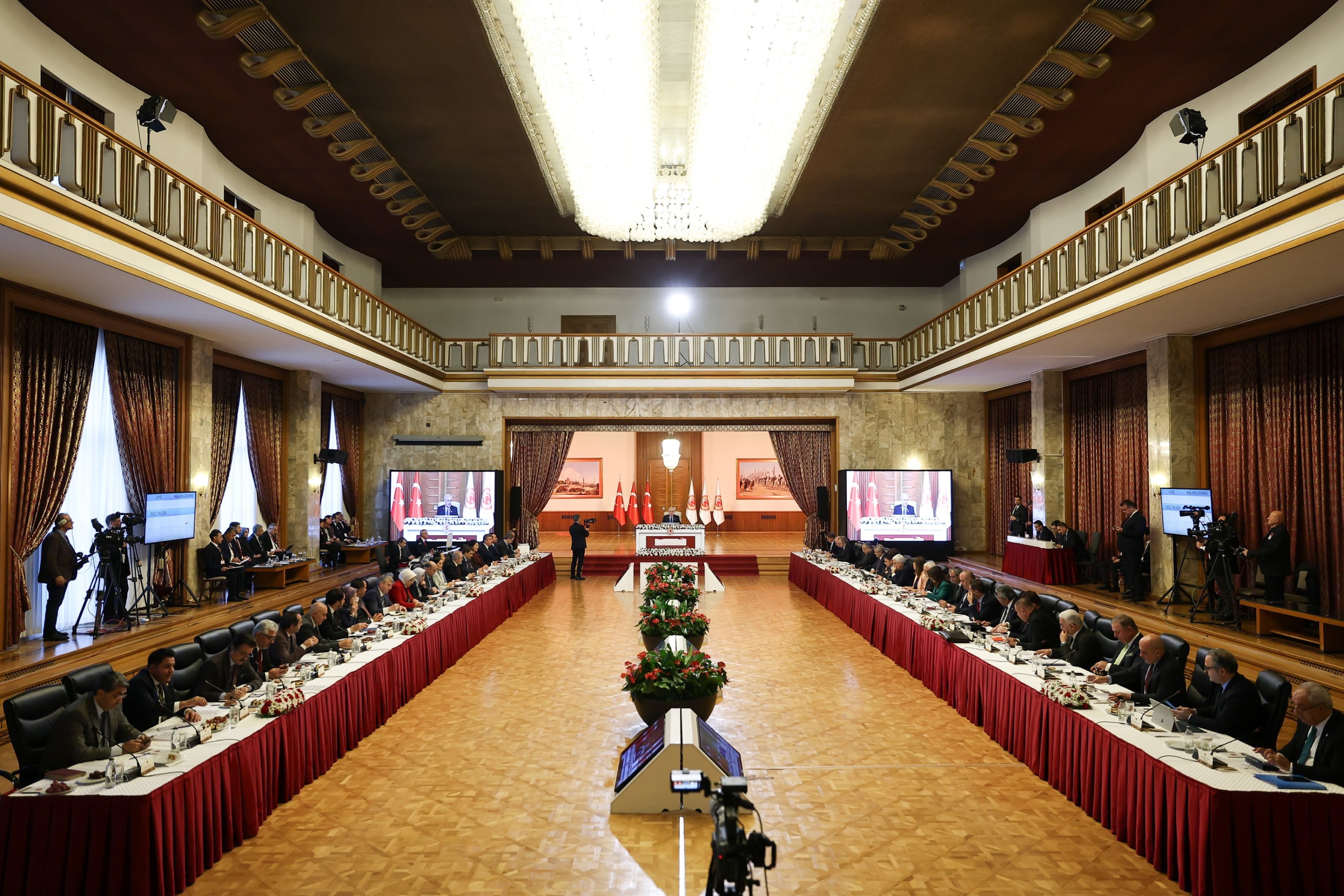
The Turkish Parliament established the National Solidarity, Brotherhood and Democracy Committee last August to address the initiative and hear from relevant parties affected by it. Recently, several members of the committee visited Öcalan in the island prison where he is held. The committee is composed of the AK Party, its ally, the MHP, and some opposition parties.
“It is expected that political parties should weigh the significance of the initiative and demonstrate maturity and reconciliation. Everyone is obliged to demonstrate utmost caution to turn this historic opportunity into reality,” Uçum said.