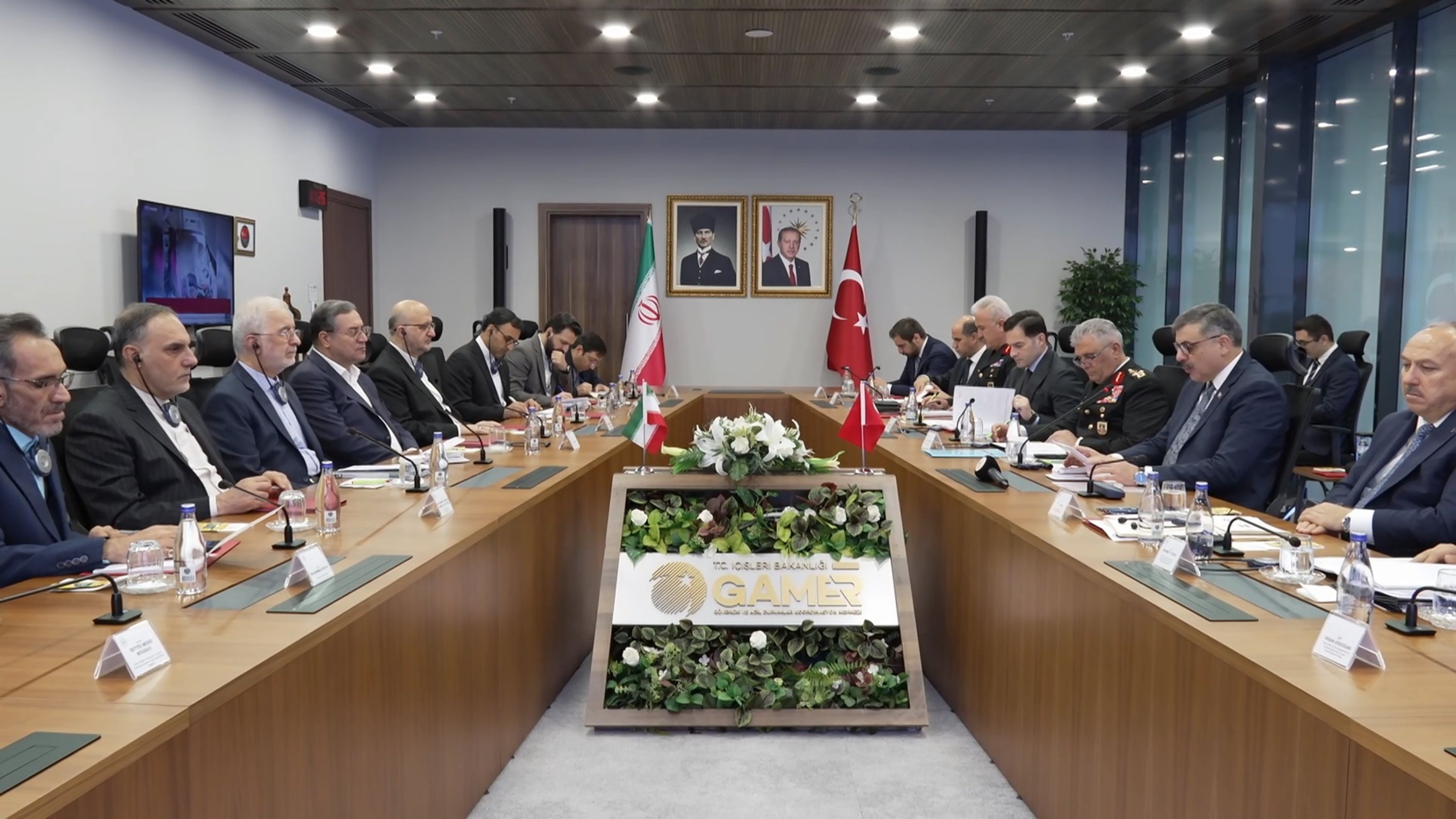
Iranian Interior Minister Eskandar Momeni met his Turkish counterpart, Mustafa Çiftçi, in Ankara on Wednesday. The two officials promised to improve cooperation on security-related matters between the two countries.
Among other things, the ministers spoke about the Terror-Free Türkiye initiative Ankara launched for the dissolution of the terrorist group PKK, which also has an Iran-based wing, PJAK.
Momeni said Iran was pleased with Türkiye’s efforts to find a solution to the PKK issue. “Türkiye, Iraq, Iran and Syria should join hands for a lasting solution. PKK, PJAK and all other wings should cease to exist and should lay down their arms. In terms of terrorism, Türkiye’s security means Iran’s security and vice versa,” he said, calling for more cooperation between Tehran and Ankara.
Minister Çiftçi said they were monitoring the dismantling of all PKK affiliates operating under different names in different regions. He said the group’s dissolution in Syria and Iraq represented a critical threshold for regional peace, adding that it was highly important for the PKK’s PJAK structure in Iran to be included in this process. Çiftçi warned that members of the group who oppose the process could cross into Iran, allowing it to become more active inside the country.
Highlighting the importance of cooperation between Türkiye and Iran in combating drug trafficking and transnational crime, Minister Çiftçi said: “In 2026 alone, 32,848 people were arrested in 38,915 drug operations, and 36 tons of narcotics were seized. Given their geographical locations, our countries lie along the transit routes used by drug traffickers and other transnational criminal networks. In this regard, I would like to emphasize that we are open to effective cooperation with your ministry in combating all forms of transnational crime, particularly drug trafficking and emerging criminal organizations.”
Çiftçi also addressed extradition and deportation procedures between Türkiye and Iran, saying: “Extradition and deportation constitute an important item on the agenda of our bilateral cooperation. In this regard, we attach importance to strengthening ties between our Interpol units and ensuring that procedures are carried out more effectively. As a manifestation of this approach, we are doing everything we can, within the limits of our laws, to address the sensitivities of our friendly and brotherly Iran. We, too, are carefully following the extradition requests submitted by Iran and promptly extraditing individuals whose legal proceedings have been completed to your country. We believe that you are also carefully following our country’s requests, and I would like to state that we look forward to your valuable contribution to completing the ongoing procedures.”
The meeting also addressed joint steps that could be taken to combat irregular migration.
“We have built our policy for combating irregular migration around a comprehensive system that begins in the migrants’ countries of origin and ends there, ensuring their safe, dignified and voluntary return to their home countries. We know that you are also taking measures to prevent irregular migrants from crossing your eastern border. I believe that by coordinating and strengthening our border measures, we can combat the irregular migration pressure we face more effectively. In particular, we need to step up our fight against human trafficking networks and migrant smugglers and increase mutual information sharing. While combating irregular migration, we also support regular migration.”