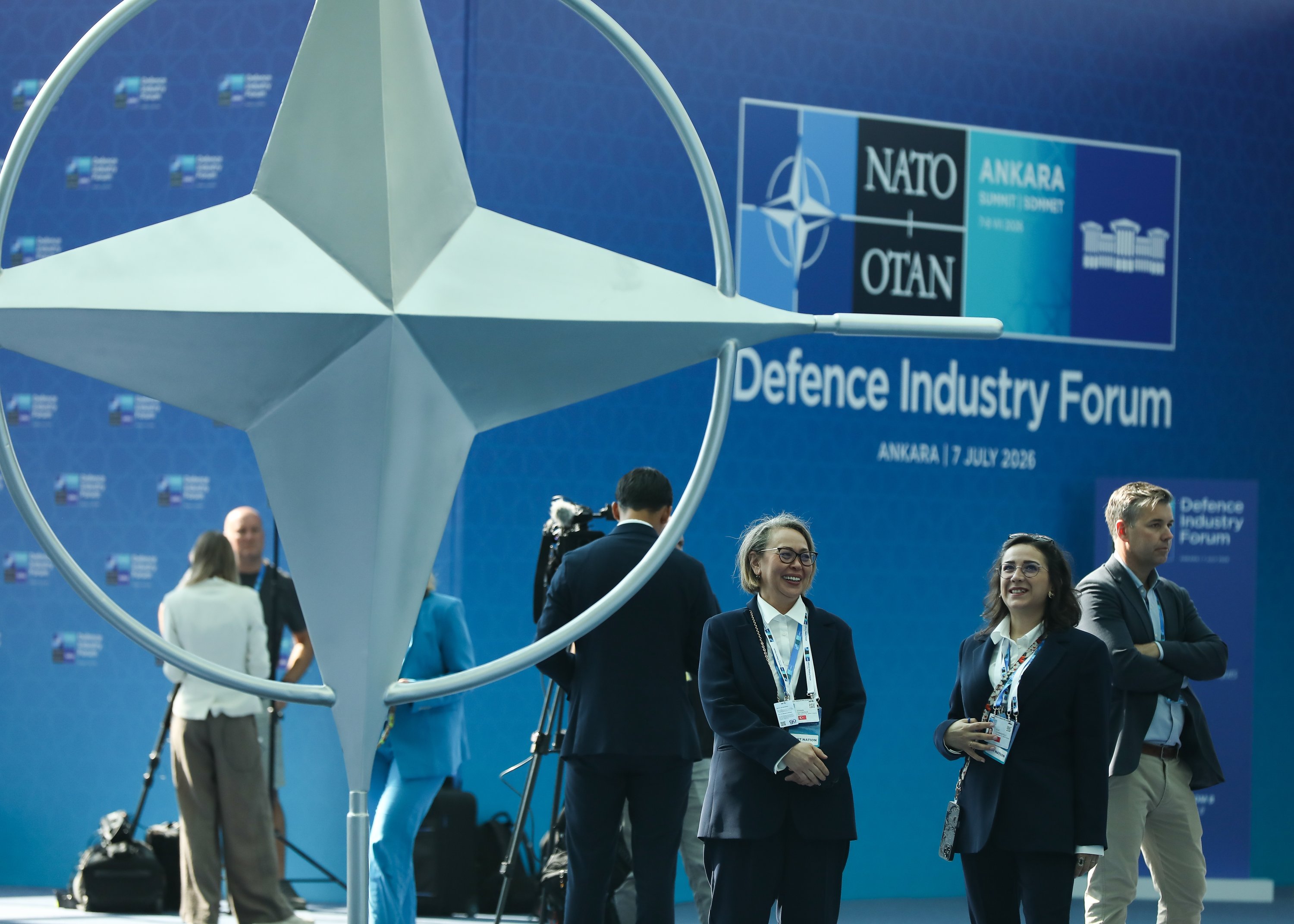
Türkiye this year marks the 74th anniversary of its accession to NATO and has the second-largest army in the alliance. It is the only country in NATO’s “southern flank” with a sizable military power and a gateway to the Middle East and wider Asia. Security of the Black Sea also largely depends on Türkiye, especially amid the Russia-Ukraine conflict, which threatens maritime security.
Founded on April 4, 1949, under the collective self-defense principle set out in Article 51 of the United Nations Charter, the North Atlantic Treaty Organization (NATO) was established as a defense alliance against the Soviet threat.
Following the end of the Cold War and the bipolar world order in 1989, NATO launched its Partnership for Peace program with former socialist countries in 1994, with the aim of facilitating their eventual accession to the alliance. In this context, the Czech Republic, Hungary and Poland joined NATO in 1999, bringing the number of member states to 19.
The fall of the Berlin Wall on Nov. 9, 1989, marked a turning point in NATO’s history and heralded the end of the Cold War.
Following the collapse of the Soviet Union, NATO established partnerships with its former adversaries as the alliance adapted to the post-Cold War security environment.
NATO later conducted its first major crisis-management operation in Bosnia and Herzegovina.
The Sept. 11 terrorist attacks in New York and Washington prompted NATO to invoke Article 5 of the North Atlantic Treaty for the first time in its history and led the alliance to adopt a broader approach to security.
Article 5 of the North Atlantic Treaty forms the basis of NATO’s collective defense principle, under which an armed attack against one or more allies is considered an attack against all members.
The article states that if such an attack occurs in North America or Europe, each member will assist the attacked ally by taking “such action as it deems necessary,” including the possible use of armed force, in line with the right to individual or collective self-defense recognized by Article 51 of the United Nations Charter.
NATO subsequently took command of the International Security Assistance Force (ISAF) in Afghanistan.
At NATO’s Prague Summit in November 2002, the alliance entered its second round of post-Cold War enlargement, holding accession and alliance-related talks with Balkan and Baltic countries.
Greece also withdrew from NATO’s military command structure in 1974 in response to Türkiye’s second Cyprus Peace Operation in August that year, but returned to the structure in 1980.
NATO marked its 77th anniversary on April 4, 2026, celebrating the signing of the North Atlantic Treaty in Washington, D.C., on April 4, 1949.
The main aim of the alliance is to maintain the security and sovereignty of member states while developing cooperation among partners.
For Türkiye, the key factor behind accession was the need to balance Soviet pressure, particularly Moscow’s claims over the Turkish straits and eastern provinces. Since joining NATO in 1952, however, Türkiye has emerged as a key member of the alliance due to its support for NATO missions, participation in exercises, steadily growing military capabilities and geopolitical importance.
Following World War II, the Soviet Union expanded its influence by establishing communist governments across Eastern Europe, laying the foundations of the Cold War.
NATO emerged as a source of hope for Türkiye under these circumstances. From the alliance’s establishment, the Turkish government showed a strong willingness to join. However, some of NATO’s smaller members, as well as the United States, initially opposed Türkiye’s membership over concerns that it could heighten the Soviet threat.
Yet, Türkiye’s geopolitical importance and the performance of Turkish troops deployed during the Korean War in 1950 demonstrated the potential strategic value of bringing the country into NATO. After two previous applications, in May and September 1950, had been rejected, Türkiye was invited to join NATO alongside Greece on Sept. 21, 1951. The U.S. Senate approved the accession of the two countries on Jan. 29, 1952, and the Turkish Grand National Assembly approved Türkiye’s accession to NATO on Feb. 18, 1952.
Türkiye's contributions extend from the Baltic region to the Black Sea and include NATO missions, operations and exercises, as well as responsibilities in maritime security, crisis management, training and deterrence.
The country currently contributes nearly 3,000 personnel, along with various weapons, vehicles and military platforms, to ongoing NATO missions, operations and initiatives.
Türkiye also hosts critical NATO facilities, including the Allied Land Command, located in the western city of Izmir, and the Rapid Deployable Corps, based in Istanbul.
The capital, Ankara, hosts the Center of Excellence for Defense Against Terrorism (COE-DAT) and the Partnership for Peace Training Center. Istanbul hosts the NATO Maritime Security Center of Excellence (MARSEC COE).
Furthermore, the Turkish Armed Forces (TSK) this year joined NATO’s Steadfast Dart exercise in Germany from Feb. 12-24, held to improve the operational readiness of the Allied Reaction Force. The army contributed naval, land and air elements, including the Anadolu Task Group, and deployed a joint force of more than 2,000 personnel to Germany.
Starting in 2028, Türkiye will assume leadership of NATO’s Allied Reaction Force (ARF), one of the Alliance’s most critical military capabilities, further strengthening its key role in European security.
With its capabilities in artificial intelligence, cyber defense and space, Türkiye stands out as one of the NATO members adapting most rapidly to the Alliance’s evolving threat landscape.
In this context, Türkiye stands out as one of NATO’s key members strengthening not only its own defense capabilities but also the Alliance’s technological edge through major projects such as the Steel Dome integrated air defense system, the KAAN fighter jet and the Altay main battle tank.
Türkiye allocated 2.33% of its gross domestic product (GDP) to defense in 2025, placing it among the NATO members assuming a high level of financial and military responsibility within the Alliance.
Türkiye also remains one of NATO’s key members in counterterrorism, maintaining an active operational role in combating terrorism, one of the threats facing the Alliance.
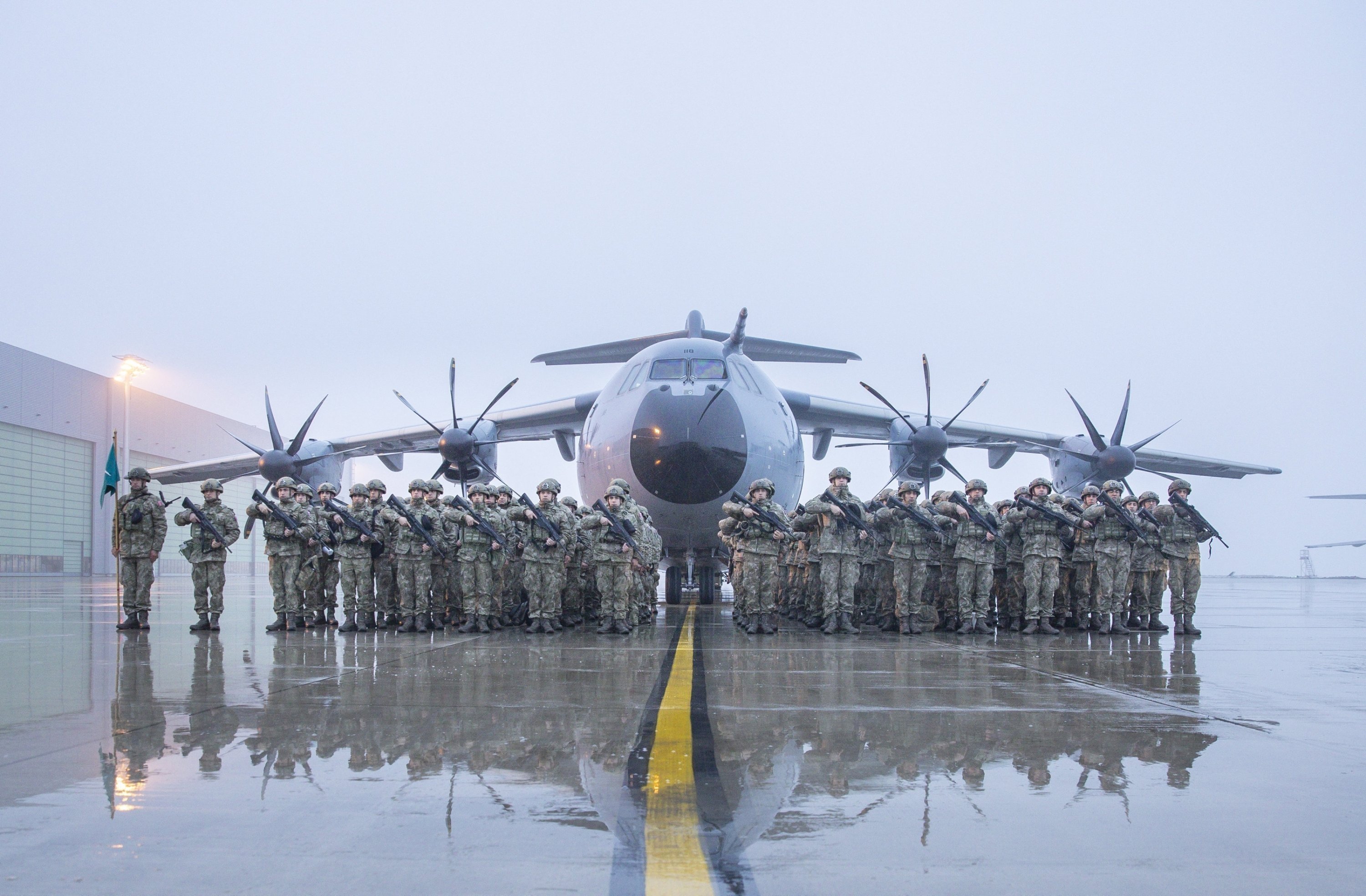
Since joining NATO, Türkiye has steadily expanded its contributions to the alliance’s missions and operations, including in Afghanistan, Kosovo, Bosnia-Herzegovina, Libya and Iraq. Turkish officials say the country has preserved and developed Cold War-era military capabilities while also fighting terrorism and responding to regional instability.
Türkiye supported NATO’s Afghanistan mission between 2002 and 2014 under the International Security Assistance Force and later contributed to the Resolute Support Mission from 2015. Turkish forces also assumed framework nation responsibility for the secure operation of Kabul Hamid Karzai International Airport until NATO’s mission ended in August 2021.
The Turkish military also contributed to the NATO Mission Iraq, launched to help build the capacity of the Iraqi army, from 2018 until a withdrawal process began in March amid worsening security conditions.
Following NATO’s decision to continue the mission with a core staff at the Allied Joint Force Command Naples, Türkiye assigned three personnel to the new structure.
Moreover, Ankara this year, hosted the 36th NATO Heads of State and Government Summit on July 7-8, with leaders issuing a final declaration reaffirming their “unwavering commitment” to Article 5, the alliance’s collective defense clause, and to the transatlantic bond.
The summit brought together leaders of the 32-member alliance as well as key partners to discuss Europe's defense capacity.
The final declaration of the summit in the end underscored collective defense, procurement agreements and continued support for Ukraine.
Member states had gathered in Ankara to reaffirm their “unwavering commitment” to Article 5, NATO’s collective defense clause, and to the transatlantic bond, it noted.
The declaration said the investments would deliver required capabilities while also strengthening the defense industry and resilience. adding that European allies and Canada increased investment in core defense requirements by more than $139 billion in 2025.
NATO allies further stressed that the support for Ukraine should remain fair, predictable and sustainable over the long term, pledging 70 billion euros ($81.5 billion) in military equipment, assistance and training for Ukraine in 2026 and committing to maintain at least the same level of support in 2027.
Moreover, the declaration also emphasized that the Alliance continued to respond and adapt to strategic competition, widespread instability, hybrid threats and recurring crises shaping the broader security environment.