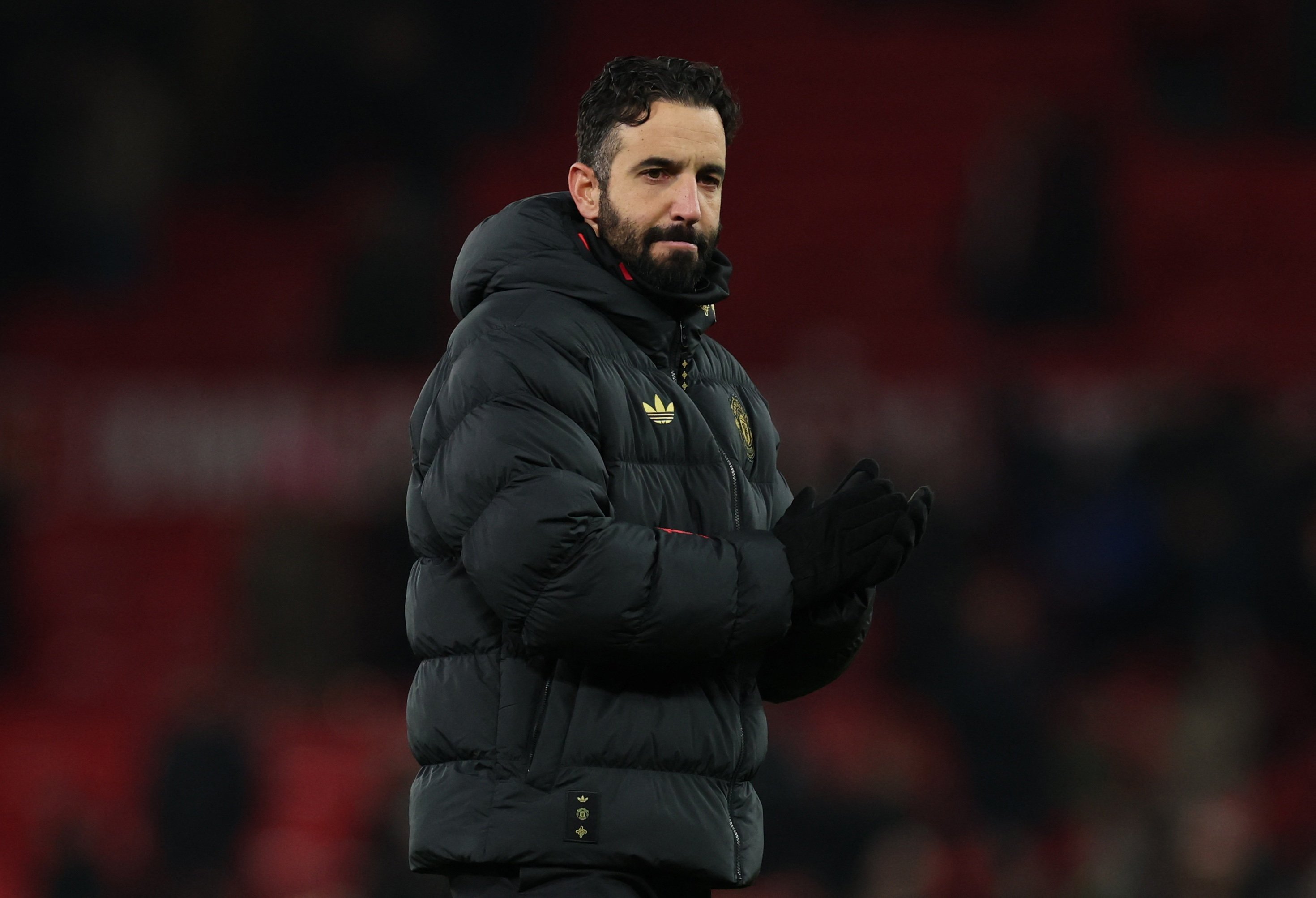
Manchester United have sacked manager Ruben Amorim just 14 months after appointing him, ending the Portuguese coach’s tenure with the club sitting sixth in the Premier League following a 1-1 draw away to Leeds United.
The decision, confirmed by United on Monday, comes after a breakdown in relations between Amorim and the club’s leadership and amid growing frustration over inconsistent results.
Amorim’s final match on Jan. 4 encapsulated his short and turbulent spell at Old Trafford: a structured performance undermined by familiar defensive lapses and a failure to turn control into victory.
What followed proved decisive.
An explosive post-match news conference, in which Amorim openly questioned the club’s leadership and transfer strategy, accelerated an exit that had been quietly approaching.
Appointed on Nov. 1, 2024, after Erik ten Hag’s dismissal, Amorim arrived with pedigree and promise.
He had won two Primeira Liga titles at Sporting CP, built a reputation as one of Europe’s most progressive young managers and was viewed by INEOS, led by Sir Jim Ratcliffe, as a central figure in the club’s football reset.
United triggered a reported 10 million euros ($11.7 million) release clause to secure him, handing him a contract through June 2027.
The brief was clear: implement his trademark 3-4-3 system, modernise United’s playing identity and restore stability after years of turbulence.
Early signs were encouraging. A derby victory over Manchester City raised expectations and suggested Amorim’s ideas could take hold quickly in the Premier League.
They never fully did.
Across roughly 60 to 70 matches in all competitions, United failed to find consistency.
League form hovered in mid-table, with a reported Premier League win rate in the low-to-mid 40% range.
Defensive vulnerabilities became a recurring theme, while the attack often lacked cohesion and cutting-edge technology.
Domestic cup exits deepened the sense of stagnation, and a sustained Champions League challenge never materialised.
Behind the scenes, tension grew.
Amorim became increasingly frustrated with United’s restructured decision-making model, particularly during the January 2026 transfer window.
Sources say he expected greater influence over recruitment but felt constrained by technical director Jason Wilcox and other senior figures. Amorim believed his authority had been diluted, a point he made unmistakably clear after the Leeds draw.
In that press conference, Amorim stressed he was hired to be “the manager, not just the coach,” publicly challenging executives to clarify roles and responsibilities.
While he insisted he intended to see out his contract, the comments were widely interpreted as a direct rebuke of the board and a line United’s leadership felt could not be crossed.
Performance issues alone may not have ended his tenure, but combined with an open power struggle, they proved decisive.
Former United midfielder Darren Fletcher has been placed in interim charge, stepping up from his role with the under-18s as the club begins the search for a permanent successor.
Early speculation has linked experienced Premier League managers, including Eddie Howe, though no shortlist has been confirmed.
In a brief statement, United thanked Amorim for his service and wished him well, offering no further detail.
Amorim has yet to comment publicly and is expected to receive a settlement on the remainder of his contract.
His dismissal adds another name to Manchester United’s long list of post-Sir Alex Ferguson managers, making Amorim the sixth permanent coach to leave since 2013.