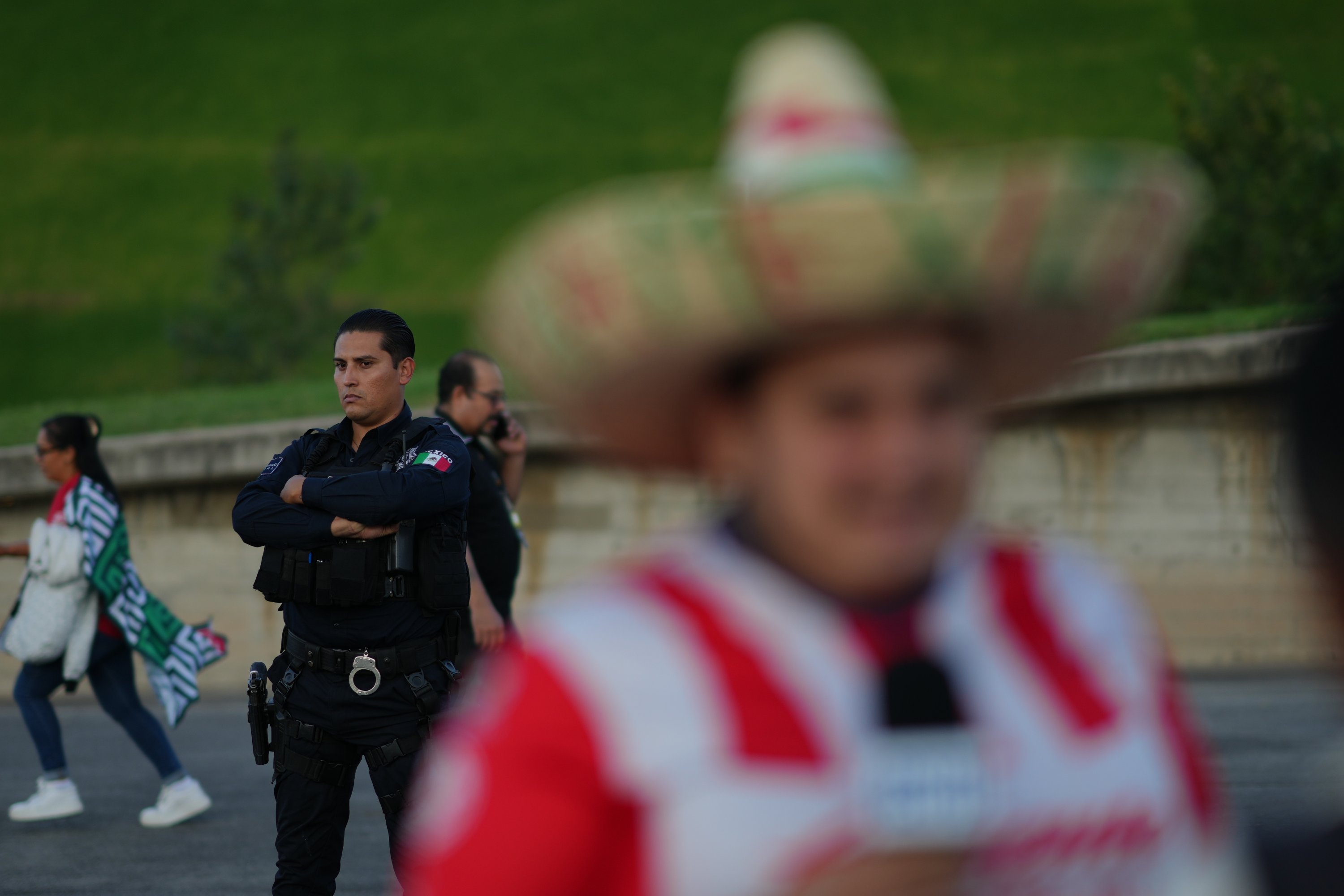
Beneath the roar of football fans chanting “Mexico! Mexico!” outside Zapopan’s 48,000-seat stadium, a different kind of sound echoed a few miles south – the scrape of shovels against concrete.
While thousands gathered under tight security to watch a friendly match between Mexico and Ecuador, volunteers in dusty gloves dug through the backyard of an abandoned house, searching for the remains of the disappeared.
The juxtaposition captures modern Jalisco in a single frame: one part global stage for the 2026 FIFA World Cup, another a graveyard for Mexico’s more than 134,000 missing.
In this state of 8 million, football and fear coexist – luxury hotels rise next to clandestine graves, and armored vehicles patrol the same roads as mothers looking for bones.
On match day, fans were funneled through layers of security – bomb-sniffing dogs, drone jammers, metal detectors and patrols by Mexico’s National Guard.
Authorities have made Zapopan a rehearsal ground for next year’s World Cup matches, a showcase of order amid chaos.
Inside the stadium, the excitement was palpable. “If you don’t get yourself into trouble, nothing will happen,” said 18-year-old student Javier Rodriguez, echoing a sentiment shared by many who have grown accustomed to life under cartel shadow.
Officials boast that Jalisco’s World Cup will be safe, prosperous and transformative.
Governor Pablo Lemus predicts $1 billion in revenue and 7,000 new jobs, alongside 12,000 additional hotel rooms and a sweeping security overhaul – including 3,000 new surveillance cameras pushing the total above 10,000.
“The 2026 World Cup is a great opportunity for Jalisco to position itself before the world,” Lemus said at an October press conference.
Yet, security wasn’t the focus that day. Absent were mentions of organized crime, disappearances or the cartel that has turned Jalisco into both a powerhouse and a powder keg.
Beyond Guadalajara’s polished facades lies the territory of the Jalisco New Generation Cartel (CJNG) – Mexico’s most powerful criminal syndicate, designated by the United States this year as a foreign terrorist organization.
The cartel’s estimated 19,000 members control operations in 21 of Mexico’s 32 states, with tentacles stretching from the U.S. border to Europe.
CJNG’s record of audacity includes shooting down a Mexican military helicopter with a rocket-propelled grenade and orchestrating an ambush on Mexico City’s police chief in 2020.
For many locals, its reach feels inescapable.
Despite this, Jalisco officials have publicly downplayed the cartel’s influence.
“Not having a great number of criminal groups like other states allows security authorities to attack these groups in a better, more controlled way,” said Roberto Alarcon, the state’s security strategy coordinator.
He insists that major crimes are trending downward – though data from Mexico’s National Search Commission shows a 30% rise in disappearances this year alone.
Security analyst David Saucedo offers a more pragmatic, if unsettling, explanation: a silent pact between the state and organized crime. “I think both sides will agree to a truce that, obviously, might not last very long,” he said. “But it’s convenient for everyone.”
He warns the truce won’t halt criminal activity – only shift its focus.
During the World Cup, he predicts cartels will exploit the influx of fans and cash through street-level drug sales, sexual tourism, casino manipulation and ticket resales.
“They’re going to enjoy the World Cup themselves,” Saucedo said grimly.
While politicians count profits, volunteers like Indira Navarro count graves. South of Guadalajara, along the road to Lake Chapala, she leads the Jalisco Search Warriors – one of hundreds of citizen groups scouring Mexico for missing loved ones.
That October morning, her team unearthed nothing but hard soil.
But earlier this year, they discovered burned bone fragments and hundreds of clothing items at a ranch once raided by police – evidence of an incomplete investigation and, perhaps, another mass grave.
Navarro has spent a decade searching for her brother, who vanished in 2015 in Sonora.
Since revealing her group’s findings, she has lived under round-the-clock National Guard protection after repeated death threats. Her story encapsulates the peril faced by Mexico’s “searching mothers,” women who risk their lives to uncover truths authorities prefer to bury.
“They want to wash away everything that has to do with the issue of the disappeared,” Navarro said. “But they won’t be able to. We’re going to keep fighting.”
Jalisco’s World Cup promises spectacle – four matches, fan zones, hotels, and a global spotlight. But behind the fireworks and chants lies an unspoken truth: order here depends as much on negotiation as on law.
The same drones monitoring fans will hover over streets controlled by cartels.
The same stadiums celebrating sport stand within miles of fields where mass graves were found.
And the same government touting investment must also answer for tens of thousands who may never come home.