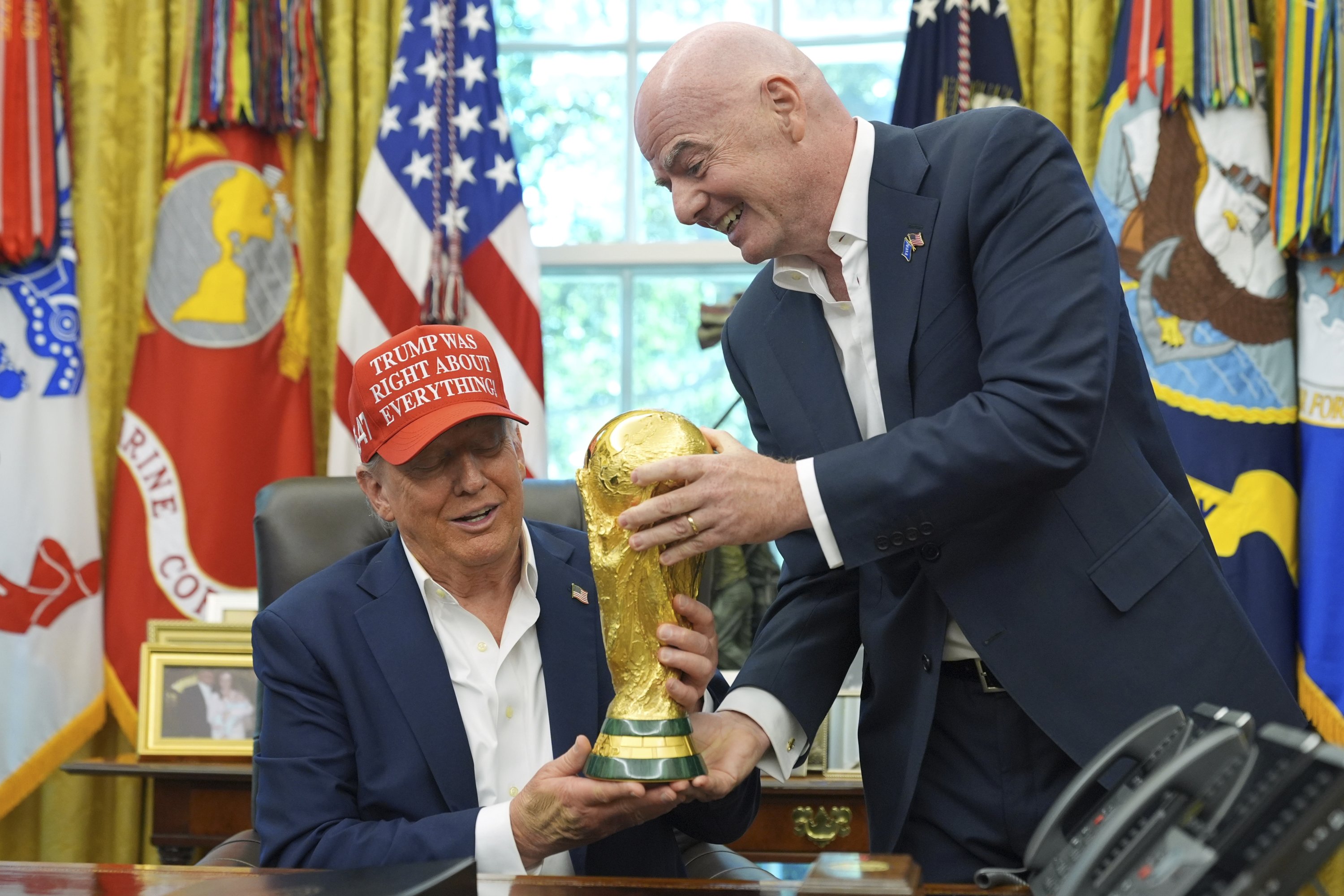
FIFA, world football’s governing body, has stepped onto the diplomatic stage with an unexpected move – the creation of the “FIFA Peace Prize,” a new annual award meant to honor “individuals who have taken exceptional and extraordinary actions for peace.”
Announced on Nov. 5, 2025, the initiative marks FIFA’s boldest foray yet beyond the touchline, aiming to position the sport as a global voice for unity.
The award, to be handed out for the first time on Dec. 5 during the 2026 World Cup draw at Washington’s Kennedy Center, has already generated intrigue – and controversy – over who might become its inaugural recipient.
FIFA President Gianni Infantino, who has led the Zurich-based organization since 2016, framed the prize as a reflection of football’s power to bridge divides.
“In an increasingly unstable and divided world, it’s fundamental to recognize those who work to end conflicts and bring people together,” he wrote on Instagram, echoing FIFA’s mantra that “football unites the world.”
The Kennedy Center ceremony – usually devoted solely to the tournament’s draw – will now also serve as a diplomatic spectacle.
The event, revealed in August from the Oval Office by Infantino and U.S. President Donald Trump, will determine the 12 groups for the 2026 World Cup, the first edition to feature 48 teams and 104 matches across 16 host cities in the United States, Canada, and Mexico.
Infantino teased that the first FIFA Peace Prize winner “will surprise many,” declining to confirm whether Trump – long vocal about his own peace credentials – would receive it.
His cryptic “On the 5th of December, you will see,” delivered with a grin at a Miami conference last week, only fueled speculation.
Much of the global chatter surrounds Trump, who has openly sought the Nobel Peace Prize for years and frequently cites his 2020 Abraham Accords, which normalized ties between Israel and several Arab nations.
This fall, he again touted his role in brokering a September 2025 ceasefire in Gaza, calling the Nobel committee’s refusal to honor him “a disgrace.”
Infantino, for his part, has publicly praised Trump’s diplomacy.
Just a day before this year’s Nobel announcement, he wrote that Trump “definitely deserves” the award, calling him “a champion of world peace.”
The Nobel ultimately went instead to Venezuelan activist Maria Corina Machado, recognized for her nonviolent struggle against authoritarianism.
That snub, combined with the timing of FIFA’s new award and its Washington debut, has raised eyebrows among analysts who see the move as both symbolic and strategic.
“It feels like a consolation prize tailor-made for a Nobel reject,” one commentator wrote in Forbes, noting FIFA’s desire to maintain strong ties with the White House ahead of next year’s World Cup.
FIFA has provided no details about how the Peace Prize will be awarded or who will select its winners.
The organization did not respond to questions from the Associated Press about eligibility, criteria, or whether nominees must come from the world of sport.
Insiders suggest a FIFA-appointed panel will make the decision, though the size and independence of that body remain unclear.
Historically, FIFA has used its global platform for humanitarian initiatives – such as the Football for Schools program and partnerships with UNHCR to support refugees – but it has never created an award explicitly tied to peacebuilding.
The move, while potentially image-enhancing, risks reigniting skepticism given FIFA’s checkered past with corruption and political influence.