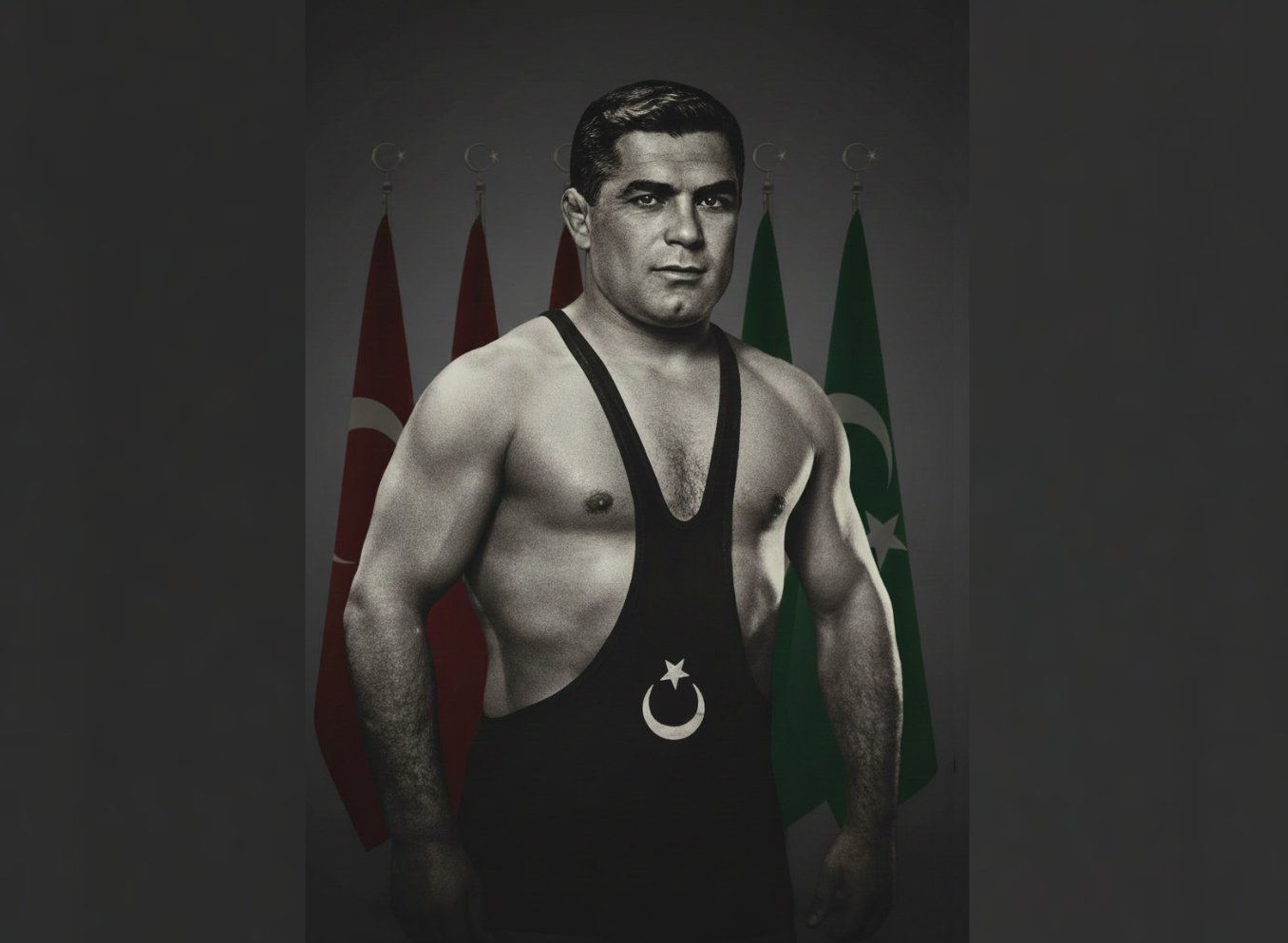
Türkiye is marking the 65th anniversary of the death of Yaşar Doğu, the towering figure who shaped modern Turkish wrestling and whose legacy stretches far beyond medals and championships.
Born in 1913 in Karlı village of Samsun’s Kavak district, Doğu’s life was shaped early by hardship.
His father was martyred while fighting in World War I, and the future champion was raised by his grandfather in the nearby village of Emirli.
It was there, on open ground and in village contests, that Doğu first made a name for himself in karakucak wrestling, the traditional Anatolian style that forged his raw strength and fearless technique.
His path changed decisively during military service in Ankara, where he transitioned from grass wrestling to Olympic-style mat wrestling. That move launched one of the most dominant international careers Turkish sport has ever seen.
Doğu announced himself on the continental stage at the 1939 European Championships in Oslo, competing in the 66-kilogram division.
He finished second after suffering a single defeat, an outcome that would stand as the first and last loss of his entire national-team career.
After World War II, his dominance was absolute.
At the 1946 European Championships in Stockholm, Doğu swept all six bouts at 73 kilograms to claim his first European title.
A year later in Prague, he achieved a rare double, winning gold in both freestyle and Greco-Roman wrestling at the same weight, an extraordinary demonstration of versatility and technical mastery.
His defining moment came at the 1948 London Olympics, where Doğu captured gold and reached the summit of the sport.
The Olympic title not only sealed his status as an all-time great but also helped elevate wrestling as a source of national pride in postwar Türkiye.
Success continued on home soil in 1949, when Doğu won another European gold in Istanbul.
Two years later, at the 1951 World Championships in Helsinki, he claimed his lone world title at 87 kilograms.
That tournament became historic for Türkiye: every member of the national freestyle team returned home as a world champion, including legends such as Celal Atik, Nasuh Akar, Haydar Zafer and Adil Candemir.
By the end of his career, Doğu’s record with the national team was staggering: 46 wins in 47 matches, with 33 victories by pin. His résumé included one Olympic gold, one world title and three European championships, placing him among wrestling’s elite figures globally.
Yet it was what followed that earned him his enduring title.
After stepping off the mat, Doğu devoted himself fully to coaching. He traveled from village to village searching for talent, often sacrificing his own comfort for his athletes. He carried firewood to heat cold training halls, stitched torn mats, and helped young wrestlers find work to support their families. He never asked for recognition, but his actions defined a generation.
It was during this period that he became universally known as “Türk güreşinin babası”, the Father of Turkish Wrestling.
While coaching in Sweden, Doğu suffered a heart attack. Doctors urged him to rest. He refused. Back home, he continued working with young wrestlers until a second heart attack claimed his life on January 8, 1961, in Ankara. He was just 48.
Yaşar Doğu is buried at Cebeci Askeri Şehitliği, while his former home in Emirli has been preserved as a museum, open to visitors and filled with his medals, photographs and personal belongings.
His name also lives on through the Yaşar Doğu International Wrestling Tournament, one of the sport’s most prestigious ranking events.