Daily Sabah logo

Politics
Diplomacy Legislation War On Terror EU Affairs Elections News Analysis
TÜRKİYE
Istanbul Education Investigations Minorities Expat Corner Diaspora
World
Mid-East Europe Americas Asia Pacific Africa Syrian Crisis Islamophobia
Business
Automotive Economy Energy Finance Tourism Tech Defense Transportation News Analysis
Lifestyle
Health Environment Travel Food Fashion Science Religion History Feature Expat Corner
Arts
Cinema Music Events Portrait Reviews Performing Arts
Sports
Football Basketball Motorsports Tennis
Opinion
Columns Op-Ed Reader's Corner Editorial
PHOTO GALLERY
JOBS ABOUT US RSS PRIVACY CONTACT US
© Turkuvaz Haberleşme ve Yayıncılık 2025

Daily Sabah - Latest & Breaking News from Turkey | Istanbul

  • Politics
    • Diplomacy
    • Legislation
    • War On Terror
    • EU Affairs
    • Elections
    • News Analysis
  • TÜRKİYE
    • Istanbul
    • Education
    • Investigations
    • Minorities
    • Expat Corner
    • Diaspora
  • World
    • Mid-East
    • Europe
    • Americas
    • Asia Pacific
    • Africa
    • Syrian Crisis
    • Islamophobia
  • Business
    • Automotive
    • Economy
    • Energy
    • Finance
    • Tourism
    • Tech
    • Defense
    • Transportation
    • News Analysis
  • Lifestyle
    • Health
    • Environment
    • Travel
    • Food
    • Fashion
    • Science
    • Religion
    • History
    • Feature
    • Expat Corner
  • Arts
    • Cinema
    • Music
    • Events
    • Portrait
    • Reviews
    • Performing Arts
  • Sports
    • Football
    • Basketball
    • Motorsports
    • Tennis
  • Gallery
  • Opinion
    • Columns
    • Op-Ed
    • Reader's Corner
    • Editorial
  • TV
  • TÜRKİYE
  • Istanbul
  • Education
  • Investigations
  • Minorities
  • Expat Corner
  • Diaspora

‘Colonial’ sea snot poses new threat for Turkey’s Marmara Sea

by DAILY SABAH

ISTANBUL Aug 11, 2021 - 11:36 am GMT+3
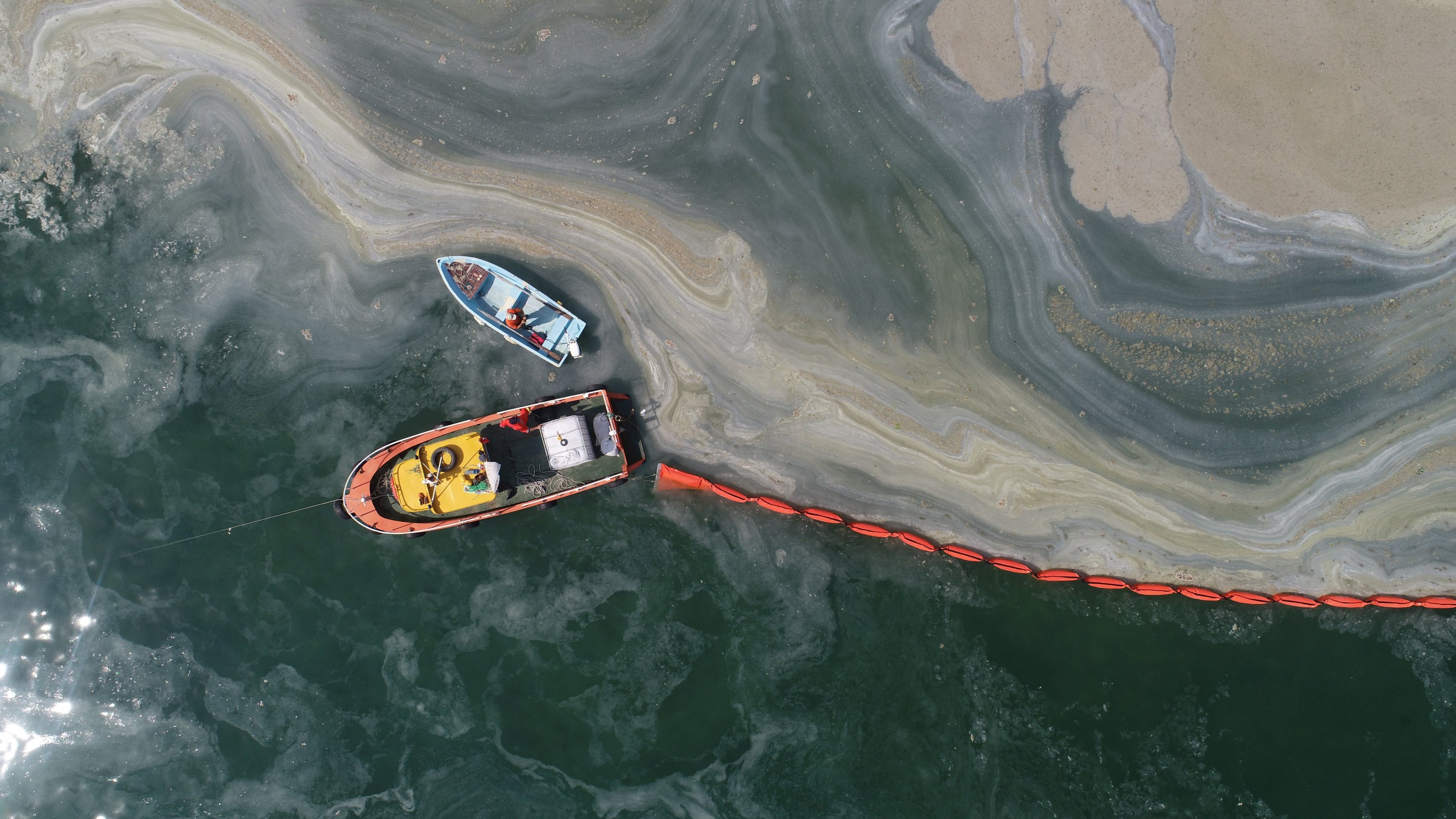
An aerial view of sea snot off the coast of Tekirdağ, in northwestern Turkey, July 10, 2021. (AA Photo)
by DAILY SABAH Aug 11, 2021 11:36 am

New types of mucilage, or sea snot, that have emerged in the Marmara Sea may cause new environmental disasters due to their “colonial” attributes, experts warn.

Professor Sevim Polat, an academic at the Faculty of Aquaculture of Çukurova University, said that species of Phaeocystis pouchetii are being carried to the Marmara Sea due to the ballast water discharge from ships, and threaten to cause environmental challenges, according to a report in the Turkish daily Milliyet newspaper.

“The Phaeocystis type of sea snot colonizes rapidly and, if the necessary precautions aren’t taken, we may see foams of mucilage that exceed the average height of humans," professor Neslihan Özdelice from the Biology Department of Istanbul University, warned.

In a recent presentation to a parliamentary committee on climate change research, Polat pointed to an increase in different types of diatom (a group of algae) and dinoflagellate, which is a type of algae that lives both in freshwater and at sea. “What is surprising in the latest mucilage incident is that there are newly recorded species in the environment. It is highly possible that these species, especially the Phaeocystis pouchetii, may have been carried into the Marmara Sea, where it is important to observe the damage done by the newly transported species. This species’ colonial forms are increasing in numbers and cause risks. Sea snot comprised of this kind is shredded by bacteria slower than the mucilage comprised of diatoms, which poses a greater threat,” she added.

Özdelice said that the suggestion of wiping out the entire plankton species that cause mucilage is not a viable option, as they are a food source for other animals. “Let them (plankton) live, otherwise we will struggle to find fish to eat. We have to destroy the circumstances that cause stress to these creatures,” she added.

Explaining that the Marmara Sea is a landlocked sea – thus the contaminants may remain longer in the water – Özdelice said: “As long as the mucilage is trapped within the Marmara Sea, the level of bacteria and pathogenic bacteria will increase, causing heavy metal contamination. In order to preserve itself from the adverse environmental conditions or to hold on to various surfaces, their secretion increases, which helps them to grow in colonies.”

She noted that Phaeocystis pouchetii was already in the Aegean and Black Seas and it was not impossible for it to emerge in the Marmara Sea as well.


  • shortlink copied
  • Last Update: Aug 11, 2021 2:00 pm
    KEYWORDS
    sea snot mucilage plankton algae marmara sea
    The Daily Sabah Newsletter
    Keep up to date with what’s happening in Turkey, it’s region and the world.
    You can unsubscribe at any time. By signing up you are agreeing to our Terms of Use and Privacy Policy. This site is protected by reCAPTCHA and the Google Privacy Policy and Terms of Service apply.
    No Image
    Undersea volcanic eruption caused tsunami, severe damage in Tonga
    PHOTOGALLERY
    • POLITICS
    • Diplomacy
    • Legislation
    • War On Terror
    • EU Affairs
    • News Analysis
    • TÜRKİYE
    • Istanbul
    • Education
    • Investigations
    • Minorities
    • Diaspora
    • World
    • Mid-East
    • Europe
    • Americas
    • Asia Pacific
    • Africa
    • Syrian Crisis
    • İslamophobia
    • Business
    • Automotive
    • Economy
    • Energy
    • Finance
    • Tourism
    • Tech
    • Defense
    • Transportation
    • News Analysis
    • Lifestyle
    • Health
    • Environment
    • Travel
    • Food
    • Fashion
    • Science
    • Religion
    • History
    • Feature
    • Expat Corner
    • Arts
    • Cinema
    • Music
    • Events
    • Portrait
    • Performing Arts
    • Reviews
    • Sports
    • Football
    • Basketball
    • Motorsports
    • Tennis
    • Opinion
    • Columns
    • Op-Ed
    • Reader's Corner
    • Editorial
    • Photo gallery
    • DS TV
    • Jobs
    • privacy
    • about us
    • contact us
    • RSS
    © Turkuvaz Haberleşme ve Yayıncılık 2021