Daily Sabah logo

Politics
Diplomacy Legislation War On Terror EU Affairs Elections News Analysis
TÜRKİYE
Istanbul Education Investigations Minorities Expat Corner Diaspora
World
Mid-East Europe Americas Asia Pacific Africa Syrian Crisis Islamophobia
Business
Automotive Economy Energy Finance Tourism Tech Defense Transportation News Analysis
Lifestyle
Health Environment Travel Food Fashion Science Religion History Feature Expat Corner
Arts
Cinema Music Events Portrait Reviews Performing Arts
Sports
Football Basketball Motorsports Tennis
Opinion
Columns Op-Ed Reader's Corner Editorial
PHOTO GALLERY
JOBS ABOUT US RSS PRIVACY CONTACT US
© Turkuvaz Haberleşme ve Yayıncılık 2025

Daily Sabah - Latest & Breaking News from Turkey | Istanbul

  • Politics
    • Diplomacy
    • Legislation
    • War On Terror
    • EU Affairs
    • Elections
    • News Analysis
  • TÜRKİYE
    • Istanbul
    • Education
    • Investigations
    • Minorities
    • Expat Corner
    • Diaspora
  • World
    • Mid-East
    • Europe
    • Americas
    • Asia Pacific
    • Africa
    • Syrian Crisis
    • Islamophobia
  • Business
    • Automotive
    • Economy
    • Energy
    • Finance
    • Tourism
    • Tech
    • Defense
    • Transportation
    • News Analysis
  • Lifestyle
    • Health
    • Environment
    • Travel
    • Food
    • Fashion
    • Science
    • Religion
    • History
    • Feature
    • Expat Corner
  • Arts
    • Cinema
    • Music
    • Events
    • Portrait
    • Reviews
    • Performing Arts
  • Sports
    • Football
    • Basketball
    • Motorsports
    • Tennis
  • Gallery
  • Opinion
    • Columns
    • Op-Ed
    • Reader's Corner
    • Editorial
  • TV
  • TÜRKİYE
  • Istanbul
  • Education
  • Investigations
  • Minorities
  • Expat Corner
  • Diaspora

Turkey aims to plant 600 million saplings this year 

by DAILY SABAH

ISTANBUL Jun 11, 2021 - 2:17 pm GMT+3
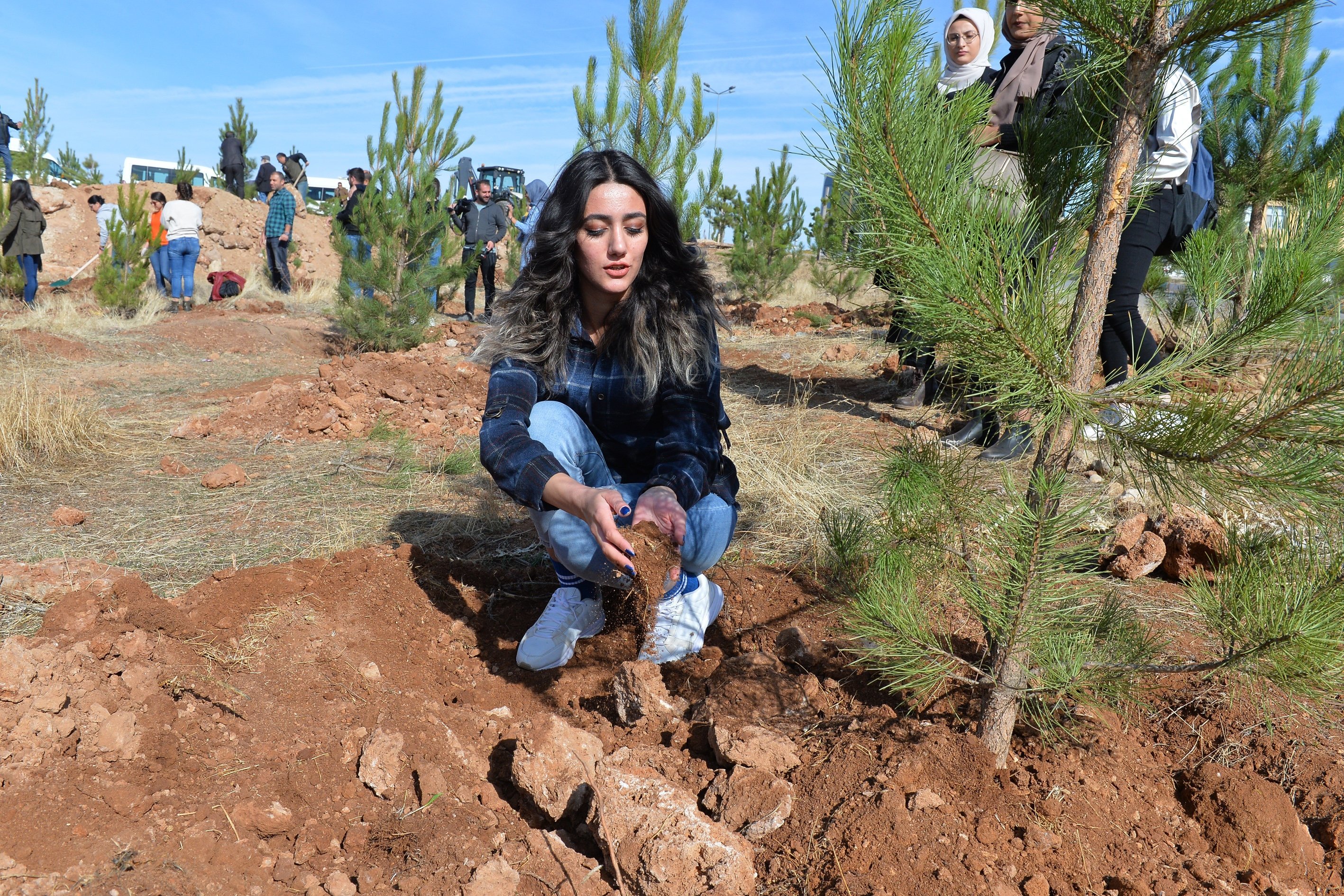
A woman plants a tree at the campus of Munzur University as part of a mass planting campaign, Tunceli, eastern Turkey, Nov. 11, 2019. (AA PHOTO)
by DAILY SABAH Jun 11, 2021 2:17 pm

A drive to keep Turkey greener in the face of climate change persists in the country as authorities plan to plant some 600 million saplings by the end of 2021. Since 2003, the country has managed to bring the number of saplings planted to 5.3 billion, with a goal of reaching 7 billion by 2023, the centenary of the Republic of Turkey.

Tree planting is crucial for Turkey which loses swathes of forests every year to forest fires and faces drought risks.

Ibrahim Yüzer, who heads the department in charge of mass planting efforts at the Directorate-General of Forests, says they rehabilitated lands amounting to 5.4 million hectares with the planting of saplings and their efforts were aided by about 40,000 workers of the directorate and people living in villages who rely on forests for a living.

Turkey’s forests cover 29% of the total territory and Yüzer says they wanted to increase it to 30%, “an ideal number based on world average of forest sizes. “We want to create more forests but our country also needs pastures, agricultural fields,” he said.

Trees are also critical to address the soil erosion challenge which caused Turkey to lose millions of tons of soil since the 1970s. The country managed to decrease the land loss to 154 million tons from 500 million tons in the 1970s.

Yüzer says they were also working to recreate forests lost to fires, frequently occurring last year, devastating thousands of acres of forests from Hatay in the south to Izmir in the west. He assured that burned forests were never allowed to be used for other purposes (such as residential developments) and after every fire, they launched reforestation efforts. “Last year alone, 90% of burned areas were planted with trees again,” he told Anadolu Agency (AA) Friday.

Forests give a lifeline to Turkey where hundreds of thousands of hectares of land turn into deserts every year due to poor irrigation. Officials say Turkey is among the countries most affected by the increase in nonarable lands and climate change, as it sits in a geographically challenging location sandwiched between different climates. More than half of soil has the characteristics of arid, semi-arid and semi-humid climates. Central and southeastern regions, known for vast flatlands and steep mountains, are particularly vulnerable to the risk of desertification.


  • shortlink copied
  • Last Update: Jun 11, 2021 3:24 pm
    KEYWORDS
    forests saplings planting turkey
    The Daily Sabah Newsletter
    Keep up to date with what’s happening in Turkey, it’s region and the world.
    You can unsubscribe at any time. By signing up you are agreeing to our Terms of Use and Privacy Policy. This site is protected by reCAPTCHA and the Google Privacy Policy and Terms of Service apply.
    No Image
    Ecuador's Pase del Nino festival celebrates Christmas
    PHOTOGALLERY
    • POLITICS
    • Diplomacy
    • Legislation
    • War On Terror
    • EU Affairs
    • News Analysis
    • TÜRKİYE
    • Istanbul
    • Education
    • Investigations
    • Minorities
    • Diaspora
    • World
    • Mid-East
    • Europe
    • Americas
    • Asia Pacific
    • Africa
    • Syrian Crisis
    • İslamophobia
    • Business
    • Automotive
    • Economy
    • Energy
    • Finance
    • Tourism
    • Tech
    • Defense
    • Transportation
    • News Analysis
    • Lifestyle
    • Health
    • Environment
    • Travel
    • Food
    • Fashion
    • Science
    • Religion
    • History
    • Feature
    • Expat Corner
    • Arts
    • Cinema
    • Music
    • Events
    • Portrait
    • Performing Arts
    • Reviews
    • Sports
    • Football
    • Basketball
    • Motorsports
    • Tennis
    • Opinion
    • Columns
    • Op-Ed
    • Reader's Corner
    • Editorial
    • Photo gallery
    • DS TV
    • Jobs
    • privacy
    • about us
    • contact us
    • RSS
    © Turkuvaz Haberleşme ve Yayıncılık 2021