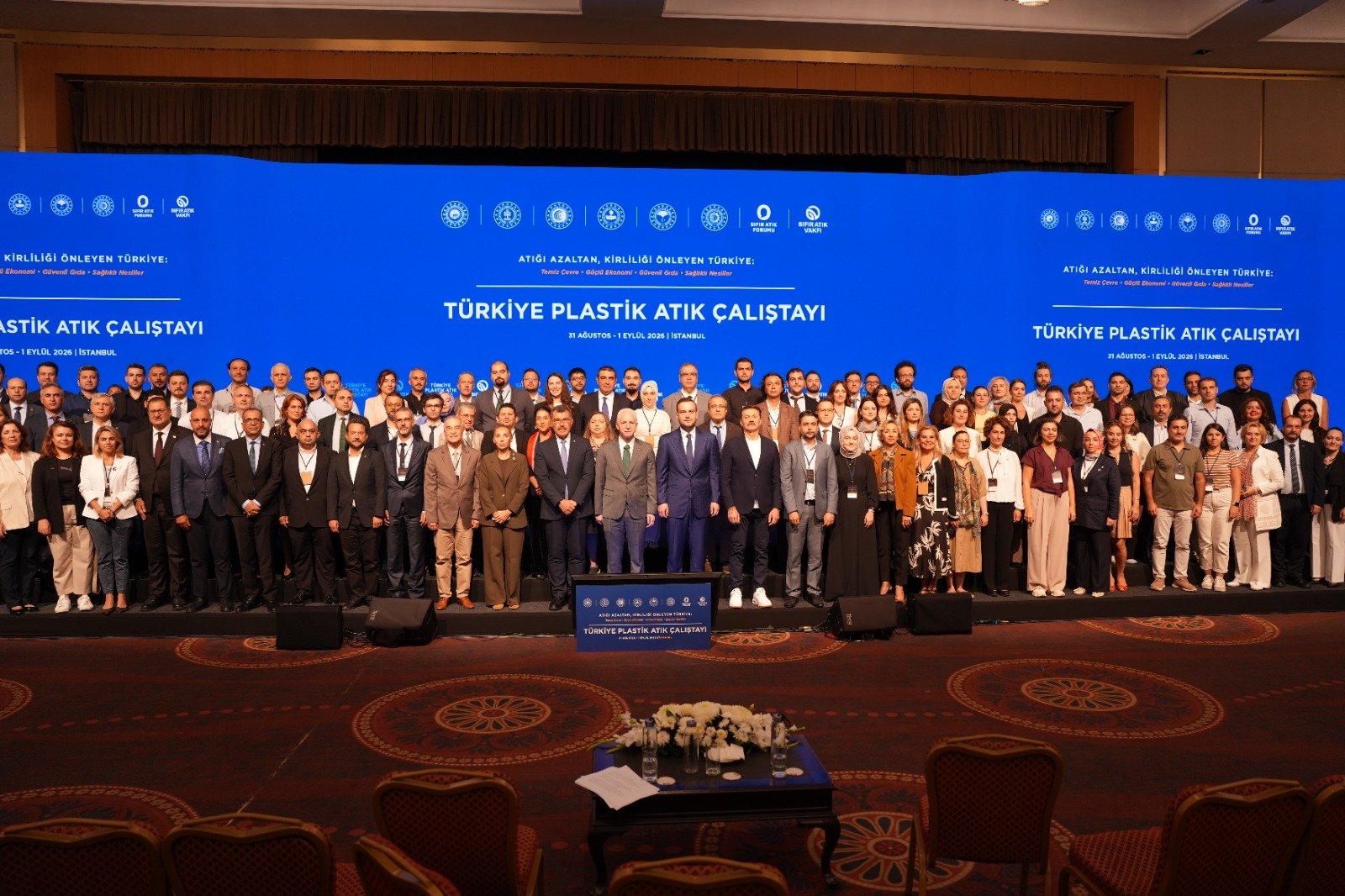
Efforts to tackle plastic pollution and transform Türkiye’s plastics sector moved forward following a two-day workshop that brought together around 600 representatives from 17 ministries, public institutions, local administrations, academia, civil society and the private sector.
The Türkiye Plastic Waste Workshop, organized by the Zero Waste Foundation under the “Zero Waste for the Future – Common Mind Platform,” was held on Aug. 31 to Sept. 1 in Istanbul, with participants assessing the country’s plastic cycle through 15 thematic working tables.
The recommendations are expected to contribute to the development of the 2053 Türkiye Plastic Vision and Türkiye’s preparations for COP31, which the country will host from Nov. 9-20.
Speaking at the closing session, Zero Waste Foundation President and COP31 High-Level Climate Champion Samed Ağırbaş said Türkiye’s plastic waste challenge required a common approach that brings local experience together with national policies.
“Türkiye’s every region, every city and every sector faces a different aspect of the plastics issue, but the solution is shared,” Ağırbaş said, stressing the need for a strong coordination mechanism that works both from the center to the local level and from the local level back to the center.
Istanbul Technical University (ITU) Rector Hasan Mandal presented the outcomes of the tables, which called for greater use of secondary raw materials, expanded source-separated collection and advanced recycling technologies to reduce Türkiye’s reliance on imported primary materials.
Participants also recommended clear eco-design criteria and compliance schedules, stronger data systems to verify environmental claims, and closer coordination between product design and recycling infrastructure.
For the plastics industry, they highlighted the need to strengthen traceability, testing and certification infrastructure to maintain competitiveness amid Türkiye’s alignment with European Union legislation, alongside support for technology, financing and qualified human resources.
The tables also called for a phased transition away from single-use plastics, stronger enforcement and clearer rules on the use of recycled materials, particularly in food-contact products.
Source-separated collection was identified as the foundation of effective plastic recycling, requiring sustainable financing, stronger licensed operators, reduced informality, effective inspections and greater public awareness.
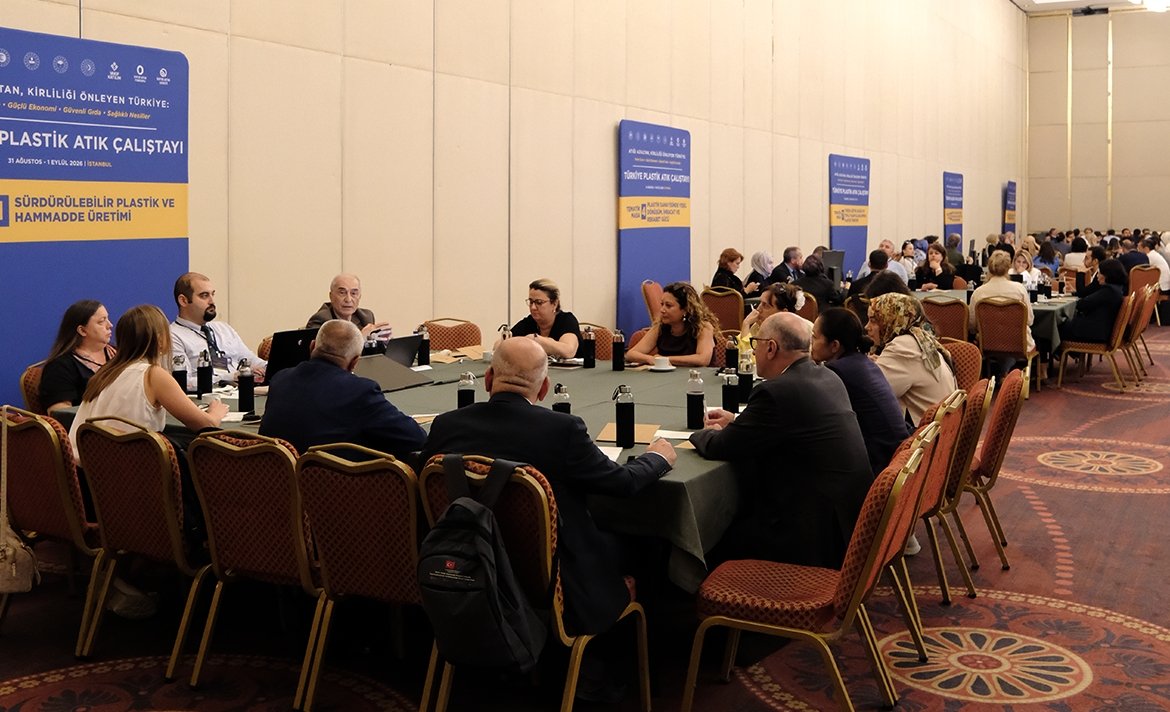
Participants further addressed plastic pollution in seas, inland waters and natural ecosystems, calling for stronger prevention, education and enforcement measures. They also recommended expanding refill and reuse systems, particularly in tourism, and preventing separately collected plastics from being mixed at later stages.
Agricultural and food-related plastics were identified as another priority, with recommendations for separate collection and tracking, alongside stronger digital monitoring and analysis infrastructure.
The workshop also highlighted microplastics and nanoplastics, calling for common measurement and analysis methods, stronger laboratory and risk-assessment capacity, measures to reduce exposure, and research into safer alternatives.
Education and public communication were also identified as key areas, with participants calling for coordinated sustainability education, targeted communication tools and a common source of reliable information on plastics.
The discussions also identified key institutional, financial and data priorities for transforming Türkiye’s plastics sector.
Participants called for clearer legislation and implementation schedules, stronger source-separated collection under extended producer responsibility, and measures to reduce informality.
They also recommended financing mechanisms based on verified data and sector performance, coordinated incentives under a single road map and a multi-stakeholder transformation mechanism covering the 2027-2031 period.
Plastic waste data should be collected under common standards, integrated across institutions and digitally tracked from source to final processing, with field data used to verify declarations and artificial intelligence-supported systems strengthening monitoring.
The final thematic table focused on the 2053 Türkiye Plastic Vision and international cooperation, with participants recommending a National Plastics Strategy and Action Plan, stronger industry transformation and investment capacity in 2027-2031, and the positioning of Türkiye as a regional circular plastics hub by 2053.
Börte Köse Mutlu, director of the Zero Waste Institute at ITU, said academics played an active role throughout the workshop, serving as moderators and rapporteurs at the thematic tables.
Mutlu, who took part in the table on the 2053 Türkiye Plastic Vision, said the discussions focused on building on Türkiye’s existing experience in waste management and plastic raw-material recycling to establish a regional model.
“Based on the 2053 Plastic Vision, we drew a roadmap together with our colleagues to position Türkiye as a regional circular hub and a major recycling center in an area where we are already very advanced, waste management and plastic raw-material recycling,” she said.
“We are thinking of a structure in which Türkiye can serve as a role model for the Middle East, the Balkans and Central Asia and, when necessary, share its know-how and knowledge, whether in explaining systems such as deposit-return schemes or other models and approaches,” Mutlu said.
She added that the workshop also addressed ambitious targets for single-use plastics.
“We discussed very specific targets, especially regarding single-use plastics, with the aim of catching up with Europe and even exceeding European standards in recycling,” she said.
Arife Eymen Karabulut of ITU said she contributed to the table focused on data and digital systems.
“One of the most important issues that emerged from the data table was the need to integrate data across all institutions and organizations,” she said. “We also discussed the need to use artificial intelligence systems in data management and to develop the necessary incentives for this. We considered this a priority.”
Hasan Can Okutan, a faculty member in the Chemical Engineering Department at ITU, said the table on sustainable plastics and raw-material production focused on Türkiye’s challenges in securing raw materials and the technological opportunities available to address them.
“Türkiye has some bottlenecks, particularly when it comes to accessing and securing raw materials,” Okutan said, noting the country’s dependence on petroleum- and natural-gas-based feedstocks.
He said Türkiye could make greater use of secondary raw materials while further developing its recycling technologies.
“Türkiye is genuinely advanced in mechanical recycling technologies. At the same time, we need to develop chemical recycling and more advanced technologies so that, particularly as we move toward 2030, we can make further progress in waste management and recover plastic waste through technologies and production systems that are increasingly free from fossil fuels,” he said.