Plastic waste is increasingly being addressed as more than a waste-management issue in Türkiye, with attention turning to reducing plastic at its source, improving waste management and preventing pollution from reaching waterways, coastlines and marine ecosystems.
Against this backdrop, the Zero Waste Foundation has launched a nationwide consultation process to examine plastic-waste management at the local level, identify challenges and develop practical solutions with local stakeholders. City coordination meetings are being held in Adana, Mersin, Muğla and Antalya, bringing together provincial authorities, municipalities, universities, industry, civil society and the private sector.
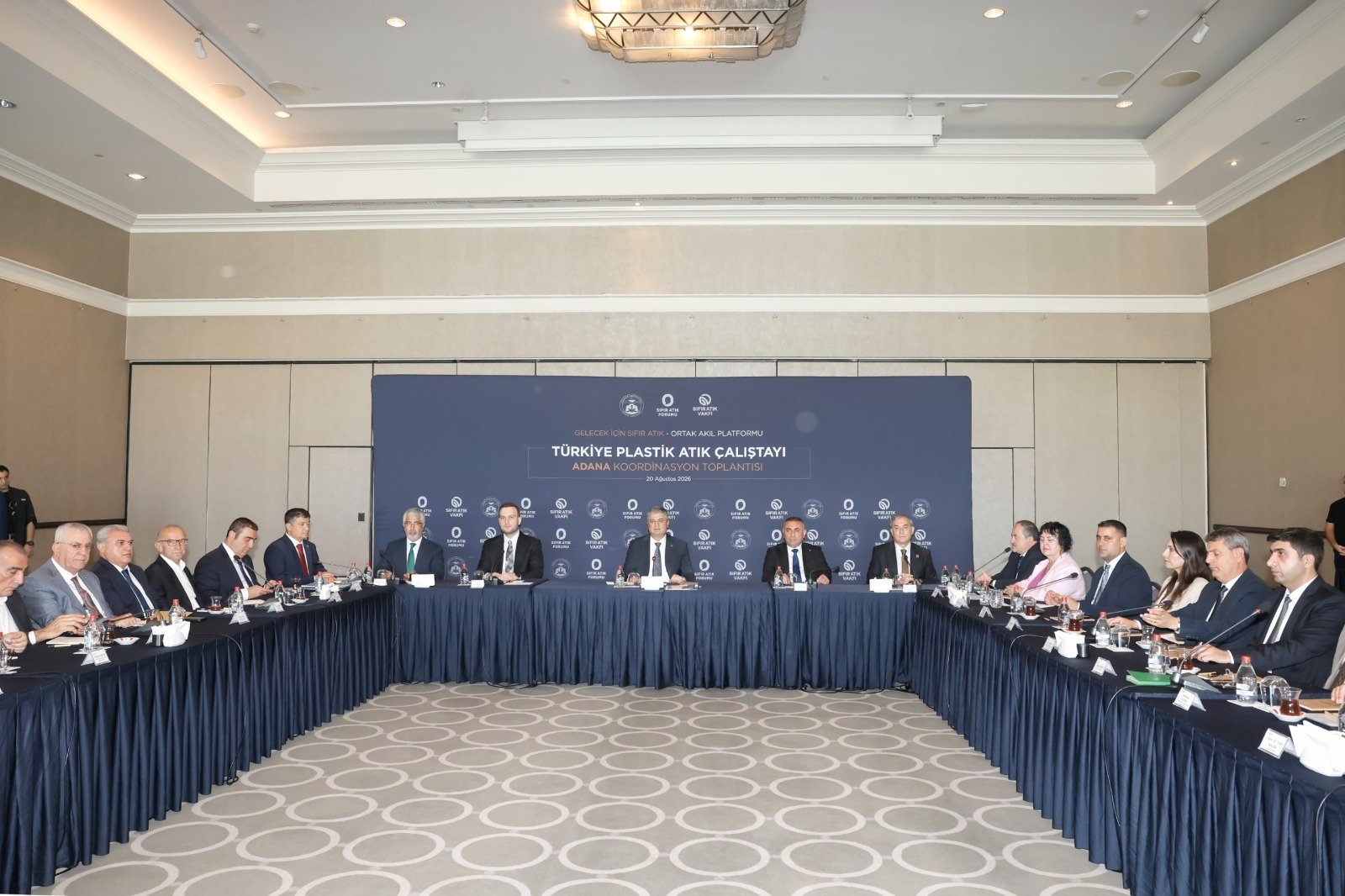
The first meeting was held in Adana, southern Türkiye, on Thursday, under the auspices of the Adana Governor’s Office and coordinated by the Zero Waste Foundation. It brought together Adana Governor Mustafa Yavuz, Zero Waste Foundation President and COP31 High-Level Climate Champion Samed Ağırbaş, as well as representatives from public institutions, municipalities, universities, chambers of commerce and industry, organized industrial zones, civil society and the private sector.
The discussions focused on Adana’s plastic cycle, including waste management, recycling and reuse, source separation and measures to prevent plastic waste from reaching water resources and the sea.
Speaking at a press conference following the meeting, Ağırbaş said plastic waste could not be addressed by a single institution or sector and called for a coordinated approach involving different stakeholders.
“The plastic waste issue is not something that a single institution or a single sector can solve on its own,” Ağırbaş said, stressing the importance of bringing different stakeholders together to identify problems and develop joint solutions.
He also linked the issue to the wider climate agenda, saying plastic pollution and the climate crisis should not be treated separately. Resource efficiency, waste management, the circular economy and sustainable production and consumption, he said, should form part of Türkiye’s climate efforts ahead of COP31.
Adana has a particularly significant role in Türkiye’s plastic-waste industry, Adana has emerged as a major center for Türkiye’s plastic-waste processing, with the province accounting for around 60% of the country’s imported plastic-waste processing.
Against this backdrop, Governor Yavuz said authorities had stepped up inspections of waste-recovery facilities, adding, “Between July 27 and Aug. 15 this year, we conducted 159 inspections. We are continuing these inspections with the aim of preventing pollution at its source, ensuring compliance with environmental regulations and making recycling processes more traceable.”
Yavuz also said authorities were preparing a provincial action plan on plastic and microplastic pollution, covering waste, water-treatment facilities, irrigation channels, recycling facilities and the identification of microplastic sources. The recommendations from the meeting will be incorporated into the plan.
He added that authorities would work to strengthen waste separation and recycling infrastructure, support licensed and modern facilities and more effectively monitor unregistered or unauthorized operations.
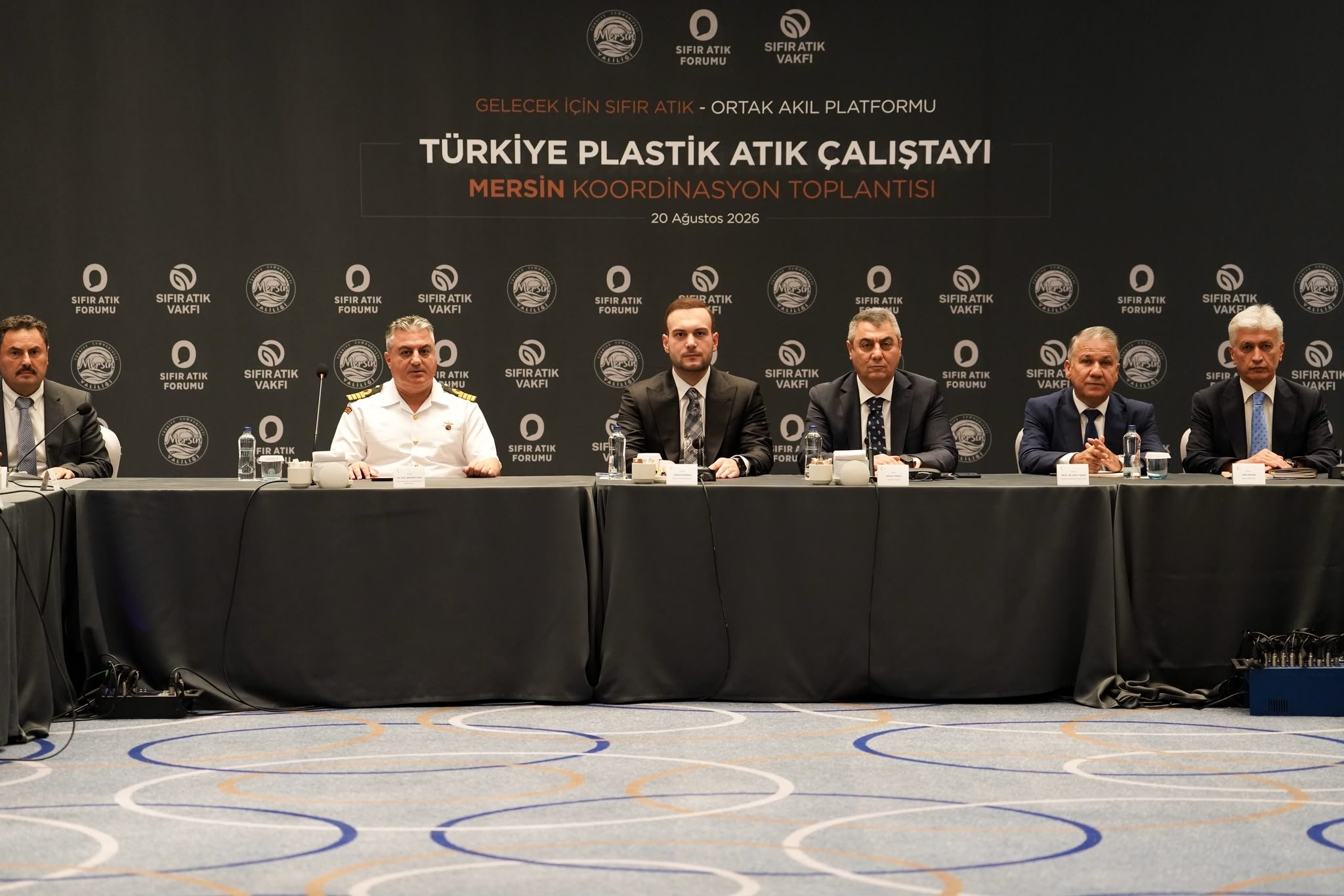
The second city coordination meeting was held in Mersin, southern Türkiye, on the same day, under the auspices of the Mersin Governor’s Office and coordinated by the Zero Waste Foundation. It brought together Governor Atilla Toros, Ağırbaş and representatives from public institutions, municipalities, universities, industry, civil society and the private sector.
Mersin’s meeting placed particular emphasis on the province’s relationship with the Mediterranean, considering the impact of its port, logistics, agricultural, industrial and tourism activities alongside measures to prevent plastic waste from reaching the sea.
Speaking at a press conference following the meeting, Ağırbaş said Mersin was important to Türkiye’s plastic cycle from both its land and marine dimensions, stressing the need to prevent plastic waste from reaching the sea at its source.
“Preventing the plastics that could reach these protected areas at their source is also our responsibility,” Ağırbaş said, adding that the Mersin meeting was part of a wider consultation process that began in Adana and will continue in Muğla and Antalya before the recommendations are brought to the Istanbul workshop.
He also emphasized the importance of bringing different views together, saying, “Common wisdom is not simply agreeing with one another, it is listening to different views, openly identifying our shortcomings and producing solutions together.”
Governor Toros highlighted Mersin’s 321-kilometer (199-miles) coastline, saying the protection of its seas and shores was critical to the province’s future and biodiversity.
On enforcement, Toros said authorities had inspected 20 plastic-recovery facilities in the province and imposed administrative sanctions on two facilities that violated regulations. Samples were also taken from urban wastewater treatment facilities, with their analysis still underway.
“The cleanliness of our seas and coasts is of critical importance for Mersin’s future and biodiversity,” Toros said, adding that the meeting had once again demonstrated the importance of preventing pollution at its source.
Toros said environmental fines amounted to TL 59.25 million ($1.23 million) in 2025 and TL 49.4 million in 2026, while inspections of plastic-recovery facilities would continue. He stressed that protecting the environment and seas required cooperation among municipalities, universities, industrialists, sector representatives and civil society.
The recommendations from Adana and Mersin, together with those emerging from Muğla and Antalya, will be taken to the Türkiye Plastic Waste Workshop in Istanbul on Aug. 31-Sept. 1.
The workshop will bring together representatives from 17 ministries, more than 40 general directorates, local governments, academia, civil society and other stakeholders to discuss plastic production and design, sustainable consumption, waste management, recycling, microplastics, human health, financing, governance and international cooperation.