Türkiye is advancing a comprehensive water strategy as the country confronts growing water stress amid regional and global scarcity, with climate change, population growth and urbanization intensifying pressure on limited resources.
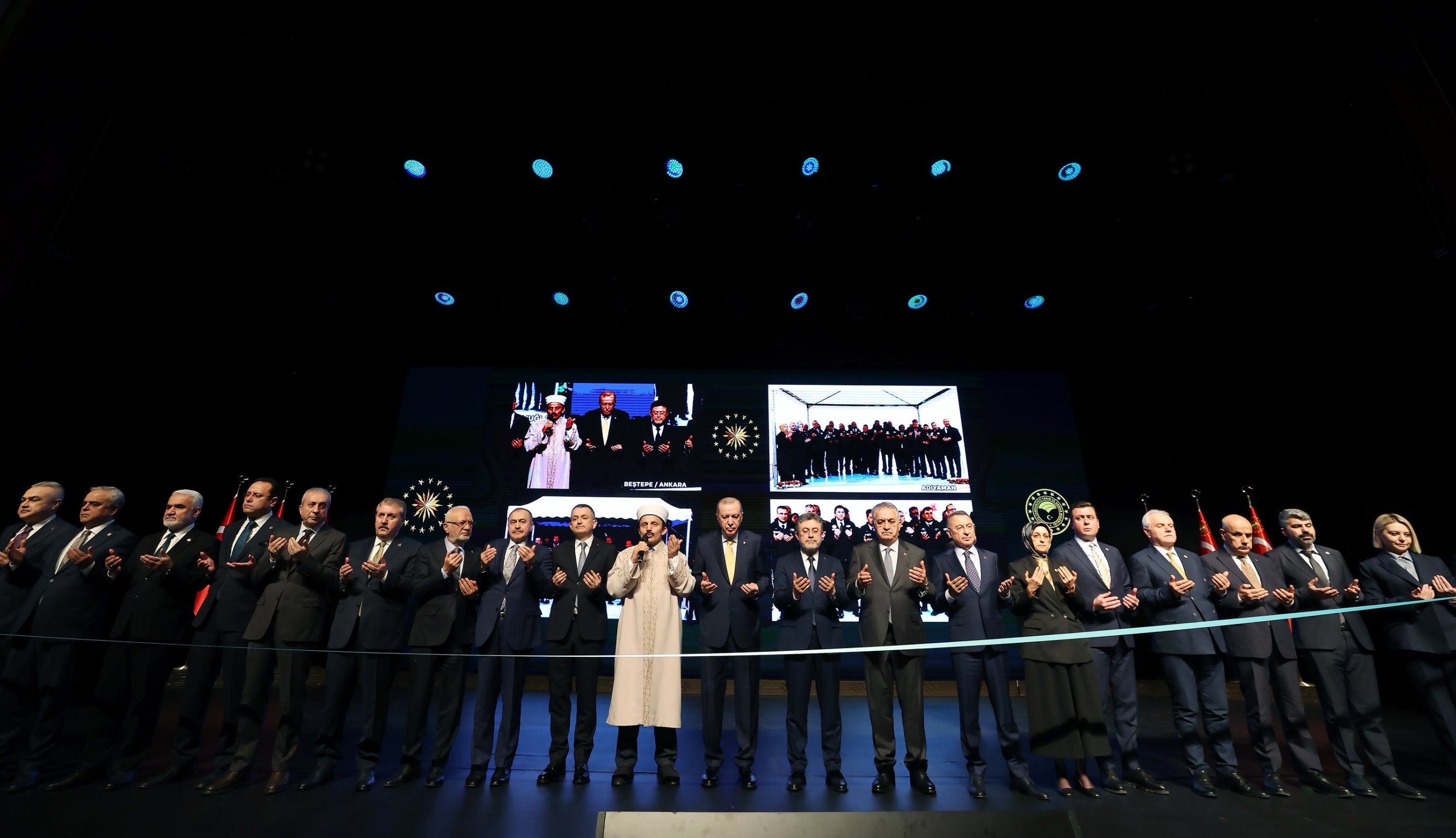
President Recep Tayyip Erdoğan highlighted how investments, including dams, ponds, irrigation networks, drinking water facilities and flood control structures, will increase water storage, make irrigation more accessible and better protect communities from flooding, during the inauguration of 563 new water infrastructure projects on Thursday at the Beştepe Nation's Congress and Culture Center in Ankara.
In his address, Erdoğan detailed the scope of the projects, highlighting the completion of 54 dams and ponds, 109 irrigation facilities, 18 drinking water facilities, 11 land consolidation and on-farm development services, and 371 flood control facilities.
Collectively, these works have increased Türkiye’s water storage capacity by 896 million cubic meters and made 1.19 million decares of land available for irrigation. They also provide 212 million cubic meters of drinking water annually and treat 301,000 cubic meters of water daily, while protecting 505 residential areas and 52,400 decares of land from flood-related damage.
“Through these completed facilities, we are contributing TL 22 billion ($494.54 million) annually to our economy at current figures,” Erdoğan noted.
The president framed these projects within a broader historical and cultural context, portraying Türkiye as a “water civilization” deeply connected to its natural resources. He invoked the legacy of dervishes, saints and scholars who established settlements and religious lodges along waterways a millennium ago, highlighting the cultural and spiritual significance of water in Turkish society.
Erdoğan stressed that in Türkiye, water has long been associated with purity, cleanliness, abundance and the welfare of the community – a principle that guided the construction of fountains, water clocks and other hydraulic systems in the Ottoman and earlier periods.
He cited the Prophet Muhammad’s teaching that giving water is a charitable act, noting that Turkish ancestors institutionalized this through public fountains, or “sebil,” which provided water for people and animals. He emphasized that this tradition underpins Türkiye’s modern water management policies.
Erdoğan highlighted the strategic significance of water in the 21st century, noting that global competition for resources is intensifying. “The struggle once waged for oil and carbon fuels will increasingly be fought over water,” he said, pointing to population growth, urbanization, industrialization and climate change as factors placing pressure on freshwater resources.
He noted that only 2.5% of the world’s 1.4 billion cubic kilometers of water is fresh, while the number of people without reliable access to safe drinking water has reached 2.2 billion. Projections suggest that by 2050, around 6 billion people may face insufficient access to clean water.
Türkiye, located in the Mediterranean belt, is particularly exposed to these pressures. Erdoğan highlighted recent environmental challenges, including forest fires and flood events, and outlined steps taken to enhance disaster response.
Last year, 2,334 forest fires affected 81,000 hectares, prompting the government to expand aerial firefighting capacity through 119 helicopters, 28 aircraft, and additional unmanned aerial vehicles.
Reflecting on national water resources, Erdoğan stressed that Türkiye is classified as a “water-stressed” country, with only 1,301 cubic meters of usable water per person annually, compared with the global average precipitation of 990 millimeters. “We must protect our water resources before they reach depletion, use them efficiently, and manage them responsibly,” he said.
The president also connected water management with broader environmental initiatives, citing the nine-year Zero Waste Movement led by first lady Emine Erdoğan, which has recovered 90 million tons of waste and contributed TL 365 billion to Türkiye’s economy.
President Erdoğan provided a comprehensive overview of Türkiye’s water infrastructure achievements over the past two decades. Since 2002, the country has completed 805 dams, 522 ponds and weirs, 1,890 irrigation facilities, 365 land consolidation projects, 378 drinking water and wastewater facilities, 6,234 flood control projects, 637 hydroelectric plants, and 148 underground storage and recharge facilities.
In total, 10,984 facilities, valued at TL 4.7 trillion, have been brought into service, opening 2.5 million hectares for irrigation, supporting 2.2 million agricultural jobs, and contributing TL 416 billion annually to the economy.
Looking ahead to 2026, Erdoğan noted the favorable rainfall season and the expected replenishment of dams and water resources. He announced plans to complete an additional 300 water and irrigation facilities within the year, emphasizing that success in agriculture, energy and industry depends not only on infrastructure but also on strategic vision and national commitment.