Daily Sabah logo

Politics
Diplomacy Legislation War On Terror EU Affairs Elections News Analysis
TÜRKİYE
Istanbul Education Investigations Minorities Expat Corner Diaspora
World
Mid-East Europe Americas Asia Pacific Africa Syrian Crisis Islamophobia
Business
Automotive Economy Energy Finance Tourism Tech Defense Transportation News Analysis
Lifestyle
Health Environment Travel Food Fashion Science Religion History Feature Expat Corner
Arts
Cinema Music Events Portrait Reviews Performing Arts
Sports
Football Basketball Motorsports Tennis
Opinion
Columns Op-Ed Reader's Corner Editorial
PHOTO GALLERY
JOBS ABOUT US RSS PRIVACY CONTACT US
© Turkuvaz Haberleşme ve Yayıncılık 2025

Daily Sabah - Latest & Breaking News from Turkey | Istanbul

  • Politics
    • Diplomacy
    • Legislation
    • War On Terror
    • EU Affairs
    • Elections
    • News Analysis
  • TÜRKİYE
    • Istanbul
    • Education
    • Investigations
    • Minorities
    • Expat Corner
    • Diaspora
  • World
    • Mid-East
    • Europe
    • Americas
    • Asia Pacific
    • Africa
    • Syrian Crisis
    • Islamophobia
  • Business
    • Automotive
    • Economy
    • Energy
    • Finance
    • Tourism
    • Tech
    • Defense
    • Transportation
    • News Analysis
  • Lifestyle
    • Health
    • Environment
    • Travel
    • Food
    • Fashion
    • Science
    • Religion
    • History
    • Feature
    • Expat Corner
  • Arts
    • Cinema
    • Music
    • Events
    • Portrait
    • Reviews
    • Performing Arts
  • Sports
    • Football
    • Basketball
    • Motorsports
    • Tennis
  • Gallery
  • Opinion
    • Columns
    • Op-Ed
    • Reader's Corner
    • Editorial
  • TV
  • World
  • Mid-East
  • Europe
  • Americas
  • Asia Pacific
  • Africa
  • Syrian Crisis
  • Islamophobia

COVID-19 could infect more than 200 million in Africa: WHO study

by French Press Agency - AFP

PARIS May 15, 2020 - 9:18 am GMT+3
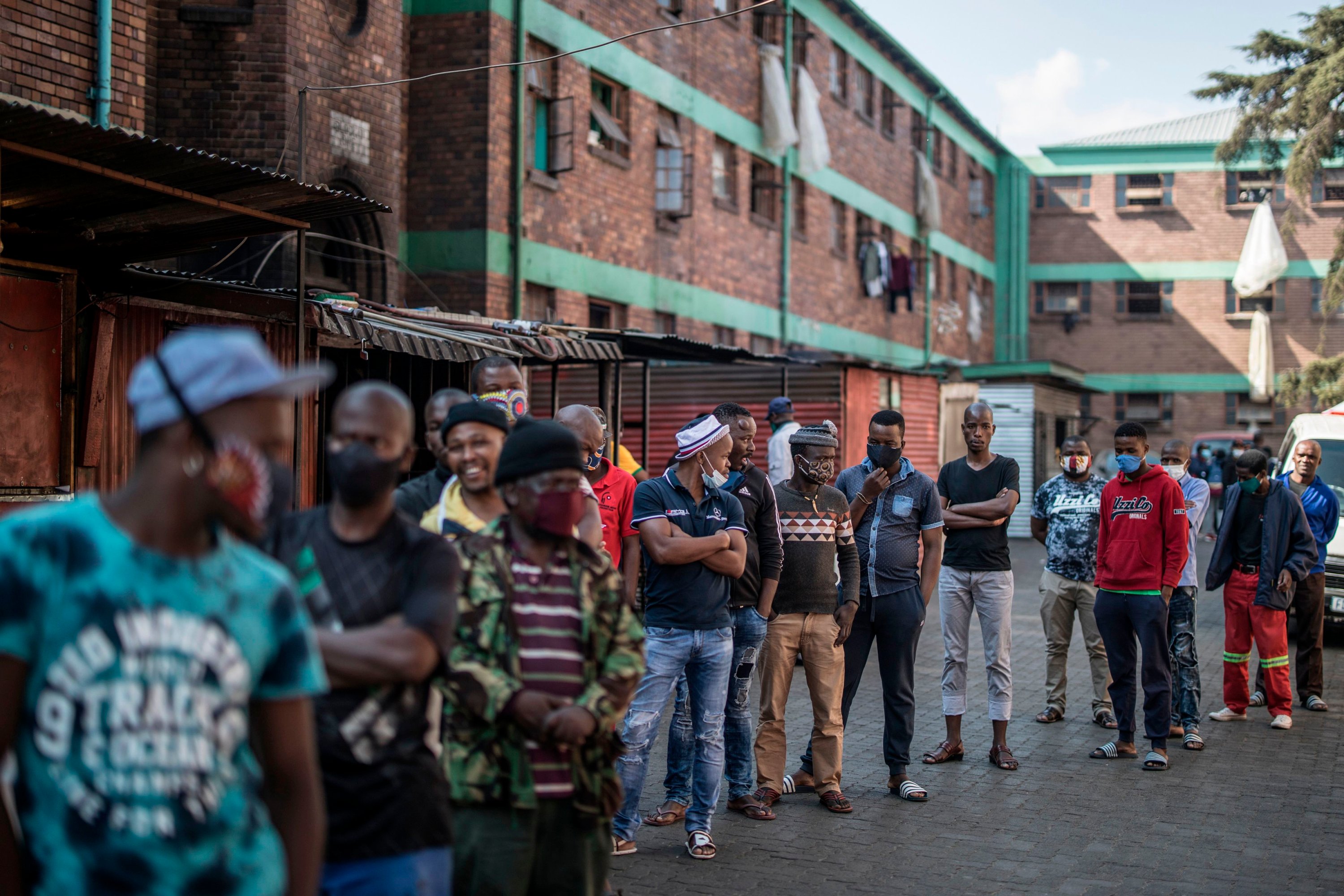
Men line up as Ministry of Health workers conduct a coronavirus screening and testing drive at the Wolhuter men's hostel in the Jeppestown district of Johannesburg, South Africa, May 14, 2020. (AFP Photo)
by French Press Agency - AFP May 15, 2020 9:18 am

The coronavirus could kill 150,000 people in Africa in a year unless urgent action is taken, according to a World Health Organization (WHO) modeling study that says nearly a quarter of a billion people will be infected.

Authors of the research, published Friday in the journal BMJ Global Health, predicted a lower infection rate than in other parts of the world like Europe and the United States, with fewer severe cases and deaths.

But while they said many African nations had been swift to adopt containment measures, they warned that health systems could still quickly become overwhelmed.

"Our model points to the scale of the problem for health systems if containment measures fail," said the authors.

The study comes amid stark warnings that COVID-19 threatens a health emergency in developing nations where fragile health systems are already struggling with an array of other chronic diseases.

Experts at the WHO's Africa office modeled likely rates of exposure to the virus and infection in the 47 countries under its regional remit, which excludes Djibouti, Egypt, Libya, Morocco, Somalia, Sudan and Tunisia.

Some 231 million people or 22% (with a range of 16% to 26%) of the 1 billion people in the region were expected to be infected in the 12-month period – most of them showing few or no symptoms.

But an estimated 4.6 million people would need to be admitted to hospital, while 140,000 would have severe COVID-19 infection and 89,000 would be critically ill.

That would lead to some 150,000 deaths (between 83,000 and 190,000) the study suggested.

The modeling estimates what would happen for each country over the period of a year from the beginning of widespread and sustained community transmission.

Smaller countries threatened

Researchers warned that surging hospital admissions for COVID-19 would divert already limited resources to tackle major health issues in the region, such as HIV, tuberculosis, malaria and malnutrition, worsening the impact of the coronavirus.

"The region will have fewer deaths, but occurring more in relatively younger age groups, amongst people previously considered healthy – due to undiagnosed noncommunicable diseases," the report said, adding that these trends were already emerging.

The researchers said they expect the virus would likely circulate within the region for longer than other countries, possibly for several years.

Transmission was estimated to be greatest in small nations, with Mauritius found to have the highest risk of exposure. Of the region's large countries, South Africa, Cameroon and Algeria were also in the top 10n for exposure risk.

The authors calculated this risk by looking at each country's "gathering factor" (including family size and population density), people's likely ease of movement, sanitation and hygiene practices.

They also included weather. It is not known if warmer temperatures slow down the spread of COVID-19, though some research has suggested it has that effect on other coronaviruses.

Researchers factored in each country's measures to control the spread of the virus, including physical distancing.

They also looked at health risk factors – the proportion of the population over 65, HIV prevalence (as a proxy for chronic communicable conditions) and diabetes (as a proxy for noncommunicable chronic illness).

The report assumed that some 88% of people would not know they had the virus, with either mild symptoms or none at all, while 4% would suffer severe or life-threatening illness.

They called for countries to rapidly boost health care capacity, particularly in primary hospitals.

This month the United Nations said the number of deaths from AIDS-related illnesses in sub-Saharan Africa could double if the provision of health care to HIV sufferers is disrupted during the coronavirus crisis.


  • shortlink copied
  • Last Update: May 15, 2020 11:17 am
    KEYWORDS
    covid-19 outbreak coronavirus africa world health organization
    The Daily Sabah Newsletter
    Keep up to date with what’s happening in Turkey, it’s region and the world.
    You can unsubscribe at any time. By signing up you are agreeing to our Terms of Use and Privacy Policy. This site is protected by reCAPTCHA and the Google Privacy Policy and Terms of Service apply.
    No Image
    Global warming hits Lake Tuz as drought worsens
    PHOTOGALLERY
    • POLITICS
    • Diplomacy
    • Legislation
    • War On Terror
    • EU Affairs
    • News Analysis
    • TÜRKİYE
    • Istanbul
    • Education
    • Investigations
    • Minorities
    • Diaspora
    • World
    • Mid-East
    • Europe
    • Americas
    • Asia Pacific
    • Africa
    • Syrian Crisis
    • İslamophobia
    • Business
    • Automotive
    • Economy
    • Energy
    • Finance
    • Tourism
    • Tech
    • Defense
    • Transportation
    • News Analysis
    • Lifestyle
    • Health
    • Environment
    • Travel
    • Food
    • Fashion
    • Science
    • Religion
    • History
    • Feature
    • Expat Corner
    • Arts
    • Cinema
    • Music
    • Events
    • Portrait
    • Performing Arts
    • Reviews
    • Sports
    • Football
    • Basketball
    • Motorsports
    • Tennis
    • Opinion
    • Columns
    • Op-Ed
    • Reader's Corner
    • Editorial
    • Photo gallery
    • DS TV
    • Jobs
    • privacy
    • about us
    • contact us
    • RSS
    © Turkuvaz Haberleşme ve Yayıncılık 2021