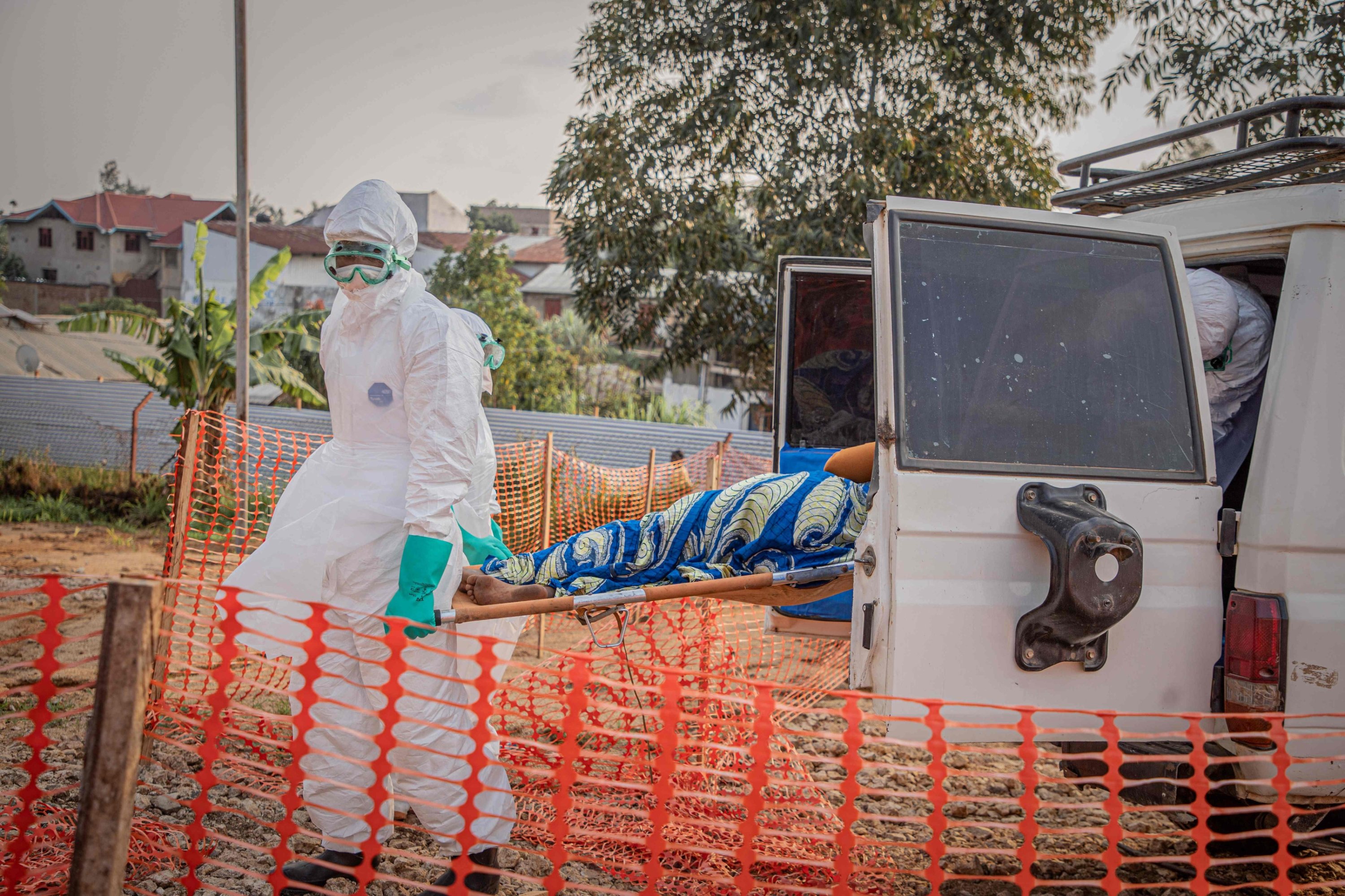
Scientists are racing to understand a growing Ebola Bundibugyo outbreak in the Democratic Republic of the Congo as medics warn that key knowledge gaps are slowing detection and treatment of patients.
Since the outbreak was declared in mid-May, Congo’s government has reported more than 1,100 cases and nearly 300 deaths, making it the largest recorded outbreak of the Bundibugyo strain to date. Uganda has also reported 20 confirmed cases and two deaths across the border.
“We’re facing an outbreak that we are, to be honest, only just beginning to understand,” World Health Organization emergencies director Chikwe Ihekweazu told a news briefing Wednesday.
Only two previous Bundibugyo outbreaks have been recorded, in Uganda in 2007 and in Congo in 2012, together accounting for about 200 cases. The strain differs from Ebola Zaire, which drove the 2014 to 2016 West Africa epidemic, but it belongs to the same filovirus family and causes similar symptoms, including fever, vomiting, diarrhea and, in some cases, bleeding.
The current outbreak was detected late because most common tests are designed to identify Ebola Zaire, not Bundibugyo. Unlike Ebola Zaire, there are no vaccines or approved treatments specifically targeting Bundibugyo, although treatment trials are expected to begin next week.
The lack of data on how to detect the disease is still causing problems, Congolese officials and doctors said, particularly because early symptoms are also common in other illnesses such as malaria and appear to be milder in Bundibugyo cases, meaning people may delay seeking care.
“For those in the early stage of the disease, it looks milder than Zaire, and I believe that is one of the reasons we are seeing more than 50% of patients at an advanced stage,” said Abdou Sebushishe, a senior adviser at the International Medical Corps in eastern Congo, which runs several Ebola treatment centers.
Bleeding is also associated with later stages of Ebola, particularly in the minds of communities that experienced the Zaire outbreak in the same region of Congo in 2018 and 2019, said Dr. Emmanuel Musingusi Bulemu, a Congolese health official investigating cases in the Nizi area of Ituri province, the worst-hit region.
Around 40% of Ebola patients experience bleeding, according to U.S. Centers for Disease Control and Prevention estimates.
But there are early signs bleeding is less common in this Bundibugyo outbreak, according to the World Health Organization and evidence published Wednesday by scientists at Congo’s National Institute for Biomedical Research. They found only 10% of people experienced the symptom among 505 confirmed cases studied.
“As a result, people in the community say, ‘Before, it was bleeding. We haven’t seen any bleeding in our sick relative, so you’re lying to us,’” Musingusi said. “That perception strengthens resistance to response efforts.”
Resistance and violence against Ebola responders have limited efforts to contain the outbreak.
Some scientists said that despite differences between Ebola outbreaks, the same response measures remain essential, including testing, isolating and treating patients.
“It’s the same things,” said Peter Piot, professor at the London School of Hygiene and Tropical Medicine and a co-discoverer of Ebola Zaire.
“But I have never seen this many cases this quickly,” he added, pointing to the challenges of responding in a conflict-hit region. “Without peace I fear we will not stop this outbreak.”