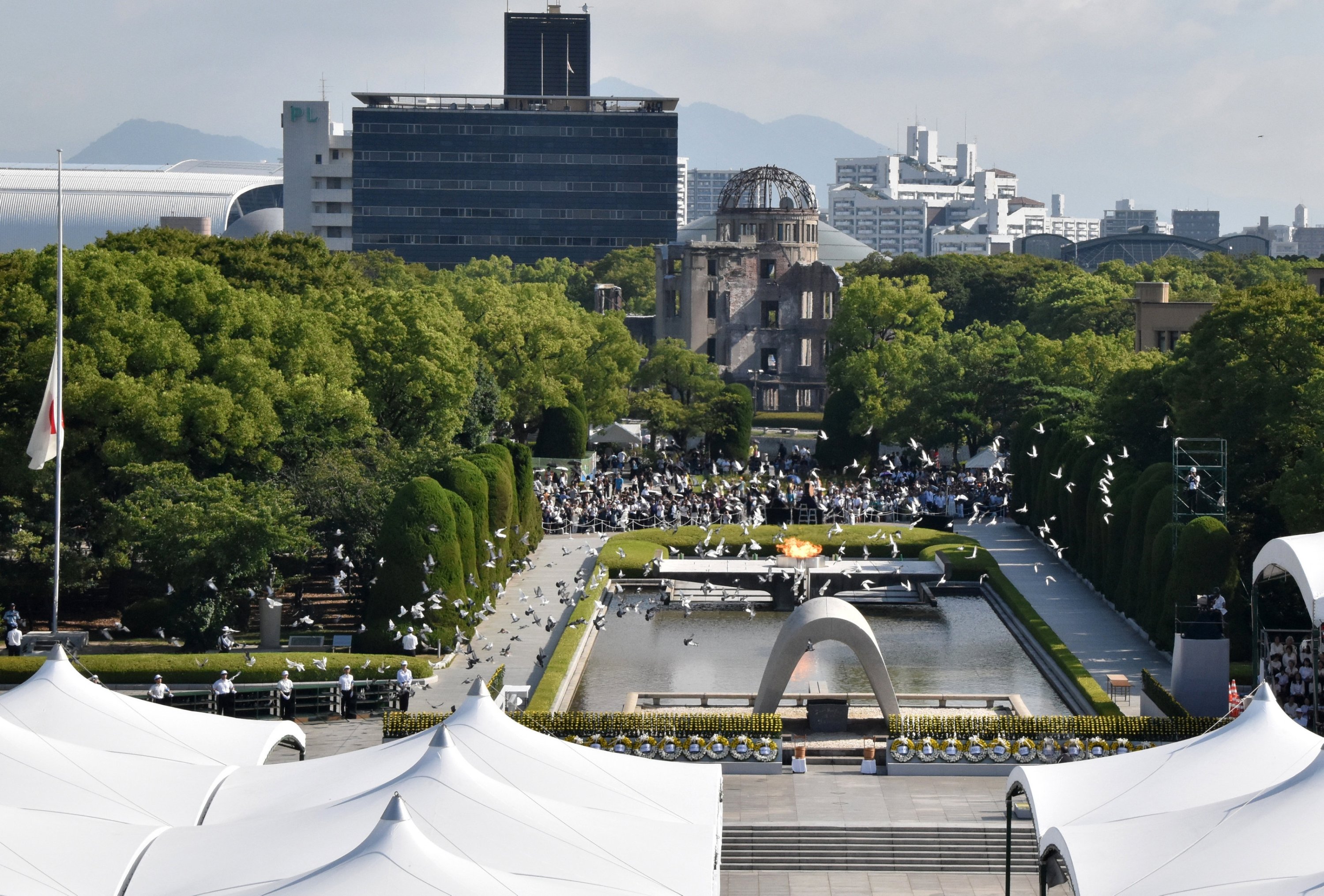
Hiroshima commemorated the 80th anniversary of the U.S. atomic bombing Wednesday, renewing calls for nuclear disarmament amid growing global fears of nuclear conflict.
At 8:15 a.m. local time – the exact moment the Enola Gay dropped "Little Boy" over Hiroshima in 1945 – about 55,000 people observed a moment of silence at Peace Memorial Park.
The blast instantly killed tens of thousands; by the end of that year, an estimated 140,000 had died. Three days later, Nagasaki faced a similar fate, and Japan surrendered soon after, ending World War II.
Mayor Kazumi Matsui placed an updated list of 349,246 victims in the park’s cenotaph and urged younger generations worldwide to learn the painful lessons of Hiroshima.
“Misguided decisions on military spending and nuclear weapons risk inhumane consequences,” he warned, pointing to current global conflicts and the threat of nuclear arms resurgence.
Prime Minister Shigeru Ishiba reaffirmed Japan’s commitment to a nuclear-free world, emphasizing the country’s unique experience as the only nation to suffer atomic attacks during war.
“These memories must be preserved and passed down,” he said, though he stopped short of endorsing the Treaty on the Prohibition of Nuclear Weapons, reflecting Japan’s reliance on the U.S. nuclear umbrella amid regional threats.
The Nobel Peace Prize-winning organization Nihon Hidankyo, representing survivors, stressed urgency as their ranks dwindle – the average age now exceeds 86.
“We have little time left to change the attitudes of nuclear states,” their statement read, echoing U.N. Secretary-General Antonio Guterres, who urged global leaders to heed the survivors’ message and work for peace.
Survivors voiced frustration over rising global support for nuclear deterrence and recent remarks by political leaders justifying military actions with references to Hiroshima and Nagasaki’s tragic legacy. “It’s ridiculous,” said 79-year-old Kosei Mito, exposed to radiation before birth. “Nuclear weapons won’t be eliminated while their use is justified.”
Outside the park, protests called for nuclear abolition and peace in conflict zones, underscoring the ongoing debate about nuclear weapons’ role in international security.