Daily Sabah logo

Politics
Diplomacy Legislation War On Terror EU Affairs Elections News Analysis
TÜRKİYE
Istanbul Education Investigations Minorities Expat Corner Diaspora
World
Mid-East Europe Americas Asia Pacific Africa Syrian Crisis Islamophobia
Business
Automotive Economy Energy Finance Tourism Tech Defense Transportation News Analysis
Lifestyle
Health Environment Travel Food Fashion Science Religion History Feature Expat Corner
Arts
Cinema Music Events Portrait Reviews Performing Arts
Sports
Football Basketball Motorsports Tennis
Opinion
Columns Op-Ed Reader's Corner Editorial
PHOTO GALLERY
JOBS ABOUT US RSS PRIVACY CONTACT US
© Turkuvaz Haberleşme ve Yayıncılık 2025

Daily Sabah - Latest & Breaking News from Turkey | Istanbul

  • Politics
    • Diplomacy
    • Legislation
    • War On Terror
    • EU Affairs
    • Elections
    • News Analysis
  • TÜRKİYE
    • Istanbul
    • Education
    • Investigations
    • Minorities
    • Expat Corner
    • Diaspora
  • World
    • Mid-East
    • Europe
    • Americas
    • Asia Pacific
    • Africa
    • Syrian Crisis
    • Islamophobia
  • Business
    • Automotive
    • Economy
    • Energy
    • Finance
    • Tourism
    • Tech
    • Defense
    • Transportation
    • News Analysis
  • Lifestyle
    • Health
    • Environment
    • Travel
    • Food
    • Fashion
    • Science
    • Religion
    • History
    • Feature
    • Expat Corner
  • Arts
    • Cinema
    • Music
    • Events
    • Portrait
    • Reviews
    • Performing Arts
  • Sports
    • Football
    • Basketball
    • Motorsports
    • Tennis
  • Gallery
  • Opinion
    • Columns
    • Op-Ed
    • Reader's Corner
    • Editorial
  • TV
  • World
  • Mid-East
  • Europe
  • Americas
  • Asia Pacific
  • Africa
  • Syrian Crisis
  • Islamophobia

One year on, Wuhan market at epicenter of virus outbreak remains empty

by REUTERS

WUHAN Dec 11, 2020 - 12:35 pm GMT+3
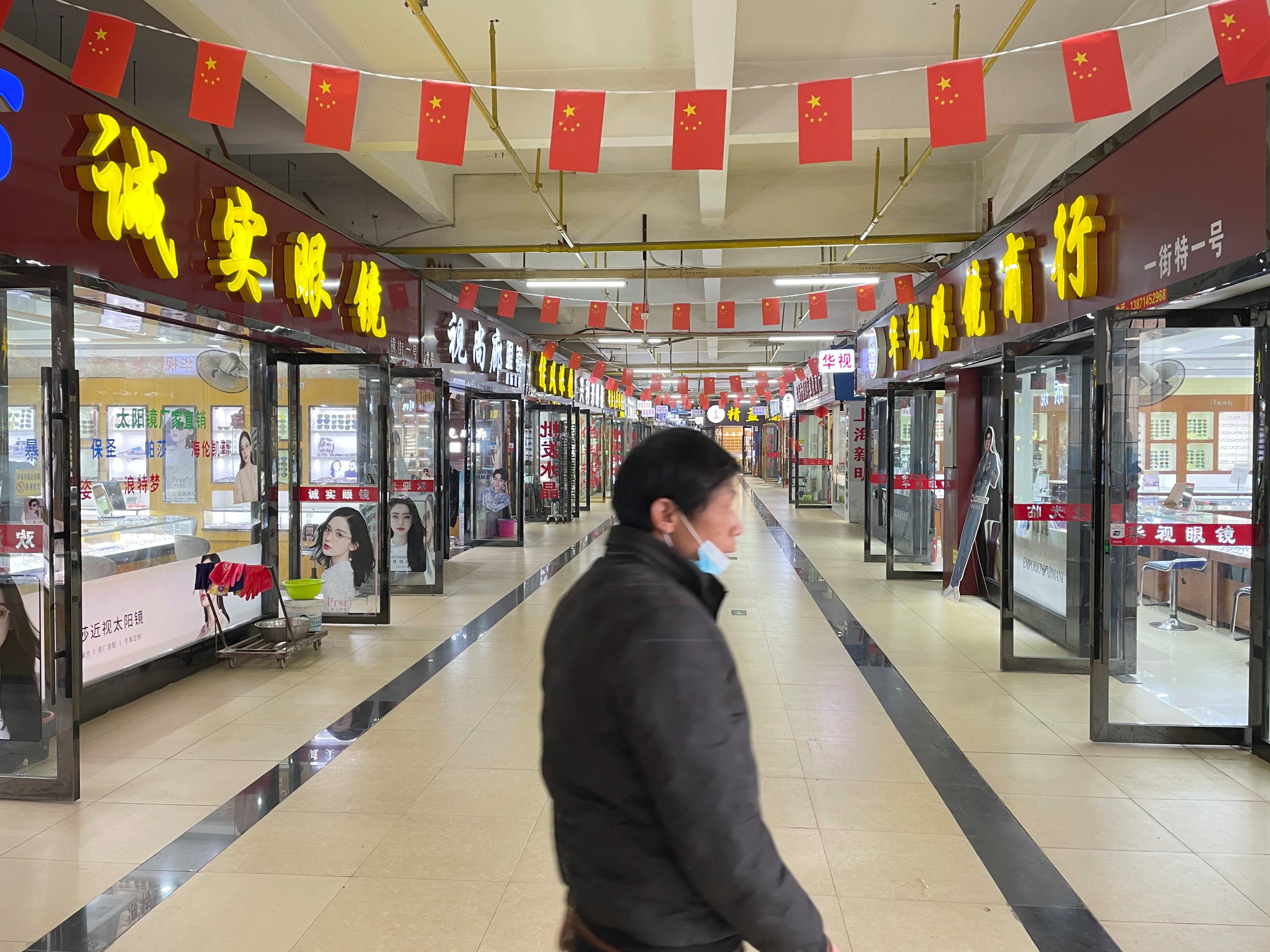
Optical shops are seen open which were originally at the second floor of the Huanan seafood market, Wuhan, China, Dec. 8, 2020. (REUTERS Photo)
by REUTERS Dec 11, 2020 12:35 pm

Almost a year since the outbreak began, COVID-19 has claimed more than 1.5 million lives, and the Wuhan wet market where it was initially detected stands empty even as the city around it has come back to life.

On Dec. 31, 2019, after four cases of a mystery pneumonia were linked to the market, it was shuttered overnight. By the end of the month, the city had begun a grueling 76-day lockdown that came with just hours' notice and barred people from leaving their homes.

It's become a symbol of the fierce political and scientific battle raging around the origin of the virus with Beijing continuing to spar with the United States and other countries, accusing them of bias.

A team of World Health Organization (WHO) experts has yet to visit Wuhan, let alone the market. Health authorities in China and abroad have warned that origin tracing efforts could take years and yield inconclusive results.

In Wuhan, where the stigma of being the first coronavirus epicenter hangs heavy, over a dozen residents and business owners told Reuters they don't believe the virus began in the city.

"It certainly couldn't have been Wuhan ... surely another person brought it in. Or surely it came from some other product brought from outside. There were just certain conditions for it to appear here," said a wet market vendor in the city's center who gave his name as Chen.

In recent months, Chinese diplomats and state media have said they believe the market is not the origin but the victim of the disease and have thrown support behind theories that the virus potentially originated in another country.

Experts say the market still plays a role in the investigation and is therefore unlikely to be demolished, though much of that research will rely on samples taken immediately after the outbreak began.

"The first cluster of cases was there, so at least it would be of interest to find out the origin of those and put forward a few hypotheses, like whether it's more likely from the wild animals or perhaps points to a human superspreader," said Jin Dong-Yan, professor of virology at the University of Hong Kong.

Access to the area remains heavily restricted. People who visited before the lockdown remember a bustling building with hundreds of stalls divided into sections for red meat, seafood and vegetables.

Recently, the local government has added leafy green plants and traditional Chinese paintings to the semi-permanent blue barricades encircling the area. Inside, wooden boards line the stalls and windows.

On the second floor above the empty market, shops selling glasses and optometry equipment reopened in June.

This week, a guard at the entrance to the eyewear market took temperatures and warned journalists not to take videos or photos from inside the building.

"Maybe some people have some bad feelings about it, but now it's just an empty building ... who feels anxious about an empty building?" said a shop assistant selling contact lenses, who declined to be named because of the sensitivity of the subject.

While Wuhan hasn't reported any new locally transmitted cases of COVID-19 since May, for some who relied on the market making ends meet is still a struggle.

Lai, who reopened his Japanese restaurant in June, says the market's closure and subsequent public panic about the safety of imported seafood have increased the cost of procuring some ingredients five-fold. "Our goal for the next year is to just survive."


  • shortlink copied
  • Last Update: Dec 11, 2020 2:00 pm
    KEYWORDS
    covid-19 outbreak coronavirus wuhan wet market china world health organization
    The Daily Sabah Newsletter
    Keep up to date with what’s happening in Turkey, it’s region and the world.
    You can unsubscribe at any time. By signing up you are agreeing to our Terms of Use and Privacy Policy. This site is protected by reCAPTCHA and the Google Privacy Policy and Terms of Service apply.
    No Image
    Over 1.7 million Ukrainians flee Russian invasion
    PHOTOGALLERY
    • POLITICS
    • Diplomacy
    • Legislation
    • War On Terror
    • EU Affairs
    • News Analysis
    • TÜRKİYE
    • Istanbul
    • Education
    • Investigations
    • Minorities
    • Diaspora
    • World
    • Mid-East
    • Europe
    • Americas
    • Asia Pacific
    • Africa
    • Syrian Crisis
    • İslamophobia
    • Business
    • Automotive
    • Economy
    • Energy
    • Finance
    • Tourism
    • Tech
    • Defense
    • Transportation
    • News Analysis
    • Lifestyle
    • Health
    • Environment
    • Travel
    • Food
    • Fashion
    • Science
    • Religion
    • History
    • Feature
    • Expat Corner
    • Arts
    • Cinema
    • Music
    • Events
    • Portrait
    • Performing Arts
    • Reviews
    • Sports
    • Football
    • Basketball
    • Motorsports
    • Tennis
    • Opinion
    • Columns
    • Op-Ed
    • Reader's Corner
    • Editorial
    • Photo gallery
    • DS TV
    • Jobs
    • privacy
    • about us
    • contact us
    • RSS
    © Turkuvaz Haberleşme ve Yayıncılık 2021