Daily Sabah logo

Politics
Diplomacy Legislation War On Terror EU Affairs Elections News Analysis
TÜRKİYE
Istanbul Education Investigations Minorities Expat Corner Diaspora
World
Mid-East Europe Americas Asia Pacific Africa Syrian Crisis Islamophobia
Business
Automotive Economy Energy Finance Tourism Tech Defense Transportation News Analysis
Lifestyle
Health Environment Travel Food Fashion Science Religion History Feature Expat Corner
Arts
Cinema Music Events Portrait Reviews Performing Arts
Sports
Football Basketball Motorsports Tennis
Opinion
Columns Op-Ed Reader's Corner Editorial
PHOTO GALLERY
JOBS ABOUT US RSS PRIVACY CONTACT US
© Turkuvaz Haberleşme ve Yayıncılık 2025

Daily Sabah - Latest & Breaking News from Turkey | Istanbul

  • Politics
    • Diplomacy
    • Legislation
    • War On Terror
    • EU Affairs
    • Elections
    • News Analysis
  • TÜRKİYE
    • Istanbul
    • Education
    • Investigations
    • Minorities
    • Expat Corner
    • Diaspora
  • World
    • Mid-East
    • Europe
    • Americas
    • Asia Pacific
    • Africa
    • Syrian Crisis
    • Islamophobia
  • Business
    • Automotive
    • Economy
    • Energy
    • Finance
    • Tourism
    • Tech
    • Defense
    • Transportation
    • News Analysis
  • Lifestyle
    • Health
    • Environment
    • Travel
    • Food
    • Fashion
    • Science
    • Religion
    • History
    • Feature
    • Expat Corner
  • Arts
    • Cinema
    • Music
    • Events
    • Portrait
    • Reviews
    • Performing Arts
  • Sports
    • Football
    • Basketball
    • Motorsports
    • Tennis
  • Gallery
  • Opinion
    • Columns
    • Op-Ed
    • Reader's Corner
    • Editorial
  • TV
  • World
  • Mid-East
  • Europe
  • Americas
  • Asia Pacific
  • Africa
  • Syrian Crisis
  • Islamophobia

Water shortage puts 2 billion health care workers, patients at higher risk of COVID-19

by Agencies

ISTANBUL Dec 14, 2020 - 12:26 pm GMT+3
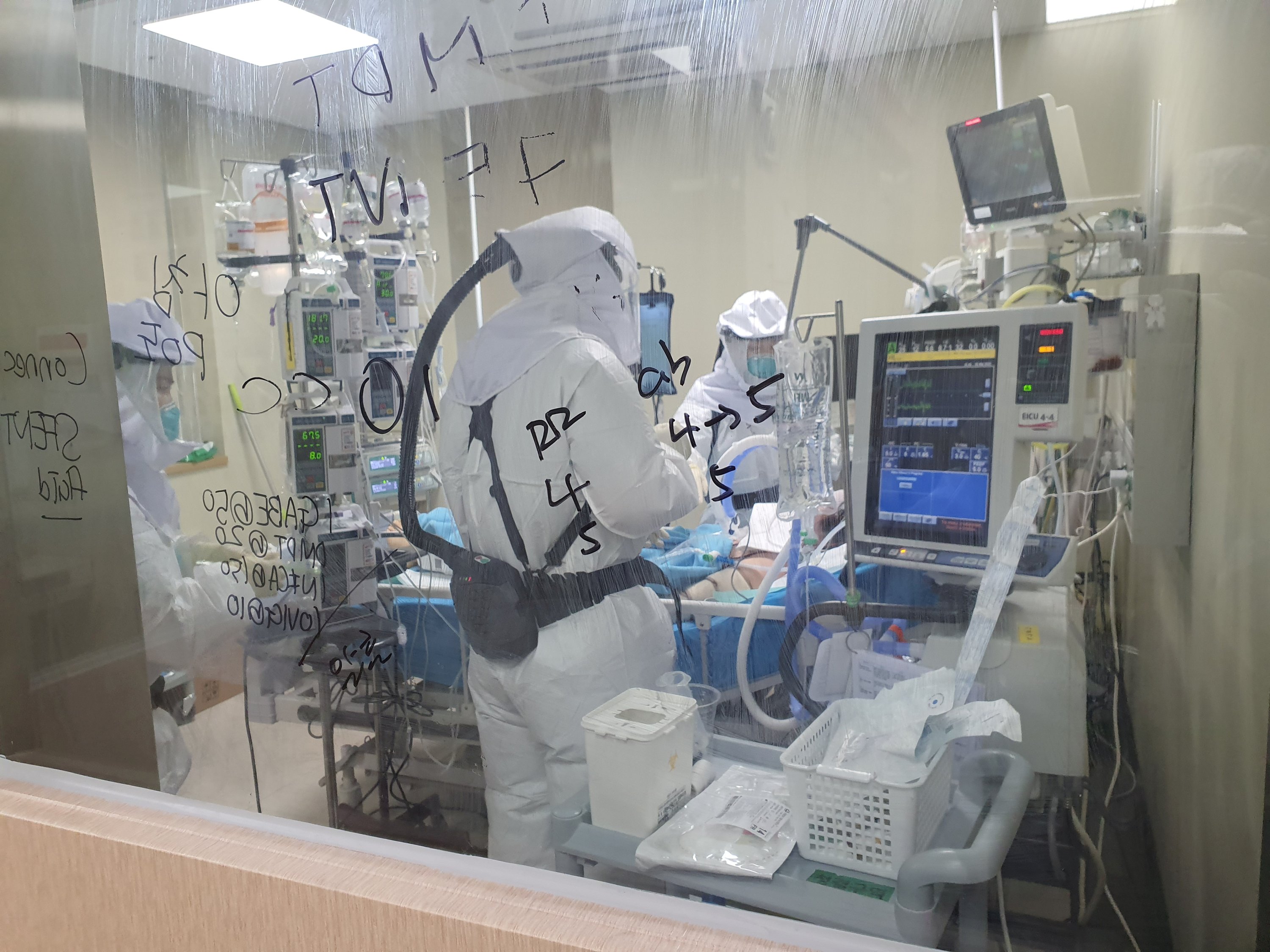
Health workers check a coronavirus patient at Hallym Sacred Heart Hospital ECMO Center in Anyang, South Korea, March 5, 2020. (Reuters Photo)
by Agencies Dec 14, 2020 12:26 pm

Around 1.8 billion people around the world depend on health care facilities that do not have clean water supplies, putting patients and staff at risk of diseases such as COVID-19, U.N. agencies warned Monday.

In a report that is based on data from 165 countries, the World Health Organization (WHO) in Geneva and the U.N. Children's Fund (UNICEF) in New York highlighted major sanitation gaps. While one in four health care facilities has no direct access to safe water, one in three does not have adequate hand hygiene services. One in 10 lacks basic toilets.

“Working in a health care facility without water, sanitation and hygiene is akin to sending nurses and doctors to work without personal protective equipment (PPE),” WHO Director-General Tedros Adhanom Ghebreyesus said in a statement. “Water supply, sanitation and hygiene in health care facilities are fundamental to stopping COVID-19. But there are still major gaps to overcome, particularly in the least developed countries.”

"Sending health care workers and people in need of treatment to facilities without clean water, safe toilets or even soap puts their lives at risk," added UNICEF Executive Director Henrietta Fore, according to remarks carried by Deutsche Presse-Agentur (dpa).

According to the report, $3.6 billion would be needed to install and operate basic health care sanitation in these countries by 2030. As leaders are thinking about rebuilding a post-pandemic world, better health care hygiene is not just an option, Fore said. "It is an absolute must," she said.

The gaps are especially large in the world's least developed countries, which are mostly in Africa and Asia.

Japan and South Korea grappled with surging coronavirus cases and growing public frustration on Monday as Japan’s prime minister tiptoed around a contentious travel subsidy program while an anxious South Korean president warned of harsh curbs. South Korea reported a new daily record of 1,030 infections on Sunday, a big worry for a country for months held up as a mitigation success story but still a fraction of the tallies being seen in some European countries and the United States, where vaccines are being rolled out.

Few Asian countries expect to get significant amounts of coronavirus vaccines in the coming weeks as they manage distribution schedules, allow time to check for any inoculation side effects elsewhere or run their own late-stage trials. Instead, they are counting on the methods that have largely kept infections in check for months – ahead of the curve testing, stringent travel curbs, strict social distancing and masks.

China, for instance, where the virus emerged almost a year ago, has managed to limit new cases with tough, sweeping action. It locked down an area of more than 250,000 people after half a dozen cases were confirmed near the Russian border in the province of Heilongjiang, The Associated Press (AP) reported on Monday. New Zealand, which has been particularly successful in tackling the pandemic, said on Monday it had agreed to open a “travel bubble” with Australia in the first quarter of 2021.

South Korea has warned that coronavirus restrictions may be raised to the highest Phase 3 level, which would essentially mean a lockdown for the first time in Asia’s fourth-largest economy. In Seoul, schools will close from Tuesday, a step toward the imposition of Phase 3. Last month, the government banned year-end parties.


  • shortlink copied
  • KEYWORDS
    covid-19 outbreak coronavirus world health organization unicef tedros adhanom ghebreyesu
    The Daily Sabah Newsletter
    Keep up to date with what’s happening in Turkey, it’s region and the world.
    You can unsubscribe at any time. By signing up you are agreeing to our Terms of Use and Privacy Policy. This site is protected by reCAPTCHA and the Google Privacy Policy and Terms of Service apply.
    No Image
    From Andalusia to Mecca: Pilgrimage of Spanish Muslims on horseback continues in Sarajevo
    PHOTOGALLERY
    • POLITICS
    • Diplomacy
    • Legislation
    • War On Terror
    • EU Affairs
    • News Analysis
    • TÜRKİYE
    • Istanbul
    • Education
    • Investigations
    • Minorities
    • Diaspora
    • World
    • Mid-East
    • Europe
    • Americas
    • Asia Pacific
    • Africa
    • Syrian Crisis
    • İslamophobia
    • Business
    • Automotive
    • Economy
    • Energy
    • Finance
    • Tourism
    • Tech
    • Defense
    • Transportation
    • News Analysis
    • Lifestyle
    • Health
    • Environment
    • Travel
    • Food
    • Fashion
    • Science
    • Religion
    • History
    • Feature
    • Expat Corner
    • Arts
    • Cinema
    • Music
    • Events
    • Portrait
    • Performing Arts
    • Reviews
    • Sports
    • Football
    • Basketball
    • Motorsports
    • Tennis
    • Opinion
    • Columns
    • Op-Ed
    • Reader's Corner
    • Editorial
    • Photo gallery
    • DS TV
    • Jobs
    • privacy
    • about us
    • contact us
    • RSS
    © Turkuvaz Haberleşme ve Yayıncılık 2021