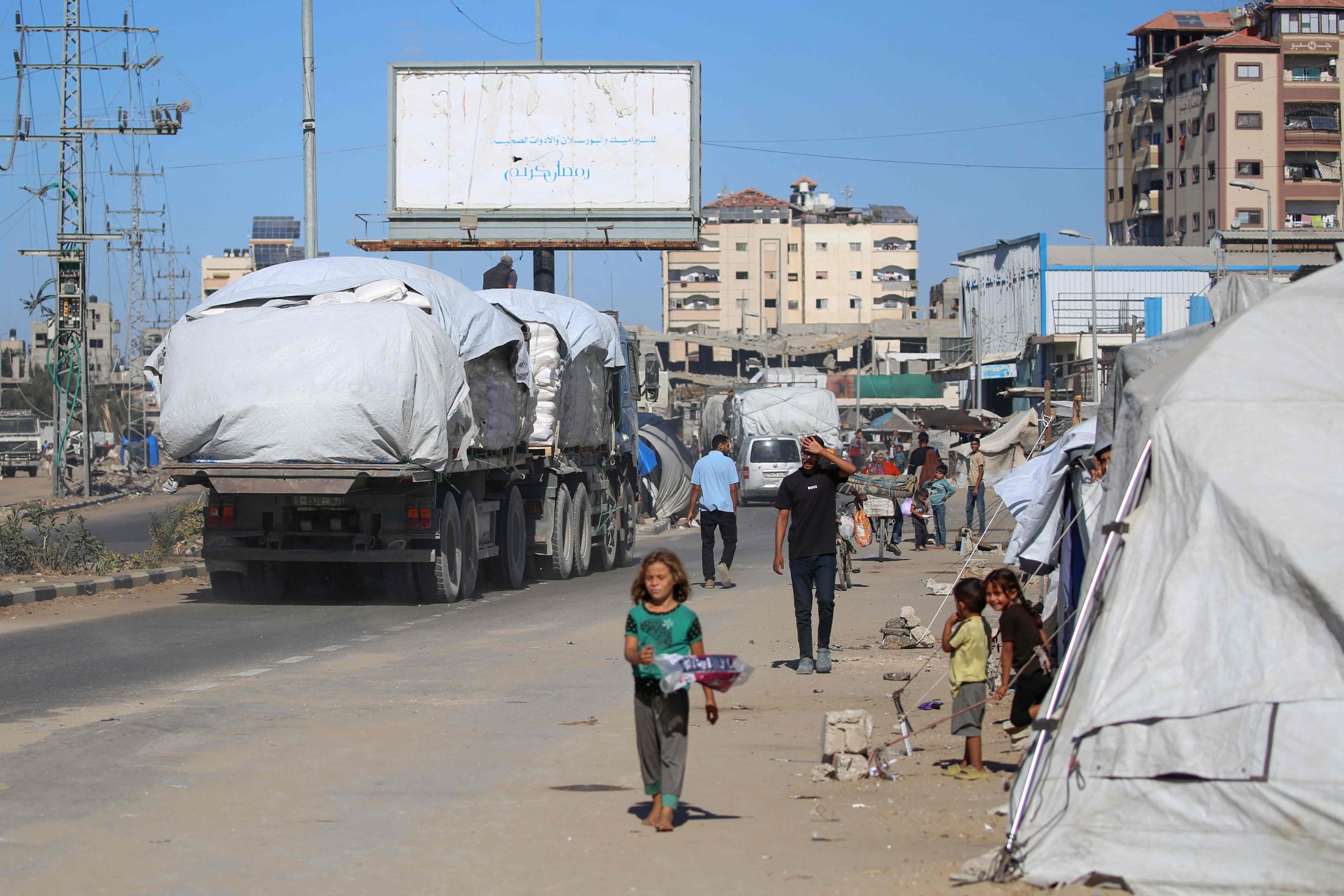
Aid trucks entered Gaza on Wednesday as Israel resumed preparations to reopen the main Rafah crossing after resolving a dispute over the return of dead hostages’ bodies that had jeopardized the fragile cease-fire with Hamas.
Israel had threatened to keep Rafah shut and reduce aid supplies because Hamas was returning bodies too slowly, showing the risks to a truce that has stopped two years of devastating warfare in Gaza and freed all living hostages held by Hamas.
However, the resistance group returned more Israeli bodies overnight, and an Israeli security official said on Wednesday that preparations were underway to open Rafah to Gazan citizens, while a second official said that 600 aid trucks would go in.
Hamas returned four bodies confirmed as dead hostages Monday and another four bodies late on Tuesday, though Israeli authorities said one of those bodies was not that of a hostage.
The dispute over the return of bodies still has the potential to upset the cease-fire deal, along with other major issues that are yet to be resolved.
Later phases of the truce call for Hamas to disarm and cede power, which it has so far refused to do. It has launched a security crackdown, as it re-establishes control over Gaza through public executions and clashes with local clans.
Longer-term elements of the cease-fire plan, including how Gaza will be governed, the make-up of an international force to take over there and moves toward the creation of a Palestinian state, have yet to emerge.
Twenty-one bodies of hostages remain in Gaza, though some may be very hard to find or recover because of the destruction during Israel's genocidal war. An international task force is meant to find them.
The deal also requires Israel to return the bodies of 360 Palestinians killed in battle. The first group of 45 was handed over Tuesday and were being identified, said Palestinian health authorities.
The war has caused a humanitarian catastrophe in Gaza, with nearly all inhabitants driven from their homes, a global hunger monitor saying famine was present in the enclave and health authorities overwhelmed.
Reuters video showed a first group of trucks moving from the Egyptian side of the border into the Rafah crossing at dawn Wednesday, some tankers carrying fuel and others loaded with pallets of aid.
However, it was not clear if that convoy would complete its crossing into Gaza as part of the 600 trucks that were due to enter the enclave Wednesday – the full daily complement required under the cease-fire plan. Aid trucks entered Gaza through other crossings.
"Humanitarian aid continues to enter the Gaza Strip through the Kerem Shalom Crossing and other crossings after Israeli security inspection," the Israeli security official said.
Israel's public broadcaster Kan reported that Wednesday's aid deliveries would include food, medical supplies, fuel, cooking gas and equipment to repair vital infrastructure.
Underscoring the political challenges facing the truce, Israel's far-right National Security Minister Itamar Ben-Gvir, an opponent of the cease-fire plan, said on X that the aid delivery was a "disgrace."
"Nazi terrorism understands only force, and the only way to solve problems with it is to wipe it off the face of the earth," he added, accusing Hamas of lies and abuse over the return of hostages' bodies.
Rafah is due to be opened to Palestinian inhabitants of Gaza, either entering or exiting the enclave. But Gazans awaiting medical evacuation told Reuters they had not yet received notification from the World Health Organisation to prepare for travel.
Several other Palestinian factions present in Gaza have backed the dayslong Hamas security crackdown as it battles local clans and armed gangs that had tried to take over areas of the territory during the conflict.
The Popular Front for the Liberation of Palestine, one of the groups backing the Hamas crackdown, described the clans being targeted as "hubs of crime."
The cease-fire envisaged Hamas initially restoring order in Gaza and U.S. President Donald Trump, who brokered the deal, endorsed Hamas' crackdown on rival gangs, while warning it would face airstrikes if it did not later disarm.
Israeli forces inside Gaza have pulled back to what the truce deal calls a yellow line just outside the main cities. Israeli Defense Minister Israel Katz said it would immediately enforce any violation of the line.