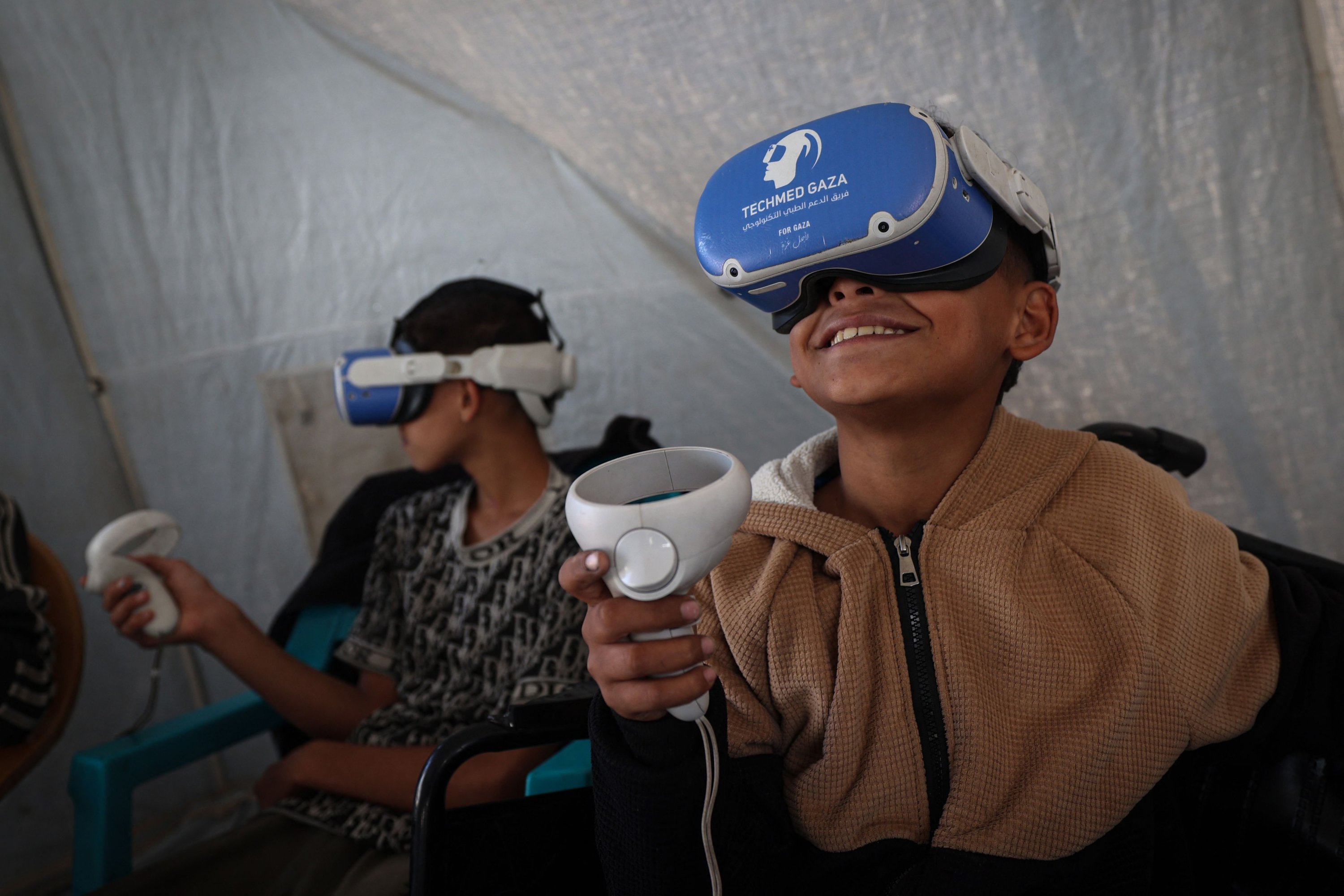
Children traumatized by Israel's genocidal war in Gaza are participating in a therapy program that uses virtual reality headsets to provide an escape from their surroundings, with organizers reporting faster improvements in psychological well-being compared to traditional therapies.
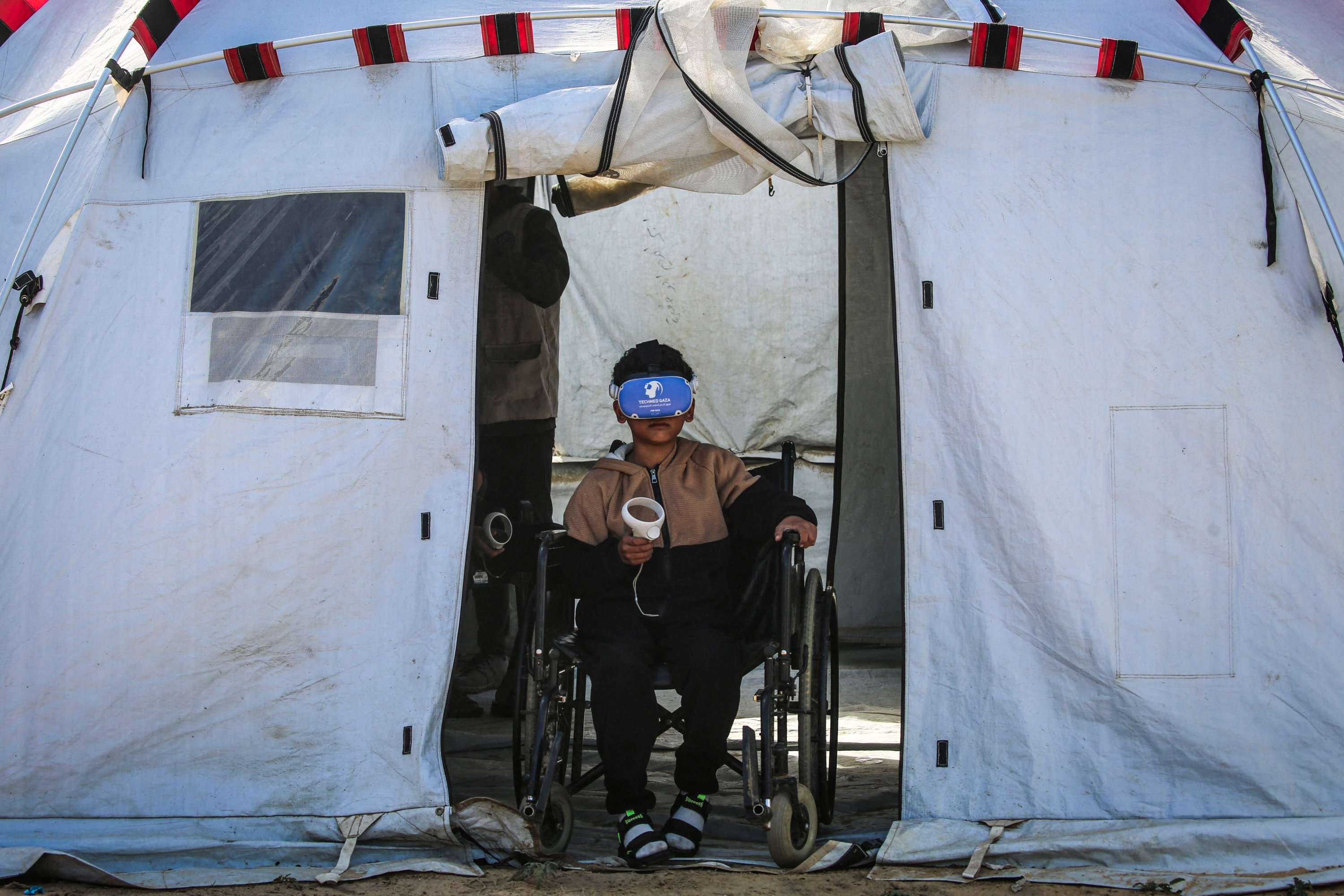
Inside a white tent pitched on a sandy patch of ground in al-Zawayda, in central Gaza, excited chatter swelled as five boys roamed around a virtual world.
The youngsters, one in a wheelchair and the others on plastic seats, turned their heads, exploring the new surroundings inside their goggles: a land of green gardens, tranquil beaches and safe cities.
One boy reached out and clapped his hands together, as if swatting a fly. Another, smiling, with his hand held up in front of his face, reached out to touch the scenery.
One said a dog was running towards him, and beckoned to it, calling out: "Come! Come!"
"I see birds," the boy in the wheelchair told an operator, looking around.
One of the operators delicately put the blue TechMed Gaza headset on 15-year-old Salah Abu Rukab, who sustained a head injury during the war, asking if he could see the VR properly as he adjusted the buckles.
"We feel comfortable in it, we enjoy it, and through it we enter a garden, we enter spaces with animals and similar experiences," the teenager told Agence France-Presse (AFP).
Asked by the operator what he saw, he replied: "It's all trees. Nothing but trees, grass and flowers."
Mental health supervisor Abdalla Abu Shamale explained there was more to the VR headsets than simply escape.
"Through programs, we are able to design games with therapeutic, preventive and developmental goals that help prepare the child or enable them to cope and manage their life more effectively," he told AFP.
"This method has proven its effectiveness over a full year of working with many children, including war-amputee children, injured children and those exposed to extremely traumatic events."
A fragile cease-fire in the war between Israel and the Palestinian resistance group Hamas has held since Oct. 10.
The World Health Organization says conflict-related injuries carry a mental health toll, and survivors struggle with trauma, loss and daily survival, while psychosocial services remain scarce in Gaza.
Jonathan Crickx, spokesman for the U.N. children's agency UNICEF, told AFP that around 1 million children, or in other words, "all children in the Gaza Strip, are in need of mental health and psychosocial support after two years of horrendous war."
The VR sessions rely on programs specifically designed for traumatized children, taking into account their physical and psychological condition, and help them rebuild positive perceptions of the world.
Abu Shamale said the children were "treated and accompanied through VR sessions, and when we integrated them into these techniques, they showed a very, very strong response and extremely positive results.
"The speed of treatment, recovery and reaching stability using VR techniques was faster than in regular sessions. In regular sessions without VR, we usually need about 10 to 12 sessions, while with VR we can achieve results in just five to seven sessions," he said.