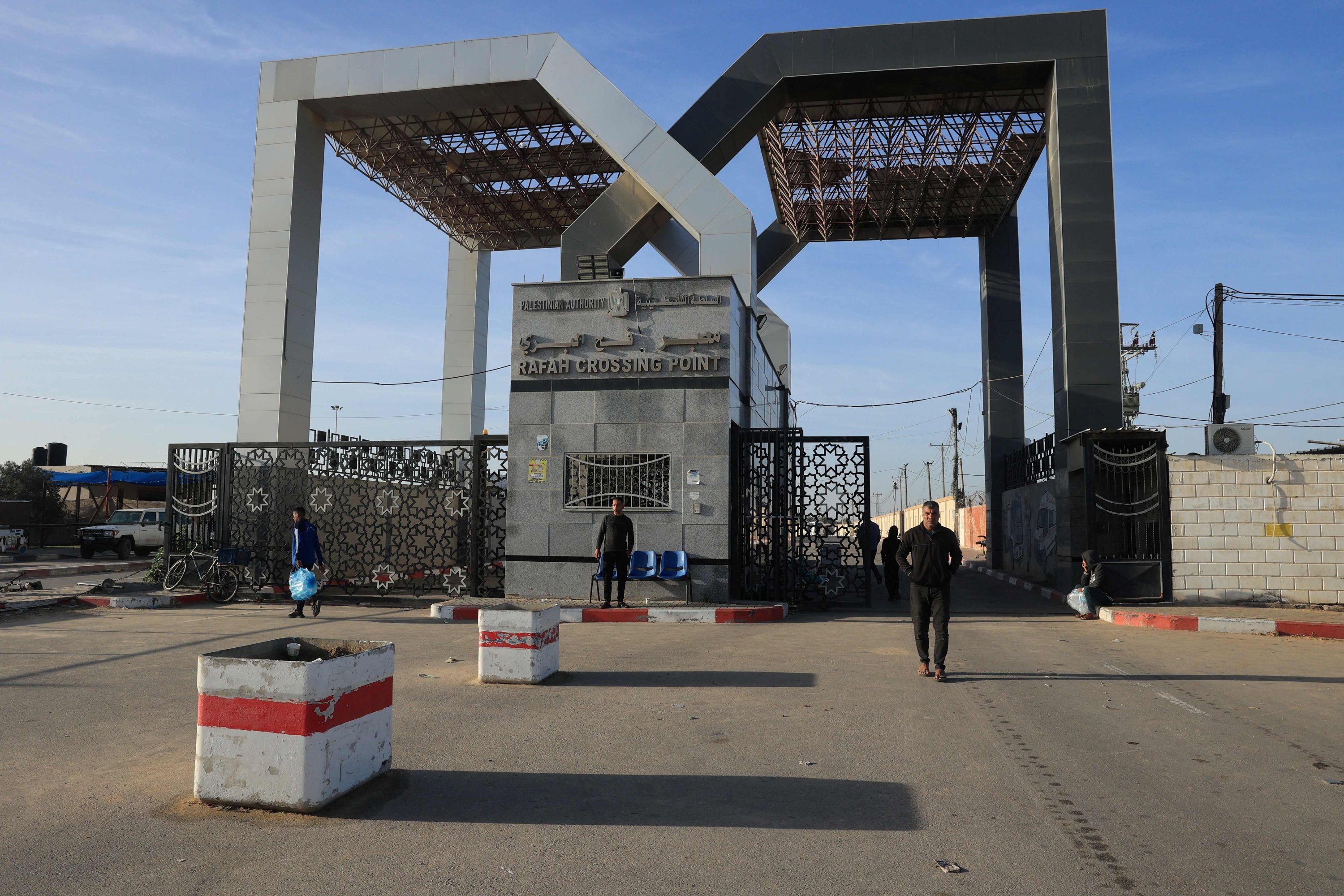
Israel announced Wednesday it would reopen Gaza's main gateway within days, allowing thousands of Palestinians requiring medical care to leave the war-torn enclave through Egypt.
COGAT, the Israeli military arm that oversees humanitarian matters, said the opening of the Rafah crossing will be coordinated with Egypt, under the supervision of the European Union mission, similar to a mechanism employed during a previous Gaza cease-fire agreed in January 2025.
Under U.S. President Donald Trump's 20-point plan that has largely halted Israel's two-year genocidal war, the crossing was to open in both directions.
Before the war, the Rafah crossing was the only direct exit point for most Palestinians in Gaza to reach the outside world and was a key entry point for aid into the territory. It has been mostly closed throughout the conflict.
At least 16,500 patients in Gaza need medical care outside of the enclave, according to the United Nations. Some Gazans managed to leave for medical treatment abroad through Israel.
"We have been waiting for the Rafah opening for months," said Gaza businessman Tamer al-Burai, who needs treatment abroad for a respiratory condition. "At last, I and thousands of other patients may have a chance to receive proper treatment," Burai told Reuters by phone from Gaza.
Israel has kept Rafah shut in both directions since the cease-fire came into effect in October, saying that Hamas must abide by the agreement to return all hostages still in Gaza, living and deceased.
Hamas has returned all 20 living hostages in exchange for around 2,000 Palestinian detainees and convicted prisoners, but two more deceased captives – an Israeli police officer and a Thai agricultural worker – are still in Gaza.
Islamic Jihad, a Palestinian resistance group allied with Hamas, which had also held some of the captives taken in the Oct. 7, 2023, incursion that triggered the war, said Wednesday that it was searching together with the Red Cross for the body of one of the remaining deceased captives.
The Islamic Jihad announcement came a day after Hamas handed over remains it said were of one of the two deceased hostages, but which were found not to belong to either of them following forensic tests in Israel.
Handing over all the hostages was a central tenet of the first phase of the cease-fire. Major obstacles lie ahead of the next phase, including the question of Hamas disarming, Israel's withdrawal from Gaza, governance of the enclave and international security arrangements.