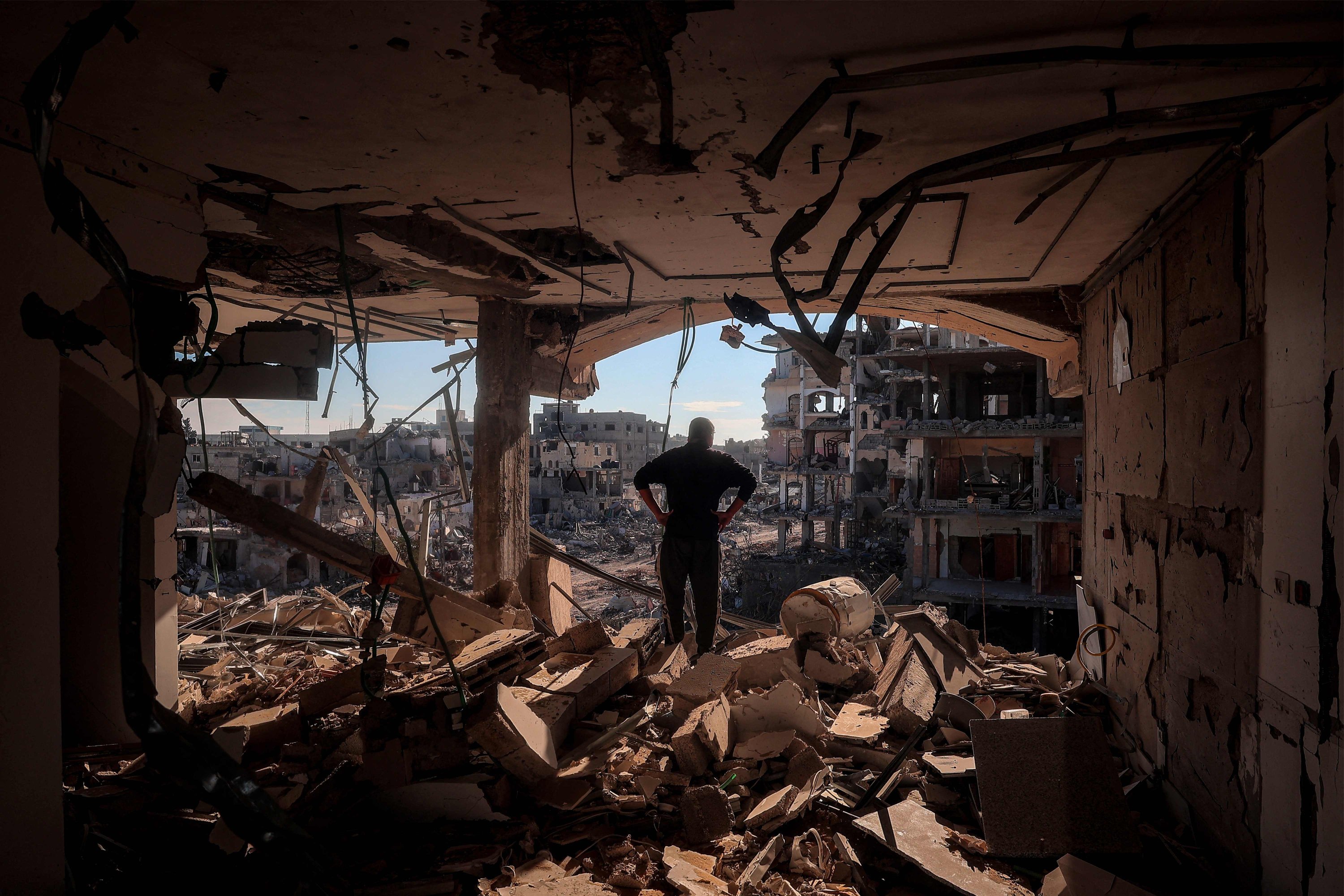
War-displaced Gazans returning home after a cease-fire have been met with scenes resembling apocalyptic ghost towns in the aftermath of Israel's 15-month genocidal war.
Drone footage showed mounds of rubble stretching as far as the eye can see – remnants of the longest and deadliest war Israel has waged on the tiny coastal enclave, where built-up refugee camps are interspersed between cities.
"As you can see, it became a ghost town," said Hussein Barakat, 38, whose home in the southern city of Rafah was flattened. "There is nothing,” he said, as he sat drinking coffee on a brown armchair perched on the rubble of his three-story home, in a surreal scene.
Critics say Israel has waged a campaign of scorched earth to destroy the fabric of life in Gaza, accusations that are being considered in two global courts, including the crime of genocide.
Israel like always denies those charges, claiming its military has been fighting a complex battle in dense urban areas and that it tries to avoid causing undue harm to civilians and their infrastructure.
Military experts say the reality is complicated.
International rights groups. including Amnesty International and Human Rights Watch, view the vast destruction as part of a broader pattern of extermination and genocide directed at Palestinians in Gaza. The groups dispute Israel's stance that the destruction was a result of military activity.
Human Rights Watch, in a November report accusing Israel of crimes against humanity, said "the destruction is so substantial that it indicates the intention to permanently displace many people."
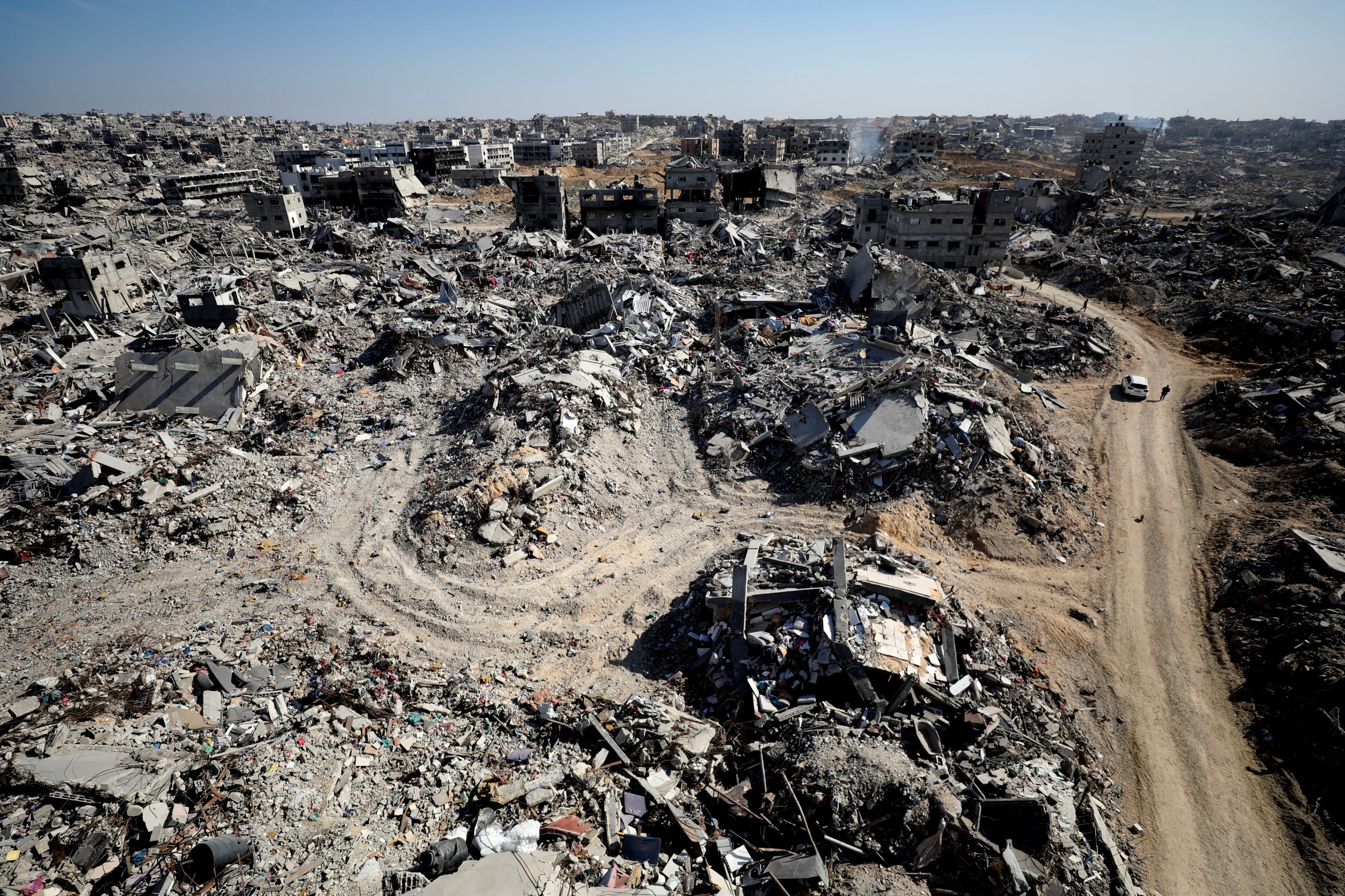
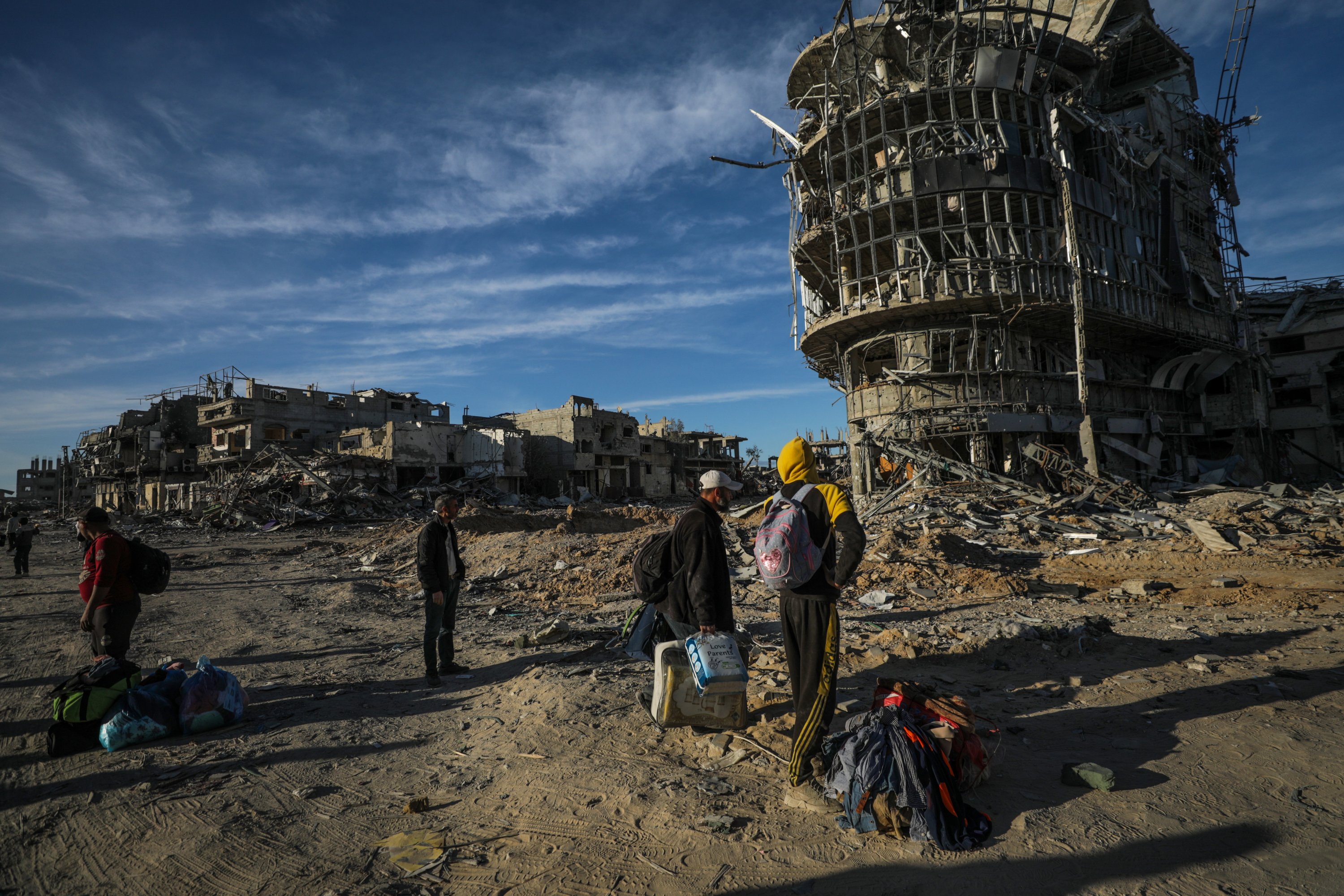
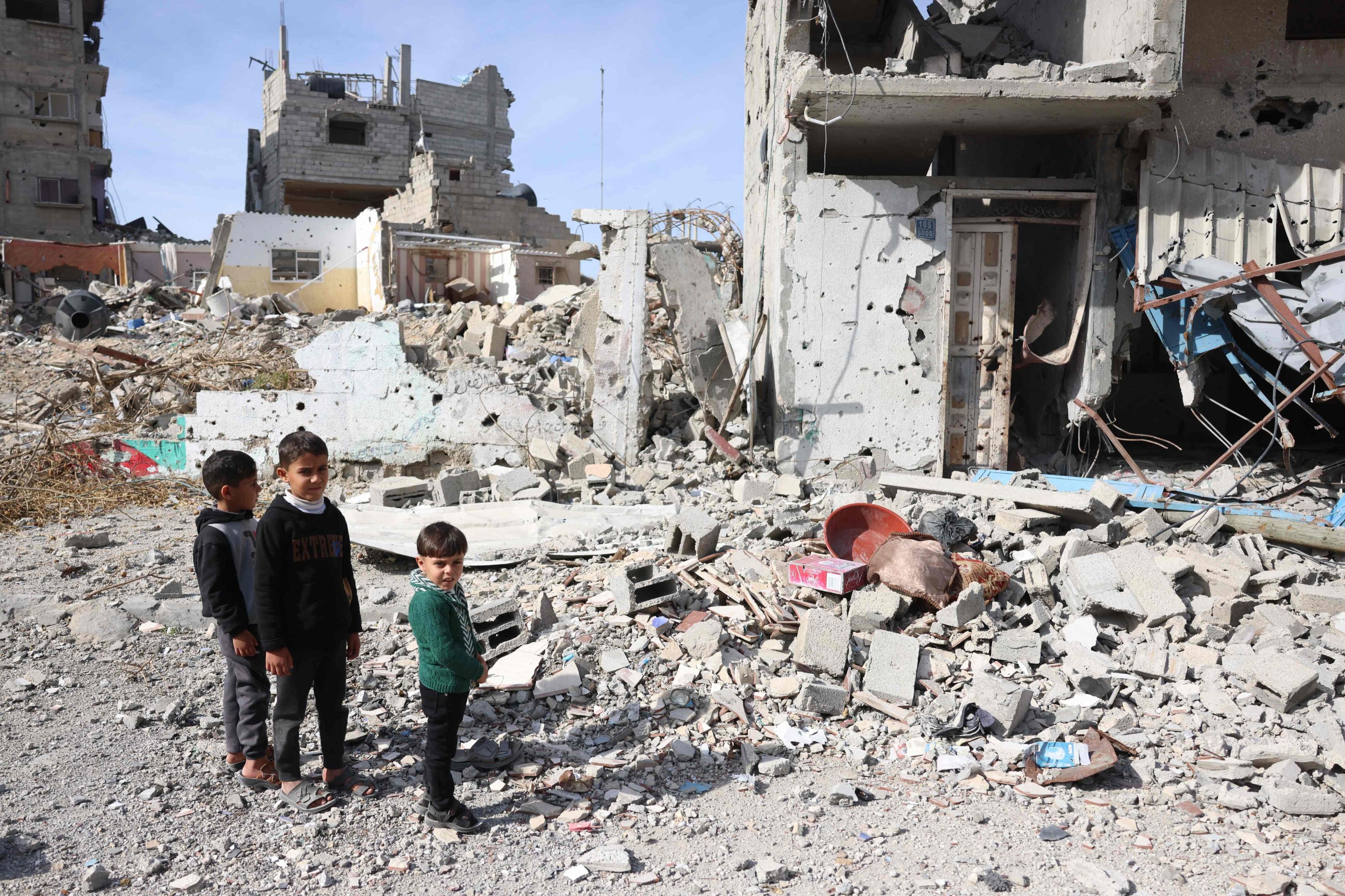
From a fierce air campaign during the first weeks of the war, to a ground invasion that sent thousands of troops in on tanks, Israel's indiscriminate response to the Hamas incursion on Oct. 7, 2023, has ground down much of the civilian infrastructure of the Gaza Strip, displacing 90% of its population. The brilliant color of pre-war life has faded into a monotone cement gray that dominates the territory. It could take decades, if not more, to rebuild.
A U.N. assessment from satellite imagery showed more than 60,000 structures across Gaza had been destroyed and more than 20,000 severely damaged in the war as of Dec. 1, 2024. The preliminary assessment of conflict-generated debris, including of buildings and roads, was over 50 million tons. It said the analysis had not yet been validated in the field.
Airstrikes throughout the war toppled buildings and other structures said to be housing members of Palestinian resistance groups. But the destruction intensified with the ground forces, who fought Hamas in close combat in dense areas.
If they were seen firing from an apartment building near a troop maneuver, Israeli forces might take the entire building down to thwart the threat. Tank tracks chewed up paved roads, leaving dusty stretches of earth in their wake.
The military’s engineering corps was tasked with using bulldozers to clear routes, downing buildings seen as threats and blowing up Hamas' underground tunnel network.
Experts say the operations to neutralize tunnels were extremely destructive to surface infrastructure. For example, if a 1.5-kilometer (1-mile) long tunnel was blown up by Israeli forces, it would not spare homes or buildings above, said Michael Milshtein, a former Israeli army intelligence officer.
"If (the tunnel) passes under an urban area, it all gets destroyed," he said. "There’s no other way to destroy a tunnel."
Cemeteries, schools, hospitals and more were targeted and destroyed, he said, alleging Hamas was using these for military purposes.
The way Israel has repeatedly returned to areas it said were under its control, only to have resistance groups overrun it again, has exacerbated the destruction, Savill said.
That’s evident, especially in northern Gaza, where Israel launched a new campaign in early October that almost obliterated Jabalia, a built up, urban refugee camp. Jabalia is home to the descendants of Palestinians who fled, or were forced to flee, during the war that led to Israel‘s creation in 1948. Milshtein claimed Israel's dismantling of the tunnel network is also to blame for the destruction there.
But the destruction was not only caused from strikes on targets. Israel also carved out a buffer zone about a kilometer inside Gaza from its border with Israel, as well as within the Netzarim corridor that bisects north Gaza from the south, and along the Philadelphi Corridor, a stretch of land along Gaza’s border with Egypt. Vast swaths in these areas were leveled.
The destruction, like the civilian death toll in Gaza, has raised accusations that Israel committed war crimes.
In Jabalia, Nizar Hussein hung a sheet over the shattered remains of his family's home, stepping gingerly around a large, leaning concrete slab.
"At the very least, we need years to get a house," he said. "It is a feeling that I cannot describe. Thank God (for everything)."