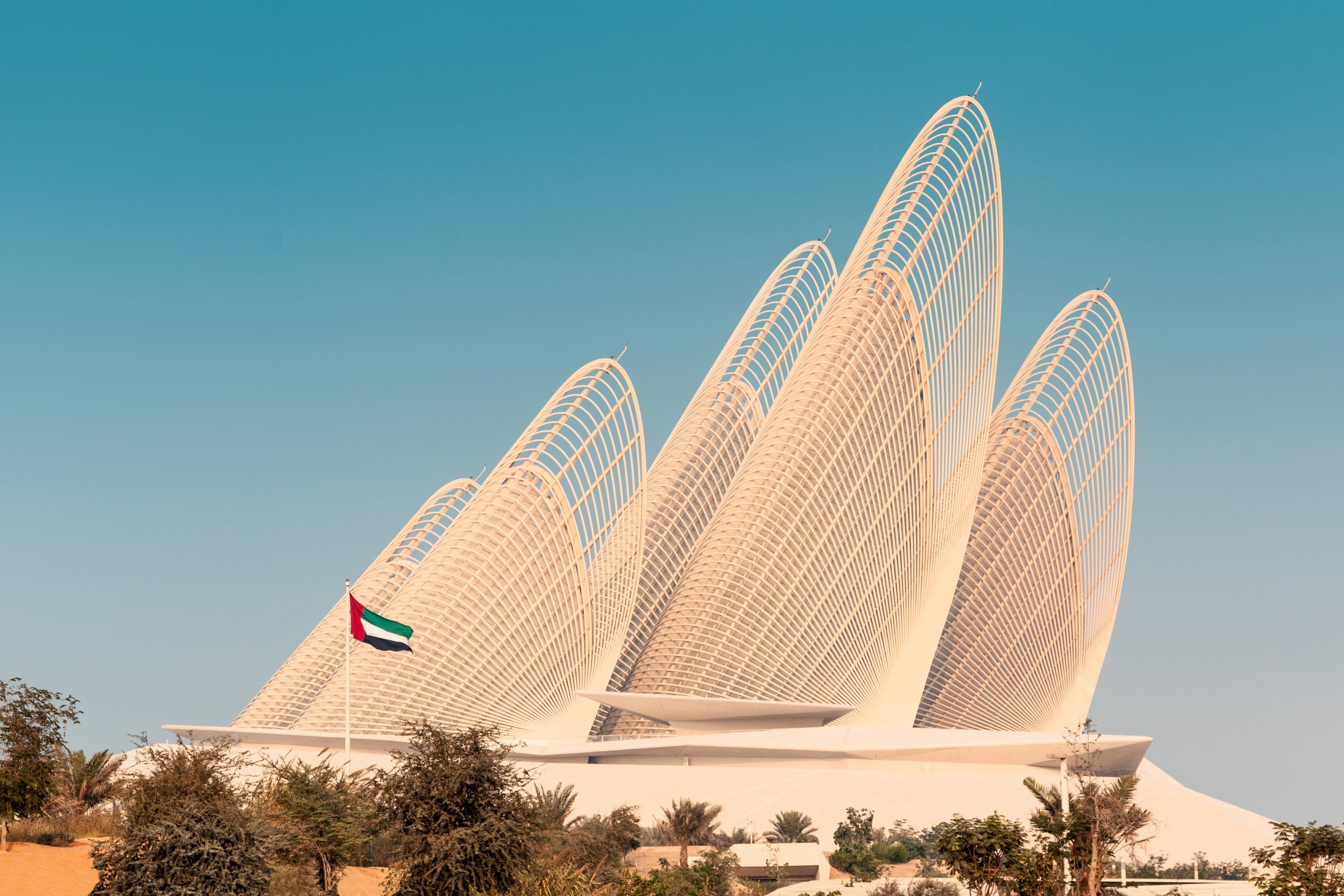
Are the massive structures rising on Abu Dhabi's Saadiyat Island merely architectural shows of force, or are they high-tech pens designed to fill the blank pages of future history books?
I visited the Zayed National Museum, which partially opened its doors last December and claims to be one of the world's most important cultural focal points when fully operational, with these questions in mind. I must admit that it is impossible not to be impressed by the architecture and this magnificent structure currently overshadows the content and narrative somewhat.
The Zayed National Museum answers my question not with the objects it displays at this stage, but with the way it presents those objects. The picture before us is far more than a “declaration of wealth”; it is an effort to show and assert the cultural roots of the Arabian Peninsula to the world using Western techniques, that is, a construction of cultural legitimacy.
When one thinks of the Gulf, the first image that comes to mind is Dubai's vertical architecture, glittering skyscrapers and consumption-driven pace. In contrast, Abu Dhabi is moving in a very different direction: cultural depth. As part of its “Vision 2030” goal of diversifying its economy away from oil, the emirate has chosen culture as its main driver. The $30 billion investment announced for the Saadiyat Cultural District (SCD) is not just about building structures. It can be interpreted as a move to shift the center of the art market from the West to the Gulf by attracting the world's largest art institutions (Louvre, Guggenheim) to the region.
The most important outcome of this investment is the certification of the region as a “safe haven.” In a geography often associated with instability, an island of stability is being built where artists, curators and collectors can confidently entrust their intellectual capital.
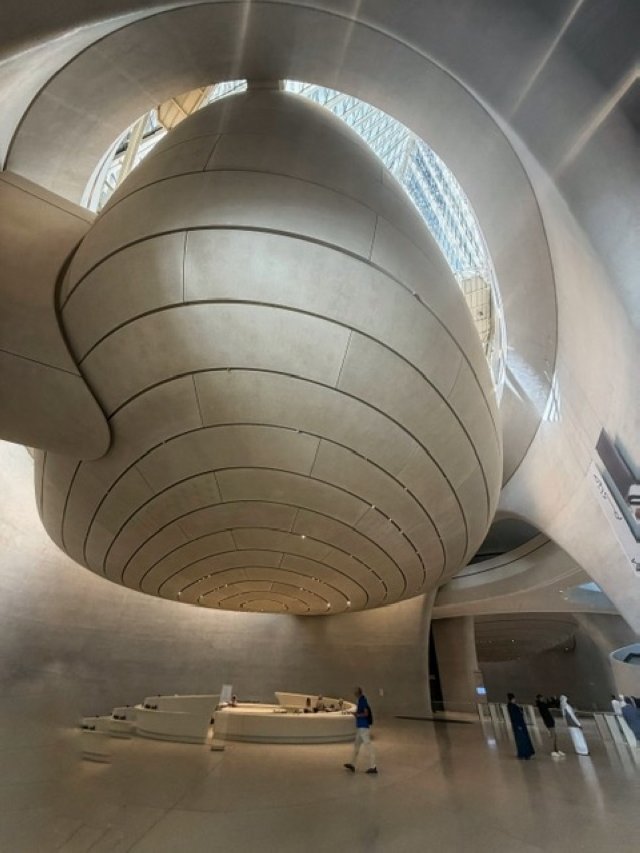
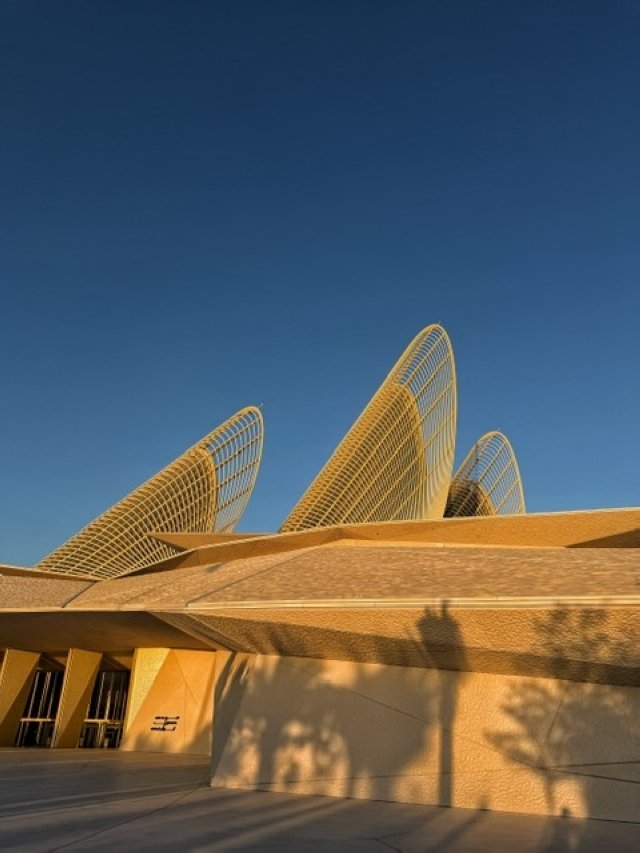
The museum experience begins at Al Masar Garden, a green walking path that winds through oases and deserts. This 600-meter (1,965-foot) trail takes visitors through the Louvre Abu Dhabi and the Natural History Museum, filtering them through “science and art” and leading them to the heart of the national memory. From the outside, the five massive falcon wings appear light and futuristic, but upon entering, they give way to the awe-inspiring monumentality of a vast atrium.
The architectural genius here is more than just a display of wealth. Designed by Foster and Partners, these wings are actually modern thermal chimneys based on the region's ancient “climate control” system, the badgir (wind tower) technology. While the museum uses high technology to negotiate with the desert heat, the “space station” feel inside perhaps whispers: “Our past was so advanced that we can only describe it with the architecture of the future.”
The sharp question we must ask here is whether this ultra-modern shell was built to honor a people's ancient roots, or whether it is an attempt to give meaning to a newly foregrounded past by adding technological grandeur.
My overall feeling is that it is an attempt to shorten time. They have to complete the museum culture and perception of history that the West built in 200 years in just 20 years. These massive structures attempt to fill the “historical void” with visual spectacle.
Perhaps the most effective way to influence human perception is through “art.” Considering that it has been used as a tool for centuries, it is only natural that minds are confused at this point. Why does Abu Dhabi need Norman Foster's designs or the British Museum's curatorship to tell its own story? Is this an “intellectual dependency,” or is it the translation of the local (the Magan ship, clay tablets) into a global “language of art”?
In the art world, the value of a work is sometimes determined by which gallery it is displayed in and under what lighting. Abu Dhabi is making the world read its heritage using the West's “museum grammar.” While America and Europe provide this region with advice, they finance their own institutions; these massive buildings become a huge construction site where one side's quest for legitimacy intersects with the other's search for a field of application.
At the heart of the museum stands one of the most extraordinary examples of experimental archaeology: the Magan (Mahan) boat. This veteran actor in the trade network that connected these lands from Mesopotamia to the Indus Valley 4,100 years ago is reborn after three years of research. The DNA of this project is found in one of the 50,000 clay tablets discovered in the Nippur excavations, where the Sumerian King Sargon the Great states, “I have anchored the Magan boats at my dock.”
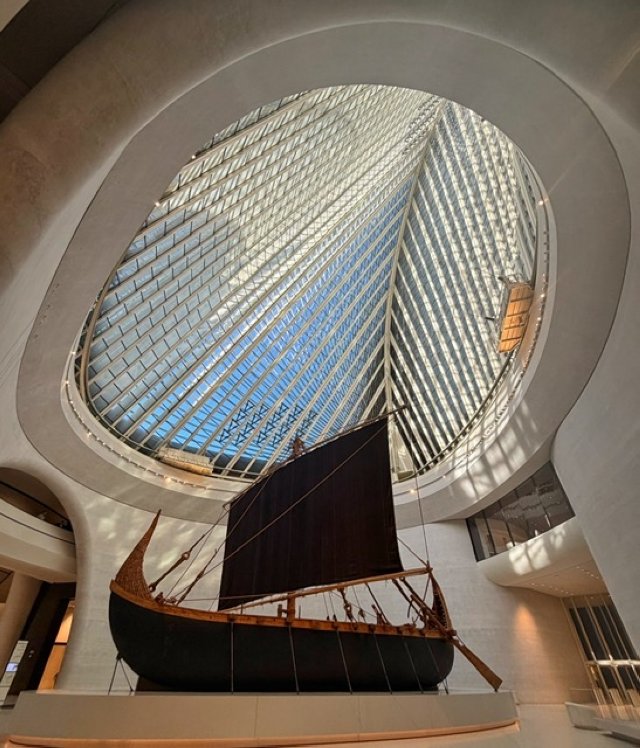
Fifteen tons of local reeds, tied together without a single nail, using only ropes made from palm fibers, were sealed with bitumen. This is not just a boatbuilding project. It is the physical manifestation of a “material list” written in Neo-Sumerian. This boat, brought to life by the hands of master craftsmen from Kerala, India, is an ancient prototype of Abu Dhabi's desire to export intellectual raw materials to the world today.
The museum approaches sacred heritage with the same researcher’s excitement. When examined using hyperspectral imaging technology, the pages of the Blue Quran, dating back to the ninth century, revealed a startling discovery. It was found that a scribal error in Surah An-Nisa, written on parchment, had been covered by the calligrapher of the period with an aesthetic floral motif.
I do not consider this discovery to be a speculative discussion about the content of the text; rather, I consider it an artistic document that reveals the meticulous hand behind the monumental and seemingly flawless work. The museum uses technology to lift the veil of perfection from history.
For civilizations like ours, sitting on thousands of years of history, archaeology is a practice of remembering. However, for Abu Dhabi, this seems like the fresh excitement of being at the very beginning of the road. It is similar to the energy of someone who has all the resources yet spends time on luxury and consumption and who is now passionately trying to learn about their own history.
In the art world, we call this “history as a project.” For centuries, the West has defined “the center of civilization” in its own way through museology. Abu Dhabi now wants to take up this instrument, eager to fill the gaps in history books in its own name, using the same Western academic discipline. By training its own curators through the MuseoPro program and building the world's largest digital Arabic library with Amazon, it is transforming this intellectual transfer into intellectual property.
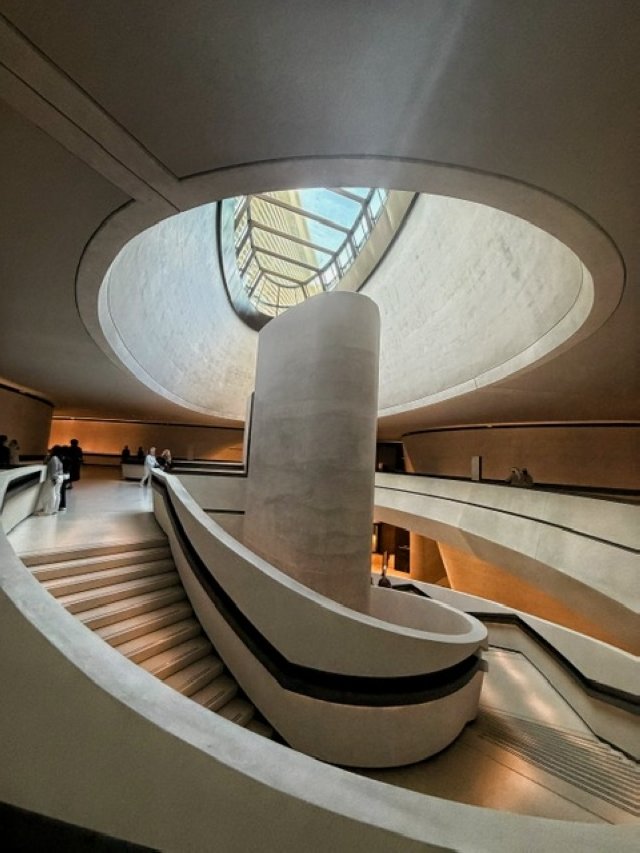
The Zayed National Museum is a laboratory for how unlimited resources can be managed with vision. However, it also carries a great risk. These resources must be used in the best possible way for the projects they aim to undertake. Visitors are both curious and hold very high expectations due to the prosperity and wealth brought by oil. Abu Dhabi, which rents Western techniques and fills them with its own unique stories, has taken on a challenging mission. The emirate now wants to anchor not only ships at its docks, but also the cultural route of the future.
This narrative construction on Saadiyat Island is not limited to a national museum. The island as a whole carries a message. As I try to understand this message, I will continue to convey it piece by piece.
The next stop will be the Louvre Abu Dhabi, where Jean Nouvel's “rain of light” challenges the boundaries of universal art, and the groundbreaking exhibition "The Figure," where Picasso reinterprets the human form.
The journey ultimately extends beyond art and national memory to deep time itself, to the Natural History Museum, where a 13.8 billion-year narrative unfolds beneath the skeleton of “Stan.” Let us continue to trace this cultural awakening in the heart of the desert.